75 attend forum in Cassville
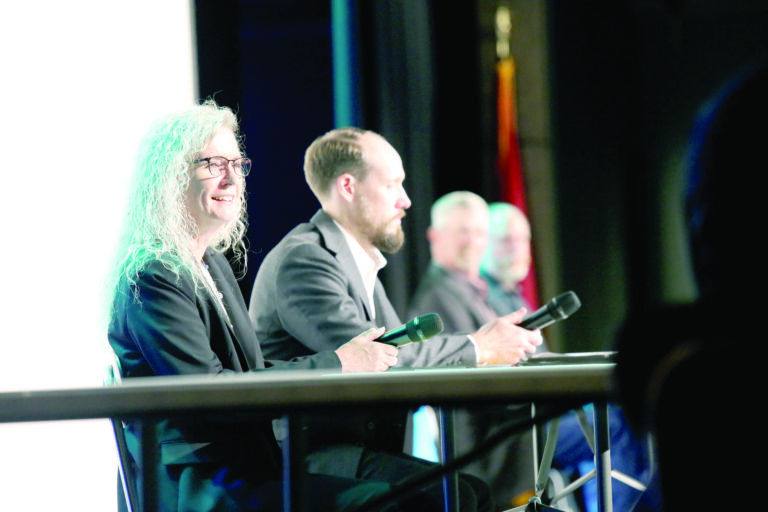
Quartet of candidates answer questions at Cassville Democrat event
By Kyle Troutman [email protected]
The two candidates for Barry County Prosecuting Attorney and two candidates for Barry County Presiding Commissioner answered questions on Thursday at the Barry County Candidates Forum, hosted by the Cassville Democrat at the Cassville High School Performing Arts Center.
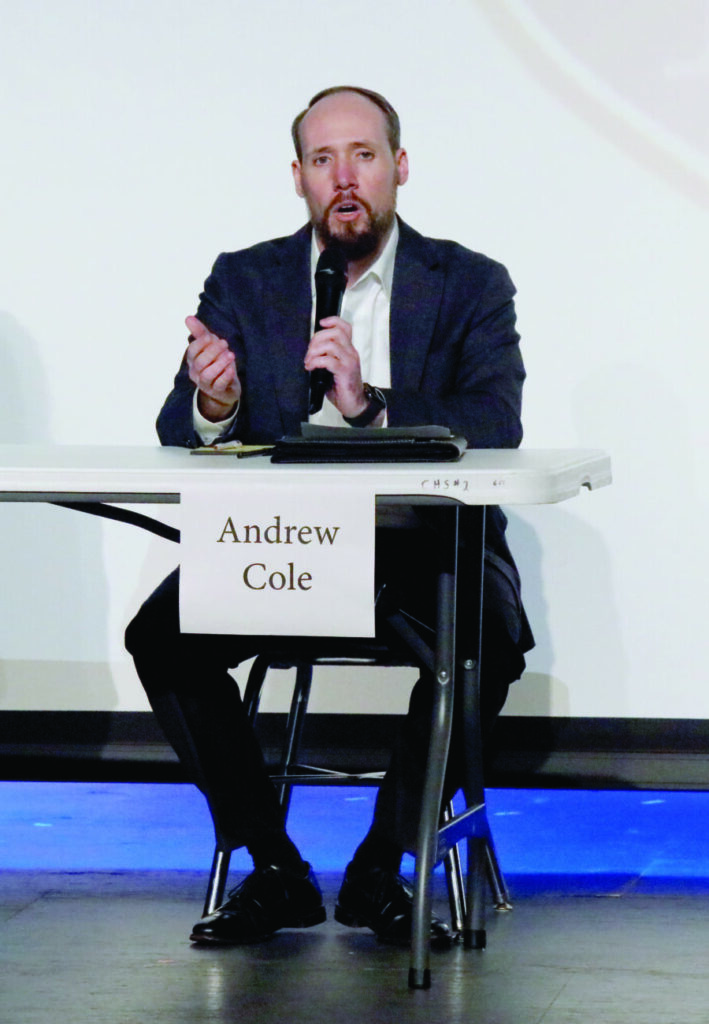
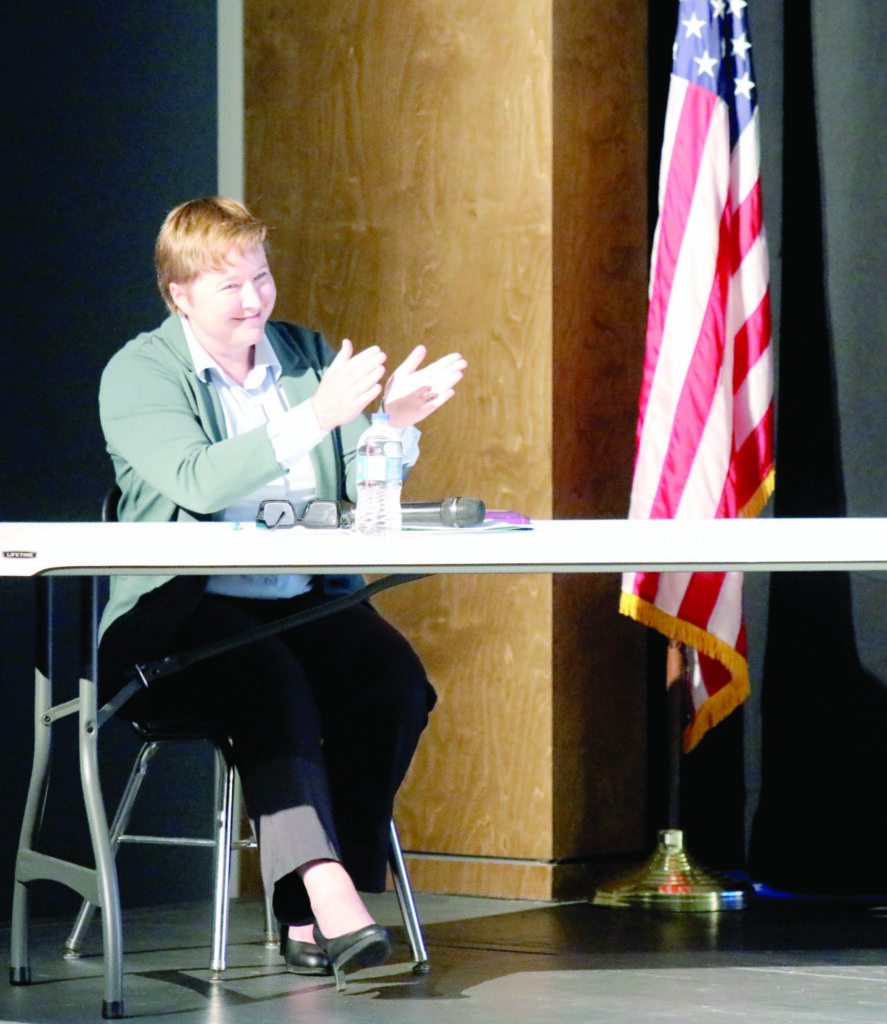
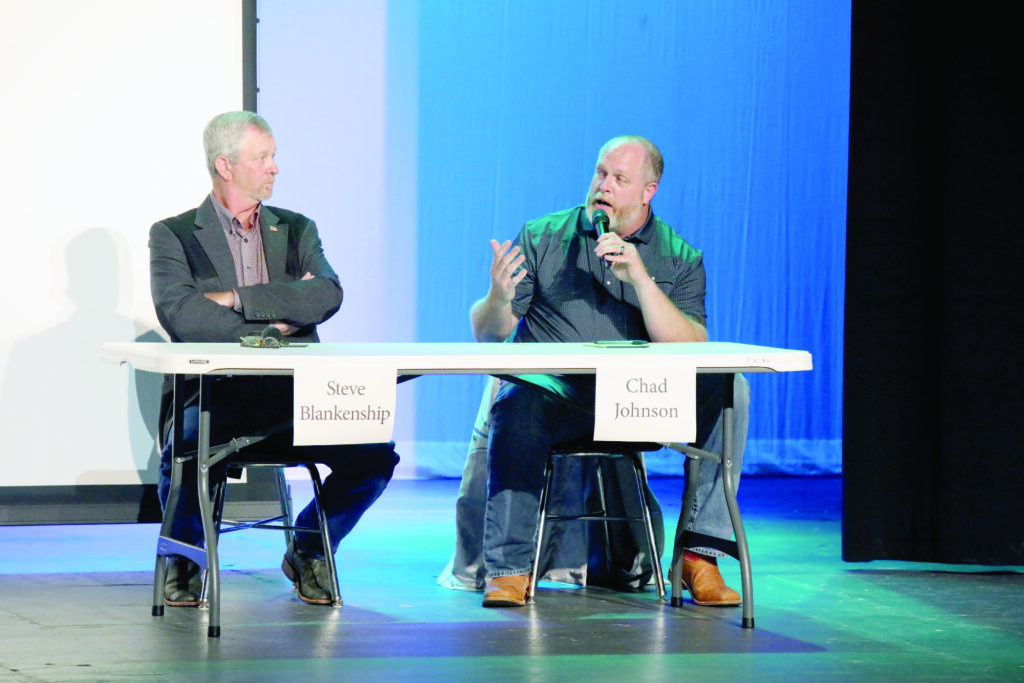
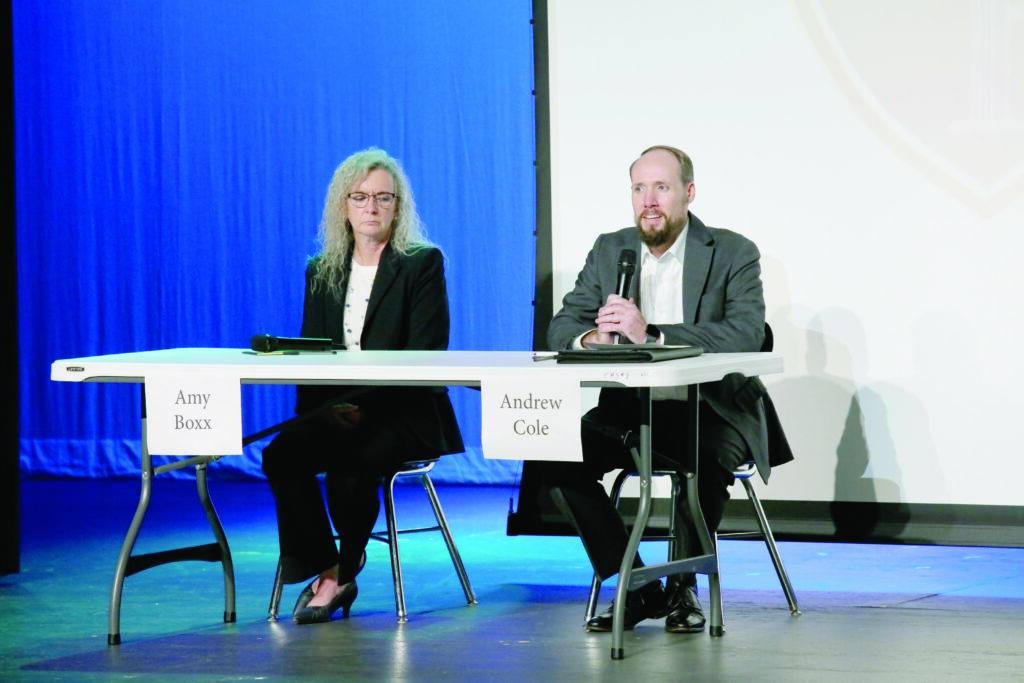
About 75 people attended the event in person, and a Facebook live stream of the Forum garnered more than 50 viewers at points during the more-than-hour-long question-and-answer session.
Denna Clymer, division chair of the Social Science Department at Crowder College, moderated the Forum, which consisted of nine questions for each pair of candidates, alternating every three questions.
The first three questions to the prosecutor candidates, incumbent Amy Boxx and challenger Andrew Cole, assistant prosecutor in Lawrence County, centered around crime trends, drugs and mental health, and the county’s response to methamphetamine and fentanyl crimes.
Boxx and Cole agreed drug crimes were a major issue, and Boxx pointed to an uptick in domestic violence crimes. Both also agreed that drugs and mental health issues tend to go hand-in-hand, and drugs tend to lead to other crimes. Treatment courts, they said, are a viable option for helping rehabilitate offenders.
Boxx added that mental health complications have prevented some individuals from standing trial, including two at the Barry County jail that have been incarcerated for two years. Cole pointed to a conference he attended focused on the fentanyl and opioid crisis as a resource he plans to pull from.
The first three presiding commissioner questions focused on government management, why each candidate should be trusted with the county’s budget and difficult leadership decisions.
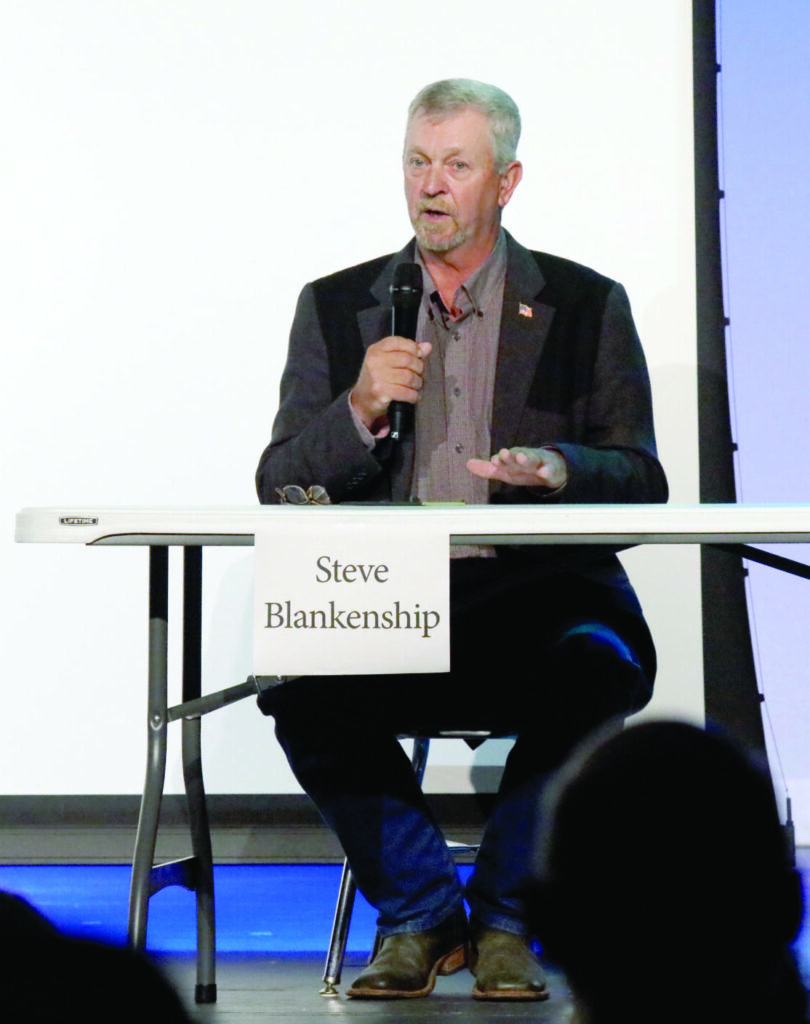
One-term incumbent Steve Blankenship noted during his last 3-1/2 years, the county has not had any layoffs, a point of pride for how finances are being managed. He also pointed to his farming and firefighting experience as tools to lean on in a management role.
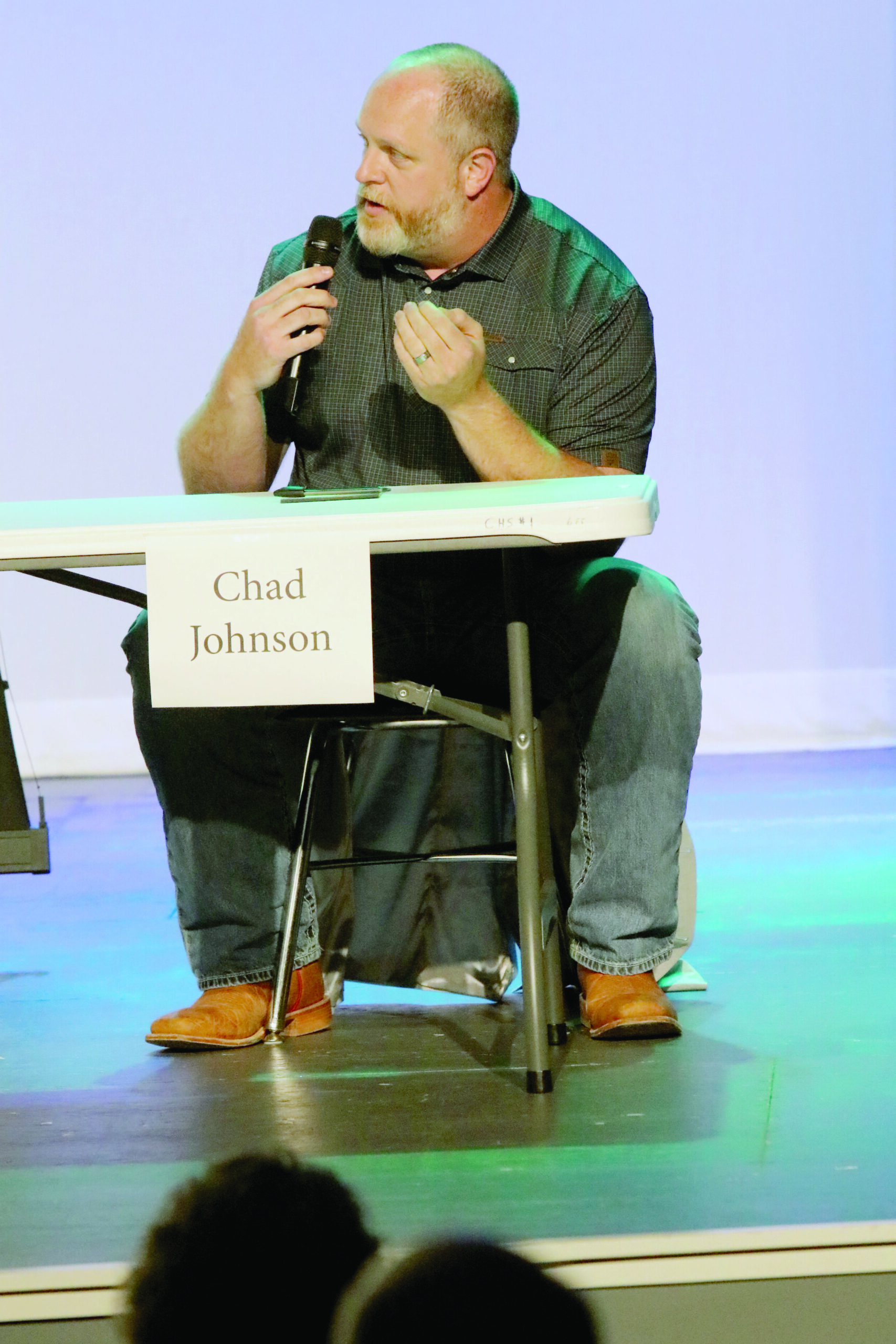
Chad Johnson, a Cassville small business owner, pointed to his work on the Cassville School Board as qualifying him for the presiding commissioner position, and how he has owned a small business for many years with financial stability.
Regarding difficult leadership positions, Blankenship described the decision to stop taking inmates from other counties while the new jail was being built, saying stopping the practice was not what he wanted to do, but he recognized the necessity. Johnson fell back on a school board decision, saying his first foray into the job was dealing with the COVID-19 pandemic and whether or not students and staff should wear masks. He said the decision to require them was highly scrutinized but believed it to be the best decision for everyone at the district.
The second series of prosecutor questions delved into the balance of punishment, rehabilitation and crime prevention; when the maximum sentence should be sought; and metrics they would use to measure success in drug-related crime prosecution.
Cole said the prosecutor’s top priority is to keep the public safe through a balance of prosecution and rehabilitation. Punishment, he said, starts with accountability, and the main goal of the prosecutor’s office is to prevent crime and lessen repeat offenders through treatment courts or prison time.
Rehabilitation, Boxx said, is largely up to the defendant and the will to change their lifestyle. Career criminals, she added, should be sent to prison. She estimated about 15% of the Barry County jail population to be a danger to the community and fall in that heavier punished category.
Boxx and Cole agreed seeking a maximum sentence is determined on a case-by-case basis, factoring in criminal history, crime circumstances and danger to the community. Boxx said in cases where 7 years is the maximum sentence, new laws are forcing criminals to serve more of that time, and probation is a tool to impose a maximum sentence should the offender violate the order.
Cole said defendants who take accountability for their crimes receive greater consideration for sentencing length than those who lie about the crime committed, but ultimately, all decisions come down to the totality of circumstances in each case.
Regarding measures of success, Cole pointed to statistics of prosecutions and victims of drug-related crimes as key in determining success.
Boxx said Barry County Drug Court keeps statistics on its participants for two years, and one measure of success she found is how many Drug Court graduates stop by her office to update her on how well they have been doing since completing the program.
The second set of presiding commissioner questions were about infrastructure, economic development and balancing property rights with neighbors’ concerns, especially regarding industrial waste used as fertilizer, sludge storage tanks, and poultry houses.
Both Johnson and Blankenship identified bridges as the top priority, especially with a new jail, new health department and Barry County Courthouse renovation. Blankenship said the county has done seven bridge projects in the last 3-1/2 years, but more are needed.
Regarding economic development, Johnson and Blankenship pointed to regional groups, like the Southwest Missouri Council of Governments and Missouri Association of Counties as tools to bolster new business and job opportunities. Larger cities in the area doing well, they said, would have a trickle-down effect to Cassville and smaller communities.
When it comes to property rights and residents’ concerns about agriculture practices, both candidates pointed to SB391 as having removed many decisions from county leaders’ hands, as it stipulates counties may not impose any laws more strict than the state. Taking concerns to state legislators and forming community coalitions with vested interest in opposing certain practices is the route residents should take. Both said in the commissioner position, they can help with such endeavors.
The final trio of prosecutor questions asked about protecting child victims, transparency regarding charging decisions and disagreements with law enforcement on charging decisions.
Boxx said the prosecuting attorney’s office works in tandem with the Children’s Division, Child Advocacy Center and trained law enforcement to collect forensic interviews that keep children from having to relive victimization multiple times. She said she uses all the tools state statute allows to protect children who are victims of crime.
Cole said it’s vital to work with those same groups, make sure charges are filed in a timely manner and utilize a victim’s advocate to work with children and their families to help them understand the process. He said children are the most vulnerable in crime situations, and the prosecutor is the last line of defense.
Regarding transparency, both candidates said the public deserves as much transparency as is allowed, with respect to victims. Cole said things like victim information and confidential informants, along with other sensitive crime information, are not things the public always needs to know. The public should know, he said, how a case is charged and why, and it’s vital to be as open and transparent as possible without causing issues with a case.
Boxx said victim’s rights are more important than the public’s right to know detailed information, specifically with sex crimes and domestic crimes. She said she looks at the victims first and if they will be hurt by information being revealed. She also said court is open to the public, and people should know what charges are filed and when, emphasizing victims come first.
Both candidates said they frequently disagree with charges submitted by law enforcement, believing some should be greater and others lesser. Boxx said in those instances, she works with law enforcement to determine why specific charges were suggested, then they come to an agreement before filing. She noted disagreements are part of the nature of the beast, and law enforcement also serve as witnesses, so their input is vital.
Cole said though he does not file charges in Lawerence County, as he is assistant prosecutor, he has disagreed many times with what is sent over. In those times, good relationships and open lines of communication are key, he said.
The final presiding commissioner questions discussed explanations of controversial decisions, how residents should hold the commission accountable and issues they believe are not getting enough attention from the public.
Blankenship said transparency is key when a controversial decision is made, giving leeway for personnel issues or decisions in closed session. The key, he said is remaining responsible to the public who vote leaders into office.
Johnson said transparency and communication breed trust from the community, and with a precedent of trust, the public will know commissioners have the public’s best interests at heart.
Regarding accountability, both candidates said the best way to hold public officials accountable is to show up to meeting and ask questions. Johnson said to avoid bringing up issues through social media or the rumor mill, instead, going to the source. Blankenship agreed the public should ask questions at meetings, or call commissioner directly with issues.
The most important issue in the county voters are not talking about enough garnered different responses from the candidates.
Through his work on the solid waste management board, Blankenship spotlighted recycling as an issue. Though there are no landfills in Barry County, he said up to half of the state’s trash could be recycled, and people should be concerned about the sustainability of landfills statewide.
Johnson pointed to the state deficit and Amendment 5 as not receiving enough attention, saying the state and counties should work to figure out how to eliminate the state deficit.
The Republican Primary Election is set for Aug. 4, with voters getting to choose one candidate in each race. The winners in each race will be unopposed in the Nov. 3 General Election.