County Commission has tank concerns
Leaders request technical review, hydrogeological survey
By Sheila Harris [email protected]
On July 27, the Barry County Commission adopted a written Resolution highlighting concerns the commission has about a pending operational permit for an industrial food and meat-processing-residuals storage tank to be constructed in the county.
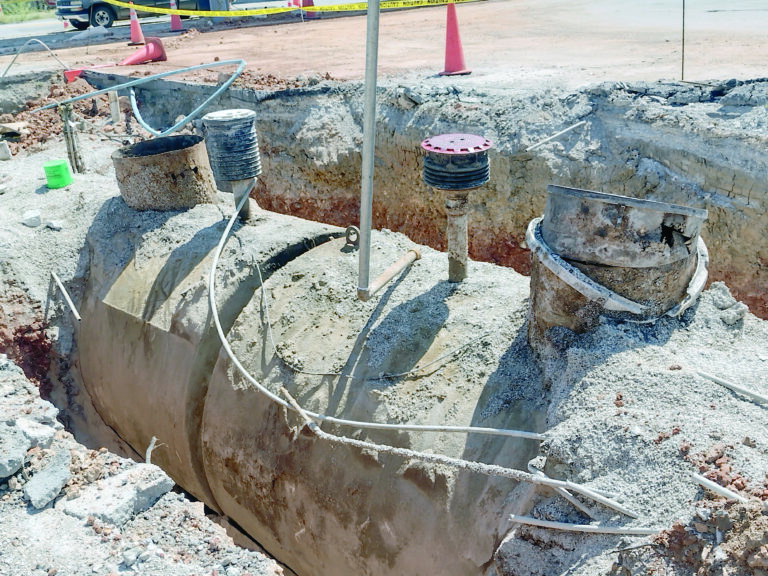
If approved by the Missouri Department of Natural Resources (DNR), the permit will allow HydroAg Environmental, LLC, to operate a 900,000-galllon, inclement-weather storage tank on private property, two miles north of Cassville. A construction permit is not required for storage containers with a capacity of one million gallons or less, if containers are constructed in accordance with a registered professional engineer’s design and plan.
The Barry County Commissioners’ primary concern with the storage tank, as expressed in their July 27 Resolution, is for the future quality of the county’s drinking and recreational waters.
“Barry County’s residents, agricultural producers, businesses, public water systems and local governments depend upon the continued availability of groundwater and surface water resources,” the Resolution states.
The county’s many karst features, commissioners say, “May allow contaminants to move through groundwater systems in ways not readily visible from the surface.”
Fractured bedrock, sinkholes, cave systems, springs and losing streams are common features of the karst hydrogeology that underlies much of the 47,000-square-mile Ozark Plateau, including that of Barry County.
The protection of groundwater in southwest Missouri’s susceptible karst hydrogeology was a primary consideration when the DNR nixed the City of Wheaton’s plan for the construction of a new municipal wastewater lagoon in 1994.
According to a September 1, 1994, article in The Wheaton Journal, engineer Steve Schultz, with Algeier-Marten, of Joplin, told the Wheaton city council that the DNR wouldn’t permit a lagoon system in an area where geological surveys say there is a severe collapse potential, because, “A lagoon collapse into a sinkhole or cavern could suck untreated sewage into groundwater and poison wells and springs,” Schultz said.
According to Cave Research Foundation Volunteer Ben Miller, sinkholes provide a direct conduit from the surface to groundwater below.
In 1994, Wheaton city council members were also told that, in an area where surface water tends to seep into the bedrock, the [City’s wastewater treatment] plant would probably have to meet the state’s cleanest wastewater standards.
With the DNR’s current draft permit for the Cassville storage tank, no mention is made of susceptible underlying karst hydrogeology, although the storage tank will be situated near the City of Cassville’s five public wells, in a karst area where groundwater can travel as rapidly as one mile per day, according to Missouri hydrologist, Tom Aley.
Cassville’s public wells serve an entire community with water, the Commission’s Resolution notes.
In addition to a concern for drinking water – both public and private – the commissioners’ Resolution points out that “Barry County’s tourism economy depends substantially upon clean water, natural resources, outdoor recreation, public confidence and the continued protection of its streams, springs, lakes, forests and public lands.”
The formal, written Resolution makes a public statement and lets the State know that the Barry County commissioners are unhappy with the DNR’s plans to approve permits for the storage and land-application of raw, meat-processing waste.
“We felt like we had to do something,” said Steve Blankenship, presiding commissioner.
According to Missouri Senate Bill 391, signed into law by former Governor Mike Parson in 2019, no county health department or county government can enact ordinances more stringent than state laws.
“The County Commission does not seek through this Resolution does not seek to replace the Department’s permitting authority or prohibit lawful agricultural practices, but desires to ensure that Barry County’s water resources, residents, property owners, public services, natural resources, tourism economy and emergency-response interests receive full consideration before a final permit decision is made,” the county’s Resolution states.
The Resolution does request that the Missouri Department of Natural Resources (DNR) completes a technical review – including a hydrogeological survey that would include an assessment of karst features, well and spring recharge characteristics, groundwater movement and other sensitive underground characteristics that would be affected by an environmental discharge from the tank.
While HydroAg characterizes their residual sludge as “organic fertilizer,” an environmental impact report compiled by the Environmental Protection Agency (EPA) calls meat and poultry-processing waste the largest source of nutrient pollution in the nation. Excess nitrogen and phosphorus in water sources can lead to harmful algal blooms, detrimental to aquatic life and humans.
Although, according to the DNR’s draft permit for the storage tank, chemicals and contaminants not covered in the permit will not be allowed in the sludge, the department does make exceptions. “Incidental amounts of cleaning materials” may be included, the department says.
The County Commission asks that storage-tank materials be identified and tested, and groundwater be monitored.
“If DNR determines that groundwater testing is unnecessary, the County Commission requests a written explanation of the technical basis for that determination,” the Resolution states.
While, according to its Resolution, the Commission supports state oversight and requirements, it also supports the consideration of additional legislative or regulatory protections, “if experience demonstrates that existing requirements do not adequately protect karst groundwater, public water supplies, private wells, neighboring properties, natural resources, tourism and affected communities.”
Barry County Clerk, Joyce Ennis, directed a certified copy of the Resolution to Mo. DNR, Water Protection Program; Mo. DNR, Public Drinking Water Branch; HydroAg Environmental, LLC; the City of Cassville; the Barry County Health Department; Barry County Emergency Management; members of Barry County’s state legislative delegation; and other agencies or public water systems the Commission deemed appropriate.
The Commission requests a joint meeting with the above-named entities regarding the proposed HydroAg storage facility and the matters mentioned in the Resolution.
The county Resolution follows a letter with similar concerns sent to the DNR by Cassville city administrator, Richard Asbill, on July 17.
If the permit for the storage tank is approved, the DNR will move forward with preparing language for draft permits for the land application of the food and meat-processing residuals.