There is a strength
Hunter: ‘You never knew that you had until you have to use it’
By Jordan Troutman [email protected]
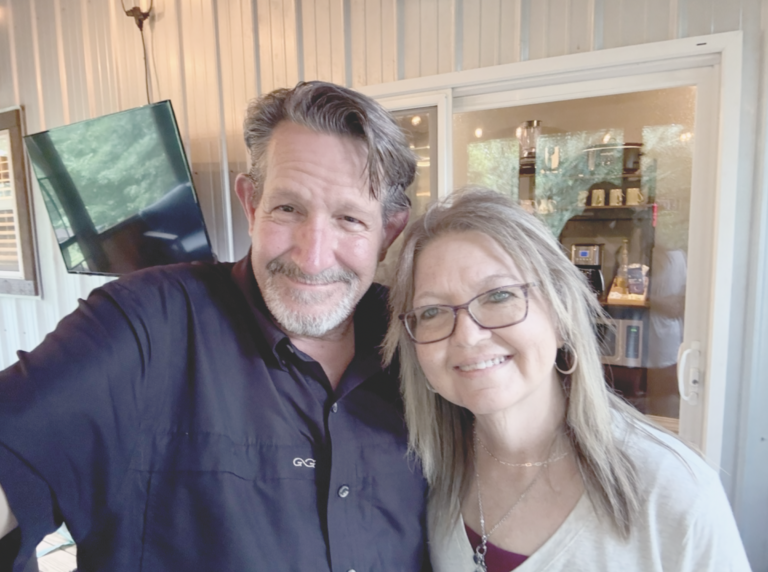
After Thanksgiving 2024, Annette Hunter was sitting on the floor wrapping Christmas presents when a sharp pain suddenly went through her right breast.
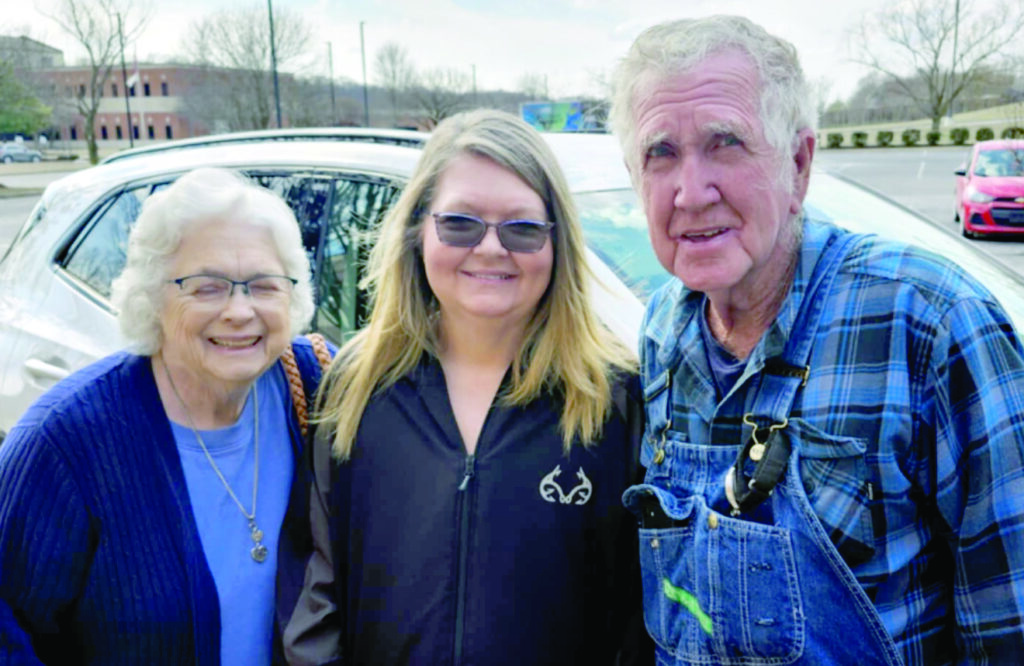
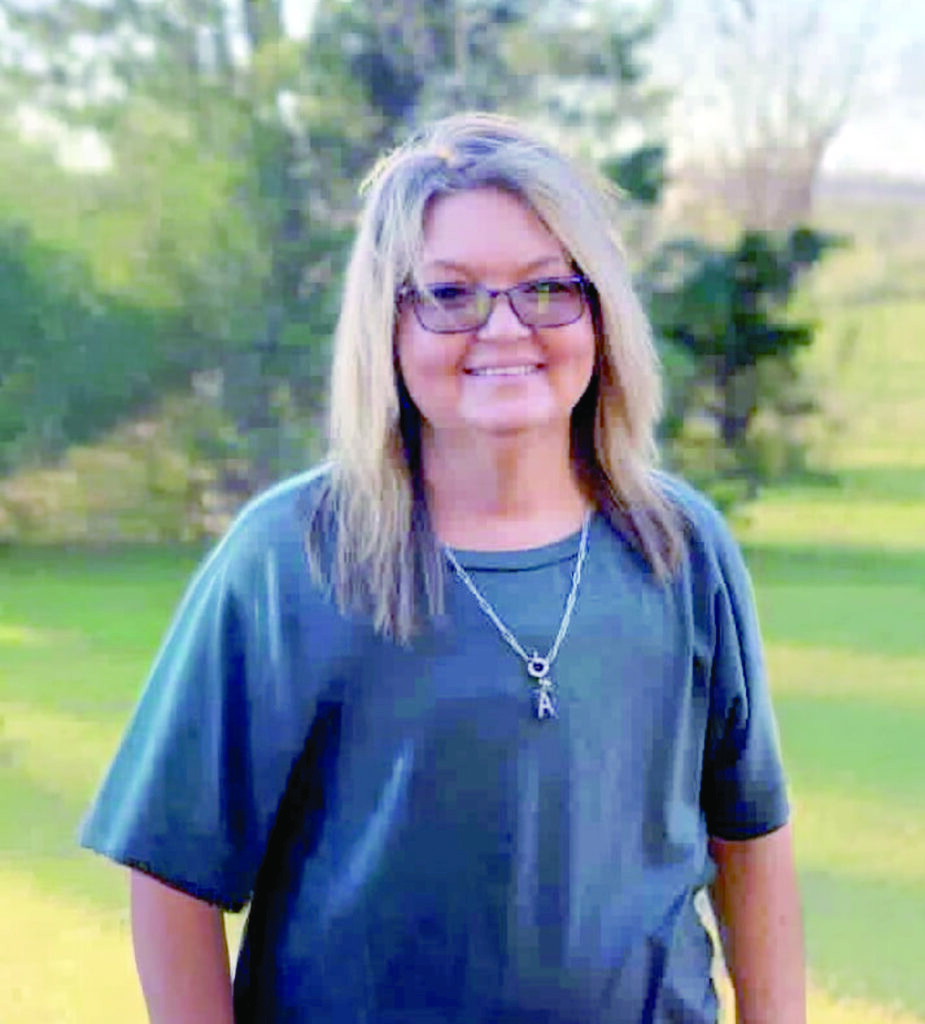
“It kind of stopped me in my tracks,” Hunter said. “I just thought it was something weird, you know? Then I felt my breast, and I felt a knot.”
She asked her husband, John Hunter, to feel the lump, and he confirmed it was there. At the time, breast cancer was the furthest thing from her mind.
“I remember when I was little and I would have like sharp pains or something, my grandma or mom would always say they were growing pains,” she said. “I kept thinking, well maybe I’m still growing. I have to try to find the humor in it so I don’t cry.”
Hunter’s husband encouraged her to see her primary care doctor if the lump was still there after a few days. When it was, Hunter made an appointment. Her doctor recommended a mammogram as soon as possible, but that appointment was a month away.
“The mammogram was scheduled for the day after Christmas,” she said. “Even though I felt good, I knew something was wrong. I just felt it in my gut.”
When she finally went in for the mammogram, the appointment took a turn she had feared. Rather than being sent home, she was taken into another room for an ultrasound.
“The lady that did the ultrasound was very serious,” Hunter said. “And, I remember turning and looking at the wall, and I had tears rolling down my face, because at that moment, I knew — I already knew.”
The ultrasound was followed by another wait, this time for a biopsy. She waited for another month, then two days after the biopsy, she got the call on her lunch break.
“I remember pulling over to the side of the road, putting the car in park, and just sobbing, uncontrollably,” she said. “And, at that time, when you’re told that, you don’t know, if you’re going to live or die. I know that sounds terrible, but that’s what goes through your mind.”
Hunter called her parents, who were in their late 70s at the time, and her husband began to cry. Her parents cried, too. Together, they told her they would get through it.
That evening, Hunter called her three daughters to tell them about her diagnosis.
“And, I don’t know why, but I kept apologizing to them,” she said. “I still really don’t know why. I think I was just apologizing because I felt so bad, that I was putting everybody through this.”
Her daughters reassured her that she had nothing to apologize for.
“Little did we know, a few months later, they would end up making the same phone call to me,” Hunter said.
Hunter was diagnosed with stage two breast cancer. Her primary care doctor referred her to specialists, and her parents and husband remained by her side.
“My mom and dad went with me to every single appointment — I was never alone,” she said. “And, my heart breaks because I couldn’t be there for my daughters for some of theirs, because I was going through treatment.”
Hunter underwent a double mastectomy in February 2025, after a winter drive through ice and snow to see her surgeon.
“We called her surgeon to ask whether we should cancel, but he told us to come if we could safely get there because of how quickly the cancer appeared to be growing,” she said. “When I first found my knot, it was like the size of a small grape. By the time that I was getting ready to have surgery, it was two or three grapes.”
Hunter’s surgeon told her that two lymph nodes under her arm had tested positive for cancer.
“I’m glad that I didn’t put it off, because from then on, time I had the biopsy, and the surgery, it moved from my breast to my lymph node under my arm,” Hunter said. “Now, I have lymphedema and have to wear a compression garment on my arm.”
Hunter believes she received approximately 23 radiation treatments to treat the breast area and the region under her arm.
“I would have to pull over on the way to work to throw up,” she said. “I was so sick — but I was determined.”
Hunter now takes a hormone blocker. She said she expects to take that medication for five years, with her doctors evaluating whether she should continue for 10 years. Every three months, she has blood work to monitor her health.
While Hunter was still going through treatment, her oldest daughter, Tiffany, was diagnosed with stage four breast cancer at 37. Her middle daughter, Stacy, was diagnosed with stage one breast cancer at 33.
Hunter’s youngest daughter, who is nearly 28, has undergone mammograms, ultrasounds and genetic testing. Hunter said she has had no cancer diagnosis.
“My grandmother, nor my mother, ever had breast cancer,” she said. “We even had the testing done, and we do not have the BRCA gene. But my oldest daughter’s grandmother, on her father’s side, had breast cancer.”
“[Tiffany] finished chemo, and it was very hard on her,” she said. “She has decisions to make regarding surgery and may need radiation before proceeding.
“Stacy underwent a double mastectomy and reconstruction with implants. She did not need chemotherapy but has received immunotherapy and is taking hormone blockers.”
For a mother accustomed to caring for her children, watching them face cancer has been a different kind of pain.
“As a mother, I was used to being able to help when my children were hurt,” she said. “This was something that I could not fix. And I wanted to take it away from them so bad; and you know, if there was a way, I would have.”
Hunter hopes other women will learn from her experience, particularly those who are younger than the age when routine mammograms are typically recommended.
Her own diagnosis, along with those of her daughters in their 30s, has changed the way she thinks about screening.
“I wish that they could change that law to where you have to be 40 before you can get a mammogram as far as your insurance,” she said. “Because both of my daughters — I mean 37 and 33 — that’s young.”
Hunter believes women should talk with their doctors about their individual risk and screening options rather than assume they are too young to develop breast cancer.
“My oldest daughter is stage four, and she did not have one single warning sign, so I want women to know that you can feel perfectly fine,” she said. “You can feel healthy and go to work every day. My daughter was working 12-hour days, and on her feet. She said she felt tired, but she thought it was just everyday work.”
Hunter also encourages women to speak up when something feels different and to keep asking questions if they are concerned.
“My husband and I learned you kind of have to be your own advocate,” she said. “I think women should start getting checked as young as 25 years old, and I know that may sound crazy. But, I wish we could change some laws.”
For Hunter, that sharp pain in December 2024 became a turning point. She said her oncologist described the discovery of the lump as a divine intervention, because she might not otherwise have noticed it when she did.
Her experience has also left her navigating a new health challenge. Hunter has suffered significant hearing loss, and her doctors believe it may be related to medication she received during cancer treatment. She has been receiving injections and is considering an implant, leaving her wondering how much more she is capable of.
“I can do it,” she said. “I did the double mastectomy, and I went through the radiation and the medicine. I can do it.”
Hunter said cancer has changed how she sees life, relationships and the people around her.
Some friends stopped communicating with her after her diagnosis. She understands that people may not know what to say when someone they care about is facing cancer, but she wishes they understood that support does not require perfect words.
“You find out who your friends are, for sure,” she said. “And, I’m not trying to be negative or anything, but I had so many people, just stop talking to me. Maybe they didn’t know what to say.”
“I wish I could go back and tell them, you don’t have to say anything — just tell me that you love me.”
Hunter and her husband have been married for 30 years. Together, they have three daughters and nine grandchildren, ranging in age from 4-17.
Her grandchildren remain a source of joy, even as her family continues to face the uncertainty of cancer and long-term treatment.
She said the experience has forced her to confront fears she never expected to face, including the possibility that the disease could return. Although she prays that it never does, she knows she must continue with regular appointments, medication and monitoring.
“There is a strength, deep, deep down inside of a woman, that you have to pull out and you never knew that you had until you have to use it,” Hunter said. “And when you have to use it, you find that strength. You focus on that strength, every single day. There are days that you feel like giving up. You can’t — you have to keep fighting.”