Community Voices — Terry Held: The new old age: When retirement becomes reinvention
For generations, retirement came with a familiar picture.
You worked hard, you reached your mid-60s, and then you slowed down. Maybe you spent more time at Roaring River. Maybe you expanded your garden. Maybe those woodworking or sewing projects took on a new life.
Maybe you finally rested.
In towns like Cassville, this rhythm made sense. It followed the traditional trajectory of school, work and retirement. That sequence of life honored labor and rewarded endurance.
But, our world has quietly changed.
We are living longer than any generation before us. In 1950, the average American life expectancy hovered around 68 years. Today, it is closer to 79. That rocking chair on the porch can only fulfill who you are for a short time. Maybe it’s time to rediscover all those talents and skills you have yet to tap.
That extra decade of life — or two — has transformed retirement from a short victory lap into a long and open chapter of life. And when you suddenly find yourself with 20 or 30 years ahead of you, the old model of “work, stop, rest forever” begins to feel less practical and more unfinished. This season of life we once called retirement may be more than a swan song; it could very well be a golden vista of reinvention. An exciting new chapter with unlimited possibilities.
This is where a new idea has entered our cultural vocabulary: unretirement. It doesn’t mean dragging people back into exhausting schedules or denying anyone a well-earned rest. It simply recognizes that many retirees are choosing to thrive in new ways. Some are motivated by a new income, new experiences, or the opportunity to develop new skills, but all seek a deeper purpose. National surveys now show that roughly one in three retirees works part-time or full-time, with millions more actively seeking opportunities to stay engaged.
The reasons are not hard to understand.
Some are financial. Inflation stretches fixed incomes thinner each year. Healthcare costs do not shrink. Many people simply discover that their savings were designed for a shorter retirement than the one they are actually living. But, money is not the whole story.
Talk with retirees, and you hear another theme repeated: boredom, restlessness and a quiet loss of identity. For decades, work structured time provided social contact and gave people a sense of usefulness. When that disappears overnight, the freedom can feel surprisingly empty. Humans were not built solely for leisure. We were built to contribute, to solve problems, to help others, to feel needed. This truth carries special weight in rural communities like Cassville, where the citizenry are “can-do” people.
Small towns survive on shared effort. We volunteer at ballgames. We coach youth teams. We fix fences, help neighbors, serve on boards, organize food drives, and staff community events. When older adults disengage completely, Cassville doesn’t just lose labor; we lose wisdom, mentorship and continuity. Our community loses a meaningful voice for who we are and who we will become. Yes, all of us shape the future of our great community, each and every living soul.
Unretirement, in this sense, is not a trendy reinvention. It is a return to something deeply familiar: staying useful in ways that fit the season of life you’re in. For some, that means part-time work. For others, it looks like volunteering, mentoring younger workers, substitute teaching or serving on nonprofit boards. For many, it means learning something new altogether.
This is where education quietly becomes one of the most powerful tools of reinvention. At Crowder College, it is not uncommon to see adult learners sitting beside recent high school graduates. We call them non-traditional students. And their numbers are growing every year. Some are retraining for new careers. Some are building digital skills they never needed before. Some are finally pursuing interests that had been postponed by decades of raising families, running businesses, or working long shifts. I have students in my writing class who are writing family memoirs, developing writing chops strong enough to write a novel.
Learning does something important in later life. It keeps the mind flexible. It restores confidence. It creates new social networks. And perhaps most importantly, it opens doors to second and third acts that look nothing like the first.
A retired tradesman might become an instructor. A former office worker might pursue healthcare certification. A lifelong reader might finally try writing. A farmer might learn new business or technology tools. These are not fantasies. They are already happening quietly across campuses and at Crowder.
What unretirement ultimately challenges is the idea that aging means shrinking. Instead, it suggests something more hopeful: that later life can become a period of selective focus. You don’t have to do everything anymore. You get to choose what matters most. You get to decide how your experience will be used.
This shift also benefits younger generations. When older adults remain visible and engaged, they pass down skills that cannot be taught in textbooks: patience, judgment, resilience, and perspective. Multigenerational workplaces and volunteer organizations consistently perform better because wisdom and energy meet in the same room.
In a time when loneliness is rising across all age groups, this matters more than we realize.
Perhaps the most important change unretirement invites is internal. It asks a simple but profound question: Who am I becoming now? Not who you were when you started your career. Not who you were when you raised children or built a business. But who you are in this new season, with experience behind you and time ahead of you.
For some, the answer will still be rest, and that is honorable. But for many others, it will be contribution, creativity, learning, service or mentorship. Cassville has always understood that communities are not built by age categories. They are built by people showing up.
So, maybe retirement was never meant to be an ending at all. Maybe it was meant to be a transition, a bridge between what we have done and what we still have to offer. The real question is not when we stop working.
It is how we keep becoming.
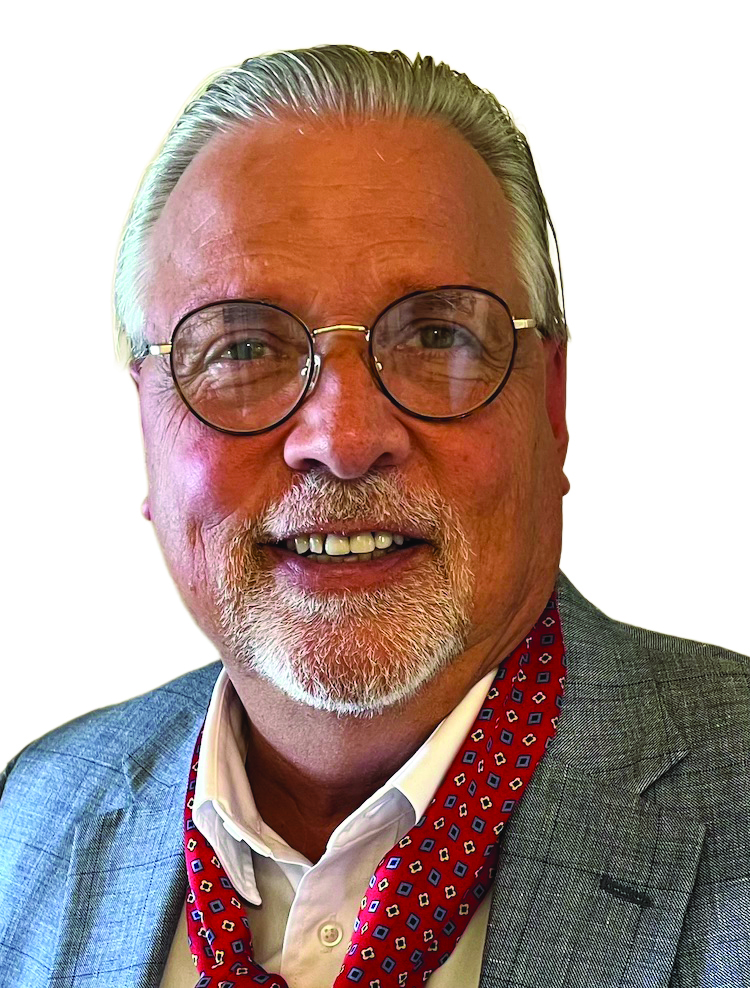
Terry Held is an English instructor at Crowder College, Cassville. The views expressed in this column are solely those of the author and do not necessarily reflect the views or positions of Crowder College. He would appreciate hearing what you think. He can be reached at [email protected].