
Community Voices — Terry Held: Crossroads in rural educationl; Keeping opportunity close to home
“The Times Are A-Changin’.”
Bob Dylan’s famous song of the 60’s became a cultural anthem with universal appeal. Today, it has become a phrase often heard in small towns when difficult decisions arrive quietly and without ceremony: Usually, those words are spoken with a shrug, a sigh, or a little disbelief. But behind them lies something larger, a recognition that institutions we once assumed would always remain steady are now being forced to adapt to realities few people fully see.
Community colleges across Missouri are standing directly in the path of those changes. It applies to us, dear Cassvillians. In recent weeks, conversations about education funding have intensified throughout the state. Public schools are concerned about uncertain state allocations, and higher education institutions are confronting difficult questions about enrollment, sustainability, staffing and the future shape of public education itself. As reported this week, Missouri lawmakers finalized a budget plan with no increase for public education programs or higher education funding, even as institutions continue to face inflationary pressures and demographic decline.
Those realities may feel distant when discussed in Jefferson City, but they arrive very personally in rural communities. For many of us in Barry County, Crowder College is not simply a collection of classrooms. It is a bridge. It is an opportunity within driving distance. It is the first college classroom that many local students have ever entered. It is workforce training for adults changing careers. It is a dual-credit opportunity for high school students. It is continuing education, nursing preparation, technical instruction, speech classes, literature courses and second chances.
And yet, community colleges now operate in a landscape vastly different than even 10 years ago. Birth rates have declined nationally. Rural populations have aged. Many students work longer hours while attending school. Online education has exploded. Economic uncertainty has forced families to become increasingly cautious about educational spending. Meanwhile, institutions are asked to do more with less while simultaneously proving their immediate economic value at every turn.
That pressure is especially acute in smaller satellite campuses like Cassville. Enrollment numbers tell a story that is difficult to ignore. The realities of staffing and budgeting eventually catch up with every institution, even those driven by service and goodwill. Colleges must make difficult decisions not because they no longer believe in rural education, but because they are trying to preserve it.
That distinction matters.
It is easy, in moments of institutional adjustment, for communities to interpret change as abandonment. But adaptation is not retreat, not now, not ever. Sometimes it is survival. Sometimes it is stewardship. Sometimes it is an institution attempting to ensure it can continue serving students five, ten, or twenty years from now rather than simply preserving yesterday’s structure.
And this challenge is not unique to Crowder.
Across Missouri, educators at every level are sounding similar warnings. Cassville Superintendent Merlyn Johnson recently noted that unreliable state funding streams and budget uncertainty create real-world consequences for schools and communities. Those consequences do not remain abstract. They affect staffing, course offerings, maintenance, transportation, and the educational opportunities available to rural students. Higher education faces similar pressures, though often discussed less publicly. Still, amid these headwinds, something important must not be forgotten:
Rural communities need community colleges now more than ever. At a time when the cost of four-year universities continues to climb, community colleges remain one of the most accessible educational pathways in America. They allow students to stay close to home, reduce debt, explore careers, transfer credits, and gain practical skills without uprooting their lives. For many first-generation students, institutions like Crowder are not secondary options; they are the doorway itself.
But perhaps the value of a community college extends beyond economics.
A college campus, even a small one, like Crowder Cassville, creates cultural gravity. Our nursing program is a showcase of academic rigor, administered to provide a much-needed service in our community. Everyone wins when our nursing programs flashes its brilliance…and brilliant it is. We host dialogues between students and the community, opening the door to civic participation. Speakers, artists, performances, civic events, literacy initiatives, and educational energy are brought into Barry County through Crowder. We are here to remind this community that intellectual life belongs everywhere, not just in urban centers. In rural America, where many communities fear decline or invisibility, educational institutions become anchors of identity and aspiration.
That is why these present financial challenges deserve public conversation rather than quiet resignation. Communities should ask how they can support educational institutions, not merely how institutions can support them. Businesses, civic organizations, schools, local governments, and residents all have a stake in whether accessible education survives in rural Missouri. Partnerships matter. Visibility matters. Participation matters. Enrollment matters.
And perhaps most importantly, belief matters. Because if rural communities stop believing education belongs locally, then eventually it won’t. The future of higher education in Missouri is likely to look different than its past. There will be consolidation, hybrid roles, technological expansion, difficult financial decisions, and institutional restructuring. Those realities are already here. But none of that means the mission itself has disappeared.
In fact, the mission may be more important now than ever. The challenge before institutions like Crowder College is not merely how to survive financially. It is how to continue serving communities while navigating a rapidly changing educational landscape. That work will require creativity, flexibility, honesty and public trust. And for communities like Cassville, it may also require remembering something simple but profound:
A college is not only a place where students attend. It is a declaration by a community that learning still matters here, and for the generations that follow.
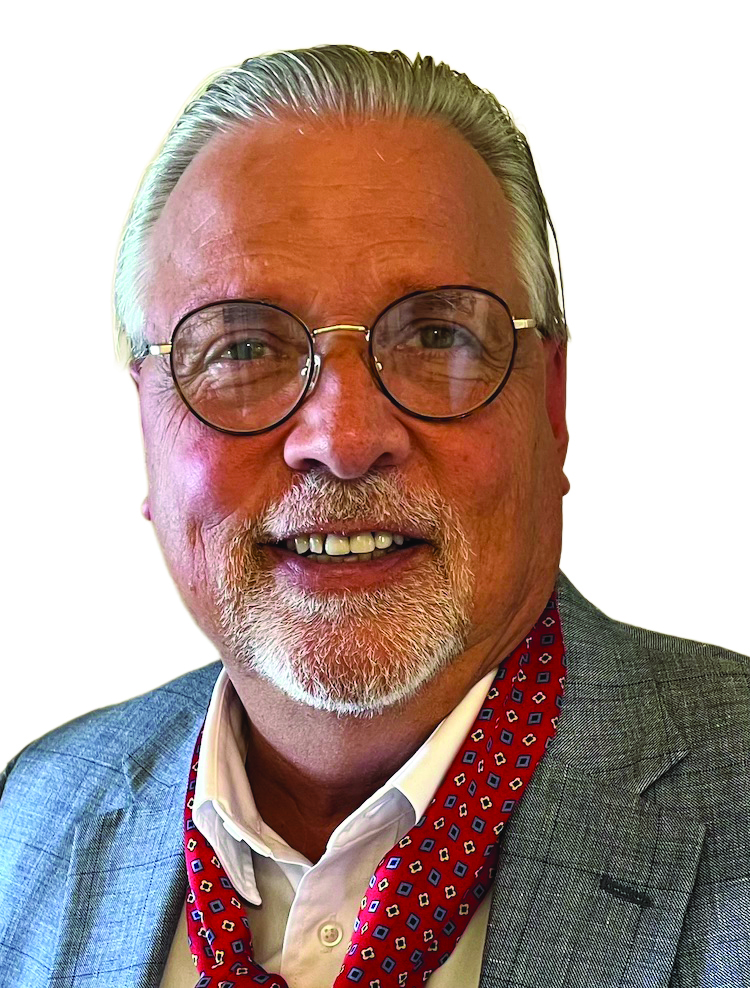
Terry Held is an English instructor at Crowder College, Cassville. The views expressed in this column are solely those of the author and do not necessarily reflect the views or positions of Crowder College. He would appreciate hearing what you think. He can be reached at [email protected].