Community Voices — Terry Held: Poetry Ain’t Dead — It’s Alive in Cassville
I am a witness.
I saw it with my own eyes. I heard it clearly. But more than anything, I felt it — somewhere in the chest, where words tend to land when they matter most.
Alexa stood at the front of the room. A single mother, all of 20 hard-earned years, one of Cassville’s own, working to get ahead and provide for her child. She paused, searching — like a compass finding true north. She cleared her voice, unfolded a wrinkled sheet of paper, and took a breath that seemed just a little harder to come by.
The room waited. Then, quietly at first, the words came. Not polished. Not perfect. But true.
They moved with a sincerity that did not ask for approval, only to be heard. And as they settled into the room, something shifted. The tension gave way. The air seemed lighter. In that moment, Alexa did more than read a poem; she stepped beyond fear. And in doing so, she gave the rest of us something just as important: a reminder that even in struggle, there is the possibility of voice, and in voice, the possibility of hope.
That moment was not an isolated one.
It has been happening more often in Cassville, with each passing student, class and semester. What we are witnessing is not simply an event, but the quiet emergence of something larger.
Poetry Ain’t Dead is more than a title. It is a kind of declaration, that ancient verse, made new again by the voices of our own community, is very much alive. And it is growing, not loudly, but steadily, across Southwest Missouri.
What began as a modest open mic at Crowder College in Cassville has become something far more meaningful than a date on a calendar. It has become a gathering place for voices. Not professional voices. Not perfected ones. Just voices, local, young, honest and increasingly willing to be heard.
On April 23, the City of Cassville will recognize this movement by designating the day as Cassville Community Poetry Day. It is, on its surface, a simple proclamation. But in practice, it says something deeper: that this is a place where language matters.
And that may be the real story.
In recent years, we have spent much time talking about literacy — how to help students read more effectively, think more critically, and navigate a world shaped by speed and screens. These are necessary conversations. But literacy, if it is to mean anything lasting, must lead somewhere. It must move beyond reading words on a page and into shaping words in the world.
That is where poetry enters.
Not as something distant or academic, but as something familiar. It lives in the way a story is told across a kitchen table, in the rhythm of a long day described at its end, in the careful choosing of words when something difficult needs to be said. Poetry, in this sense, is not an academic exercise. It is a human one.
What we are beginning to see, on campus and beyond, is what happens when people are given space to make that shift: from reading to speaking, from absorbing language to shaping it.
The open mic has grown. Participation now extends across Crowder’s campuses through a monthly online gathering. Area high school students have stepped into the circle, bringing with them a raw honesty that reminds us why expression matters in the first place. And perhaps most encouraging of all, this growing culture has led to the establishment of the Walt Whitman Scholarship, an investment not only in academic success, but in the enduring value of the written and spoken word.
None of this was inevitable.
It happened because people showed up. Because someone took the risk of reading a first poem. Because others chose to listen. Because, little by little, a space was created where language could be more than functional; it could be meaningful. In a rural place like ours, that matters more than we might first realize.
There is a persistent narrative that places like Cassville are not where literature happens — that serious writing belongs elsewhere, in cities or institutions with larger reputations. But that narrative overlooks something essential. It misses the depth of experience, the strength of memory and the clarity of voice that exists in communities like this one.
A community that values language is a community that values thought.
A community that makes room for expression is a community that makes room for people.
So no, absolutely not; Poetry Ain’t Dead.
If anything, it is doing what it has always done: waiting for a place where it can be spoken and heard. And here in Cassville, that place is beginning to take shape. And on April 23, when voices once again gather, some steady, some trembling, all sincere, we will be reminded of something simple and enduring: Not that poetry has arrived. But, that it was here all along, waiting for us to listen.
I am a witness.
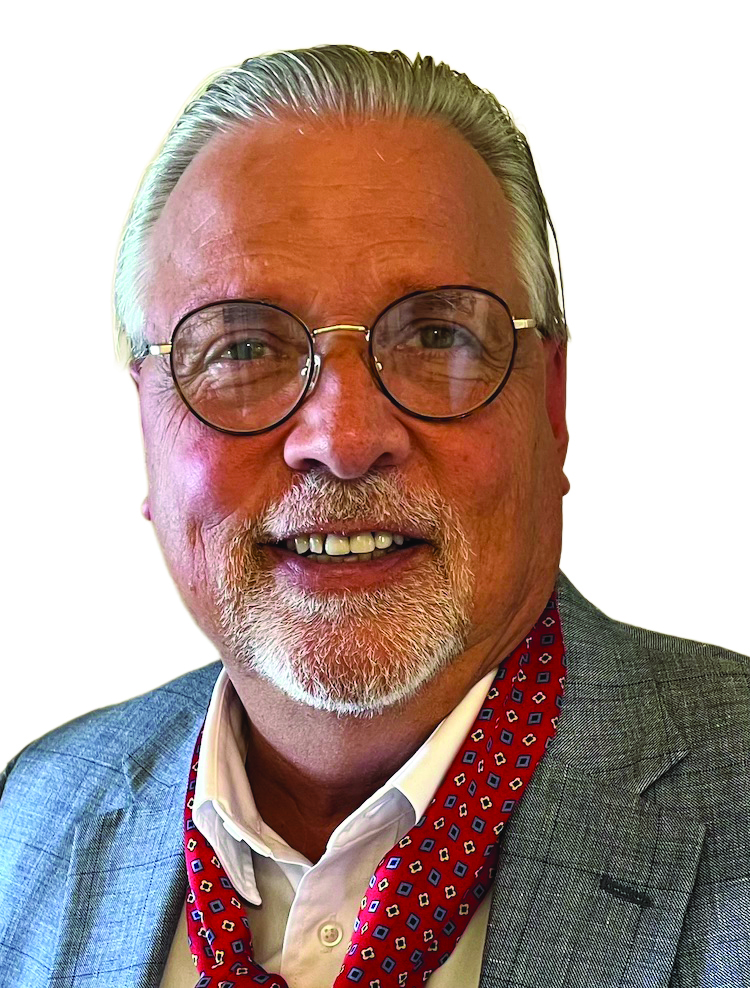
Terry Held is an English instructor at Crowder College, Cassville. The views expressed in this column are solely those of the author and do not necessarily reflect the views or positions of Crowder College. He would appreciate hearing what you think. He can be reached at [email protected].