Community Voices — Merlyn Johnson: It’s a not-so-wonderful life without Missouri public schools
In “It’s a Wonderful Life,” George Bailey is shown a world in which he never existed.
His hometown of Bedford Falls becomes Pottersville, a place stripped of stability, opportunity, and decency. Businesses close. Families struggle. Crime rises. Hope disappears.
Missouri does not need an angel to show us what life would look like without public schools. We are already seeing pieces of it falling apart in the form of charter and private school growth and public/political skepticism that has become exhausting to continually defend against. Public schools are Missouri’s George Bailey institutions. They quietly hold communities together, especially in rural areas, while rarely receiving credit for the role they play. Remove them, or weaken them beyond recognition, and the transformation is swift.
In Cassville, our school district is not just an educational institution. It is one of the largest employers, a hub for community events, and a stabilizing force for families. When schools thrive, local businesses survive. When schools struggle, the entire town feels it.
In Monett, schools support workforce readiness, career training and the future labor pool for area employers. Undermine that system and businesses do not expand, they leave. In smaller communities (Washburn, Seligman, Wheaton, Exeter and Purdy), where distances are long and options are few, public schools provide transportation, meals, special education and stability for children who have nowhere else to turn. Remove the school and there is no alternative waiting nearby.
If state leaders truly believe public education is expendable or even needs extreme makeovers, then they should be honest about the experiment they are proposing, one that trades community stability for ideological blindfolded darts.
Every Pottersville has a Mr. Potter. In Missouri, Mr. Potter doesn’t wear a top hat. He wears policy language, talks of “efficiency,” “school choice,” “charters,” and “property tax relief.”
He does not close schools outright. He slowly bleeds them dry. Unfunded mandates. Responsibilities shift downward. Expectations rise. Then, when cracks appear, the system is blamed for not surviving neglect. It’s an old strategy: dismantle the supports, then declare the structure unsound.
So, if lawmakers believe Missouri can function without public schools, they should follow that logic to its conclusion. Step back. Watch the consequences unfold. Absorb the disruption. And then pay attention to how quickly communities demand the very institutions that were dismantled in the name of reform.
Pottersville wasn’t just poorer, it was harsher. The same would be true across Missouri. Public schools feed children every day. Remove them, and food insecurity rises immediately, especially in places like Barry, Lawrence and McDonald counties, where schools are often the most reliable source of daily meals for students.
Schools are also the first line of social/mental health support in many rural communities. Counselors, nurses and trusted adults notice when something is wrong. Without that safety net, issues escalate, from anxiety and depression to substance abuse and resurface later in emergency rooms, jails and courtrooms.
Crime does not increase because children lack discipline. It increases when structure disappears, opportunity fades and economic stress takes hold. Ironically, public costs do not shrink. They just move, becoming more expensive, less effective and harder to manage.
In “It’s a Wonderful Life,” the most devastating change isn’t the buildings, it’s the people who left. That same quiet departure would spread across deep Southwest Missouri. Families would simply stop believing their hometowns could offer their children a future. And then they would move.
The road south to northwest Arkansas is already familiar. If Missouri legislators continue to make operating public schools unnecessarily complicated, that road becomes a permanent exit ramp. Families will follow opportunity, stability and hope; and they will find it where schools are treated as assets instead of liabilities.
When families leave, they take more than enrollment numbers. They take workforce potential, civic leadership and generational investment. Once they go, they do not return.
George Bailey’s loan office kept Bedford Falls from collapse. Missouri’s public schools serve the same role. Schools support construction projects, transportation contracts, utility services, local vendors and small businesses. When school funding erodes, those ripples spread quickly. In communities like Anderson, Aurora, and Neosho, weakened schools mean stalled growth, declining property values, shrinking municipal revenues and fewer public services.
There is no private-sector substitute capable of educating every child, transporting them safely, meeting special education needs, feeding them and anchoring community life, especially in rural Missouri.
Educating hundreds of thousands of children is not simple work. It is human work. It is complex, imperfect, and deeply relational. And it requires structure, sustained investment, and shared responsibility.
The expansion of private and charter schools threatens to widen the gap between rich and poor, offering increased opportunity to the wealthy while leaving families in poverty further behind. In the 1970s, ‘80s, and ‘90s, public schools were widely viewed as a shared civic investment; places where most children, regardless of background, learned together on the same playing field.
A child from a low-income family sat in the same classroom, followed the same curriculum and had access to the same opportunities as a child from a wealthy home. That common experience helped sustain the belief that education could be a true equalizer.
In recent years, however, growing criticism of public schools has fueled skepticism rather than improvement, undermining that collective commitment to equity. As private and charter schools expand, the promise of choice has often translated into fragmentation; draining resources, increasing segregation, and weakening accountability. States like Michigan, Ohio, and Arizona have seen unchecked charter growth lead to inconsistent quality, financial mismanagement and little evidence of improved outcomes for the students who need support the most.
Instead, of strengthening opportunity, these systems have too often widened gaps, eroding the very even playing field that public education once worked so hard to protect.
At the end of the movie, Clarence reminds George Bailey that no one is a failure who has friends. Missouri’s public schools are those friends. They are flawed. They are underappreciated. And, they are essential.
They reduce poverty. They stabilize families. They protect public health. They anchor local economies. They give children a reason to believe their future can be better than their present.
Public education is not failing Missouri. Missouri is failing to fully claim what has always been its responsibility. And if leaders continue to tear down the system while denying ownership of the consequences, they may eventually rebuild it, but only after communities have paid a far higher price than reform ever required.
Missouri still has a choice. But George Bailey only got one second chance.
Here’s how George Bailey might address the key legislative debates in Missouri:
“As the Missouri Legislature debates major tax changes this session, I find myself returning to a simple question that too often goes unanswered: where does the money come from? Many Missourians want tax relief, and that’s understandable; everyone feels the pinch. But income and property taxes don’t exist in a vacuum. They fund the very services that make our communities livable: strong public schools, safe roads and bridges, local libraries, fire protection and emergency services. I’m particularly confused by proposals to eliminate or sharply reduce income taxes, because they feel less like reform and more like a shell game. When a stable revenue source disappears, the bill doesn’t vanish, it just shows up somewhere else. More often than not, that ‘somewhere else’ is higher and broader sales taxes, meaning families pay more every time they get a haircut, eat at a restaurant, buy groceries or seek professional services. At the same time, lawmakers are considering changes that directly affect public education, including adjustments to the school funding formula, open enrollment, and expanded school choice; all while threatening the revenue streams that support local districts. I understand the appeal of tax cuts, but Missourians should remember that those dollars buy something real. They buy opportunity in our classrooms, safety in our neighborhoods and infrastructure we all depend on. If we want lasting tax relief, it needs to come with an honest plan, not one that weakens public education and shifts the burden onto working families.”
I encourage you to contact our local legislators about current legislation that will affect our public schools if passed this session: State Representative Scott Cupps can be reached by email at [email protected] or by phone at 573-751-1488. State Senator Mike Moon can be contacted by email at [email protected] or by phone at 573-751-1488.
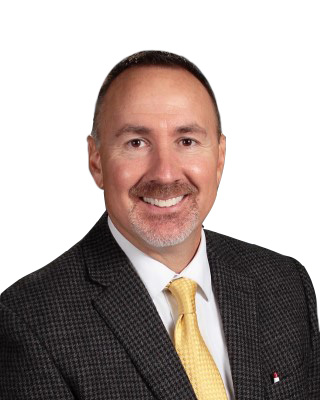
Merlyn Johnson is the superintendent of the Cassville school district. He may be reached at [email protected].