Small school, big impact
Purdy Care to Learn makes leaps and bounds in second year
By Kyle Troutman [email protected]
Purdy Care to Learn leaders say the district’s chapter, now in its second year. has grown from an idea to a fully functional, district-wide safety net for students — expanding its space, services and impact.
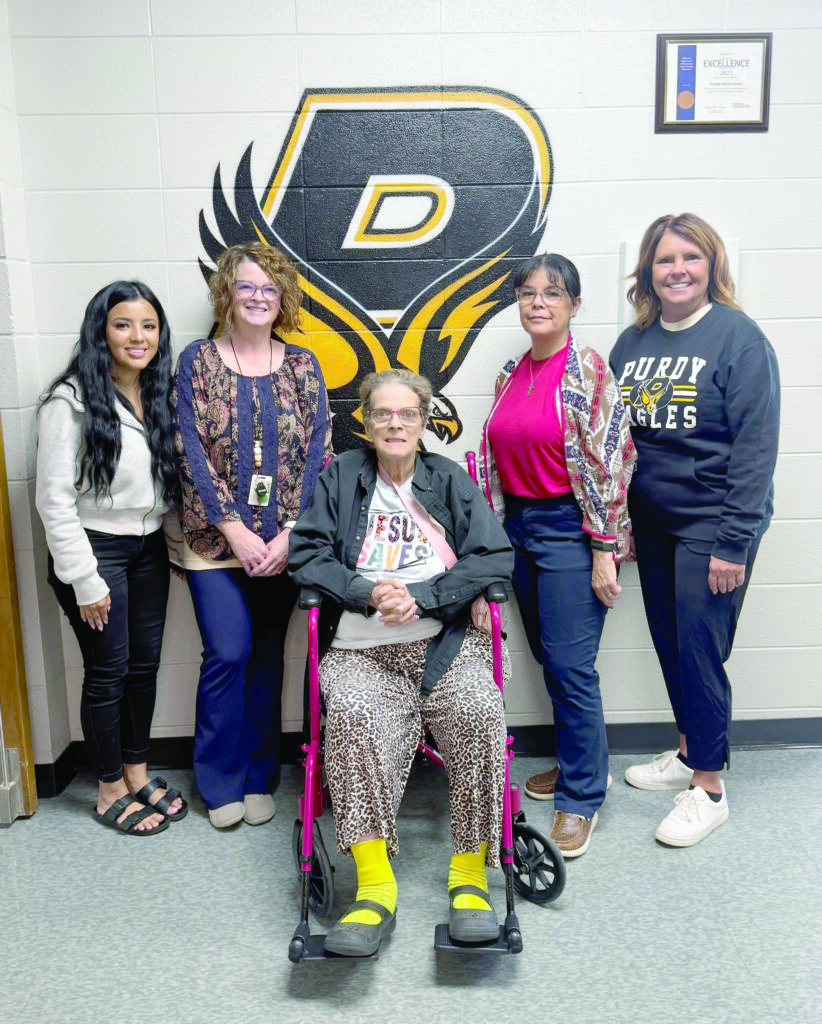
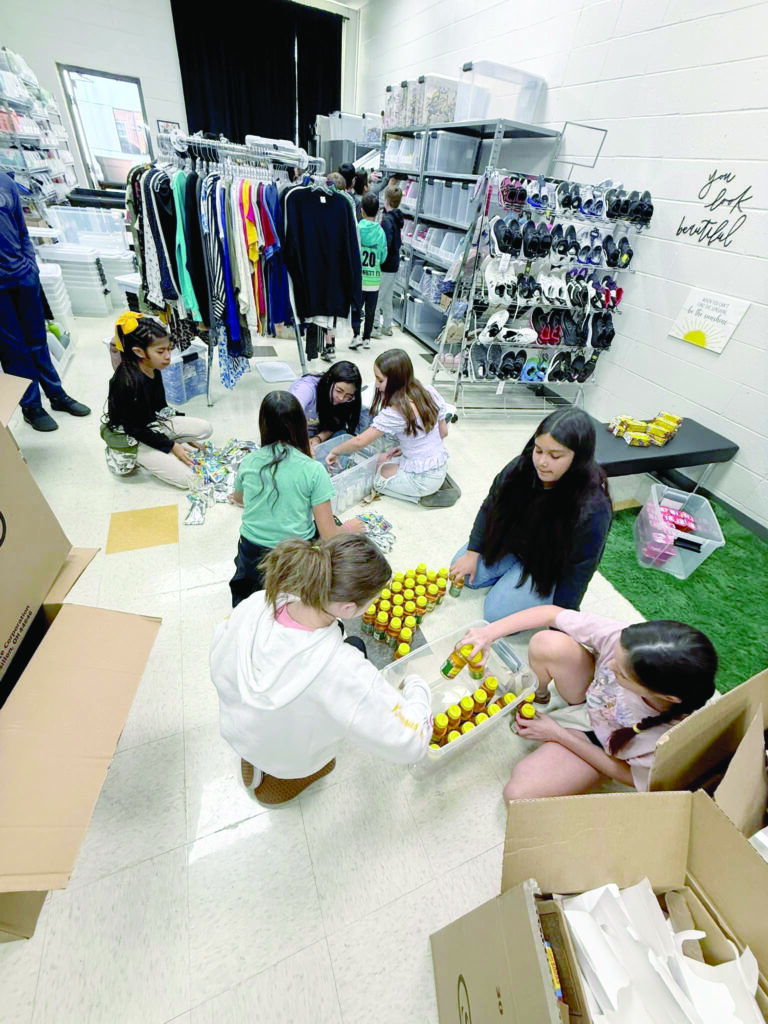
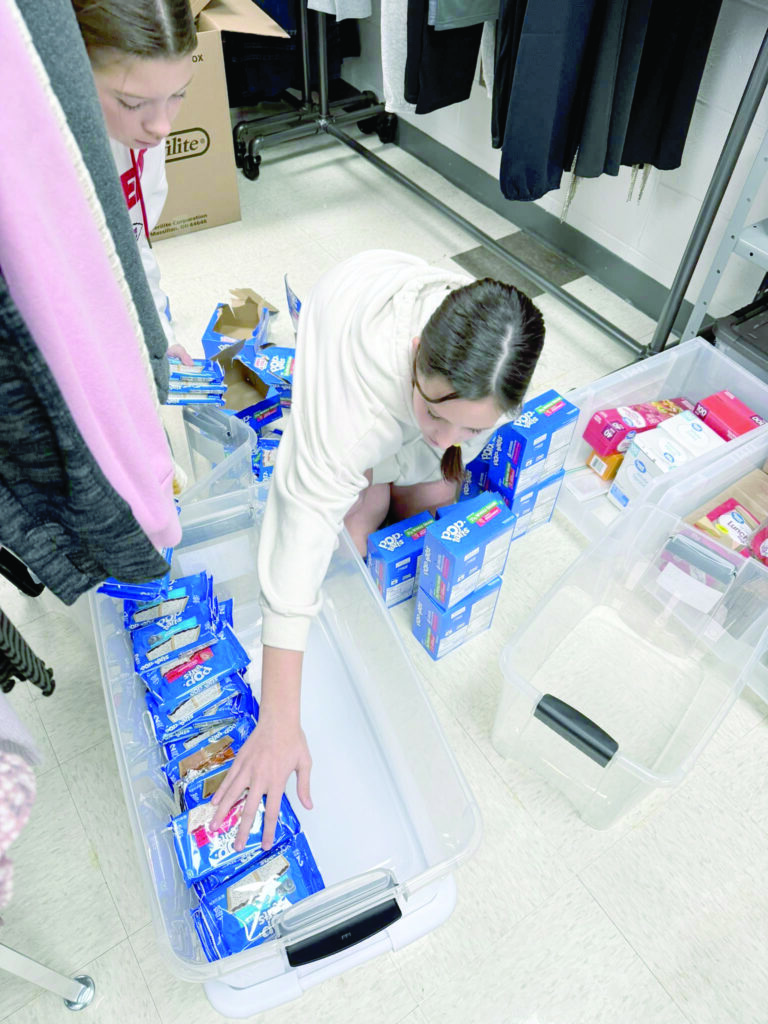
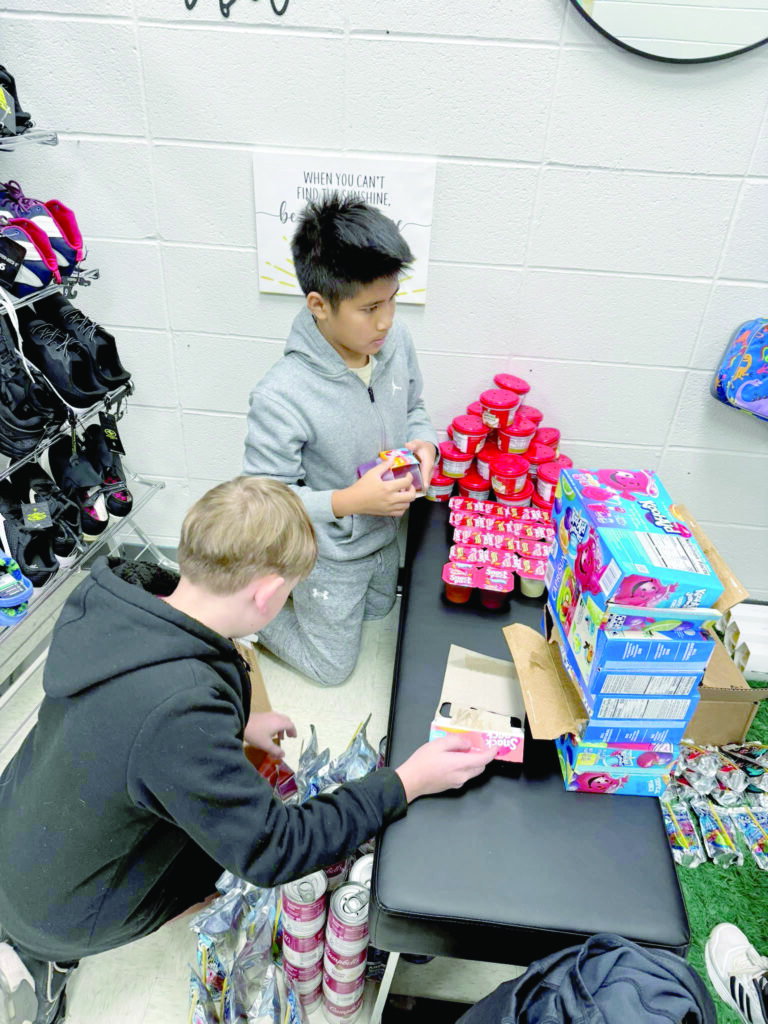
Charity Rakoski, elementary school counselor, said the program’s biggest leap came when administrators dedicated a full classroom to the effort.
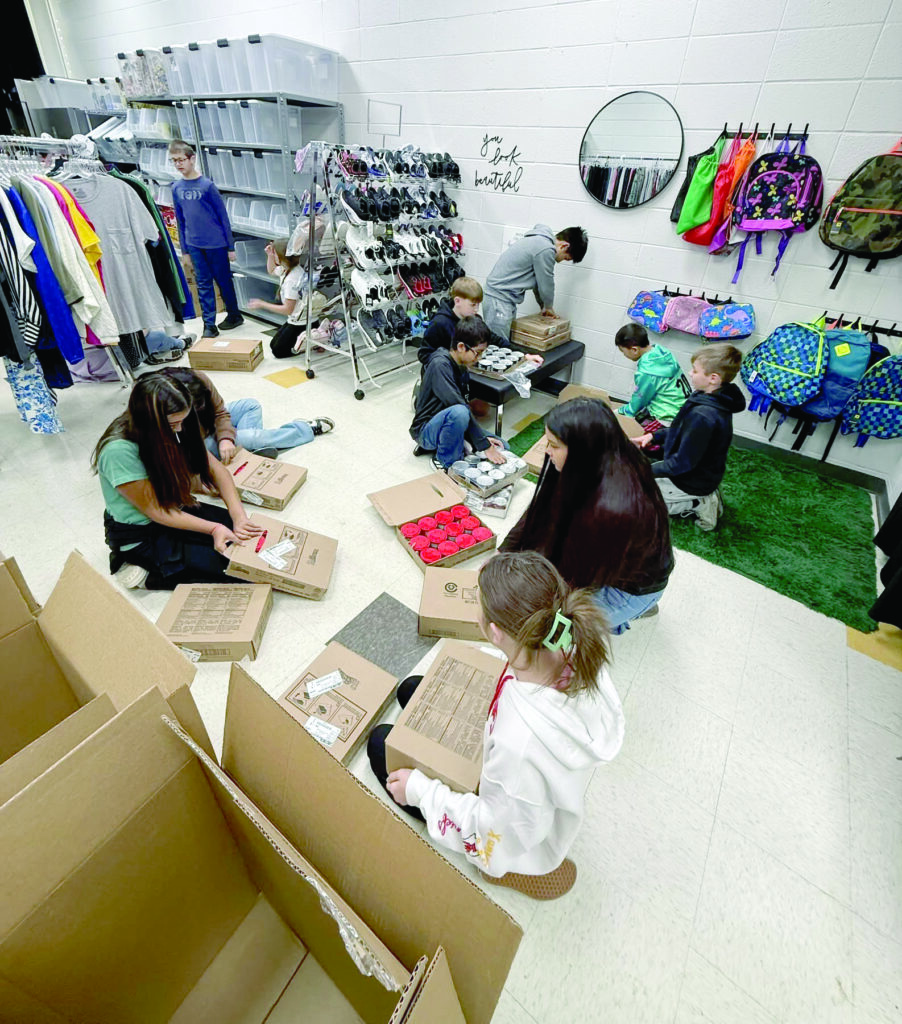
“We started with our idea of wanting to create a resource room that was on campus so we wouldn’t have to go and get things to meet kids’ needs,” she said. “We have the best administrative support for our program. Many schools just have a closet, but our admin gave us an entire classroom, so we went from an empty classroom to a combined clothing closet, food pantry and hygiene closet — fully functional, up and running.”
New facilities, immediate support
Along with the dedicated room, the district recently completed a major renovation of the nurse’s office.
“We also now have a washer and dryer,” said Lisa Essley, ELL teacher. “They paid to remodel the nurse’s office and offer more services for our kids with a shower, washer and dryer. It’s really nice. That was probably our biggest project that we’ve done.”
Rakoski said services continue to grow beyond the daily needs met on campus.
“We’ve expanded our backpack food bag program, and we have the opportunity coming up where we are going to be providing meals for those families over Christmas break that will sustain them the whole Christmas break, plus a holiday meal.”
Essley said the chapter has also addressed health needs.
“We’ve also purchased glasses for students who were in much need, and dental services,” she said.
Julie Dalton, Pre-K-8 principal, said these interventions have had visible academic results.
“You have students that are struggling to read in the classroom or pay attention because they cannot see,” she said. “For us to be able to provide that for them, they’ve improved in the classroom. They have more confidence. It just makes the educational setting more welcoming and supportive.”
Meeting needs in private, urgent moments
Amy Harkey, High school FACS teacher, said immediate access to the room helped a student whose family was facing hardship.
“On the high school side, we have students whose families have been impacted by a family member being deported,” she said. “This student is a member of a very proud family with many siblings. I took that student down to the Care to Learn room, and I gave her a box, and I said, ‘I want you to get food for your family.’”
Harkey said the student, who routinely cooks for the large family, initially hesitated, asking only for basic items.
“[The student] wouldn’t take anything extra, and seeing that initial stress of the unknown, I told [the student], ‘We’ll go down here daily if we need to, and you get what you need for your family,” she said. “That’s big because to be able to just take her and for her to know that’s there — it wasn’t embarrassing.”
She said similar moments happen with younger students as well.
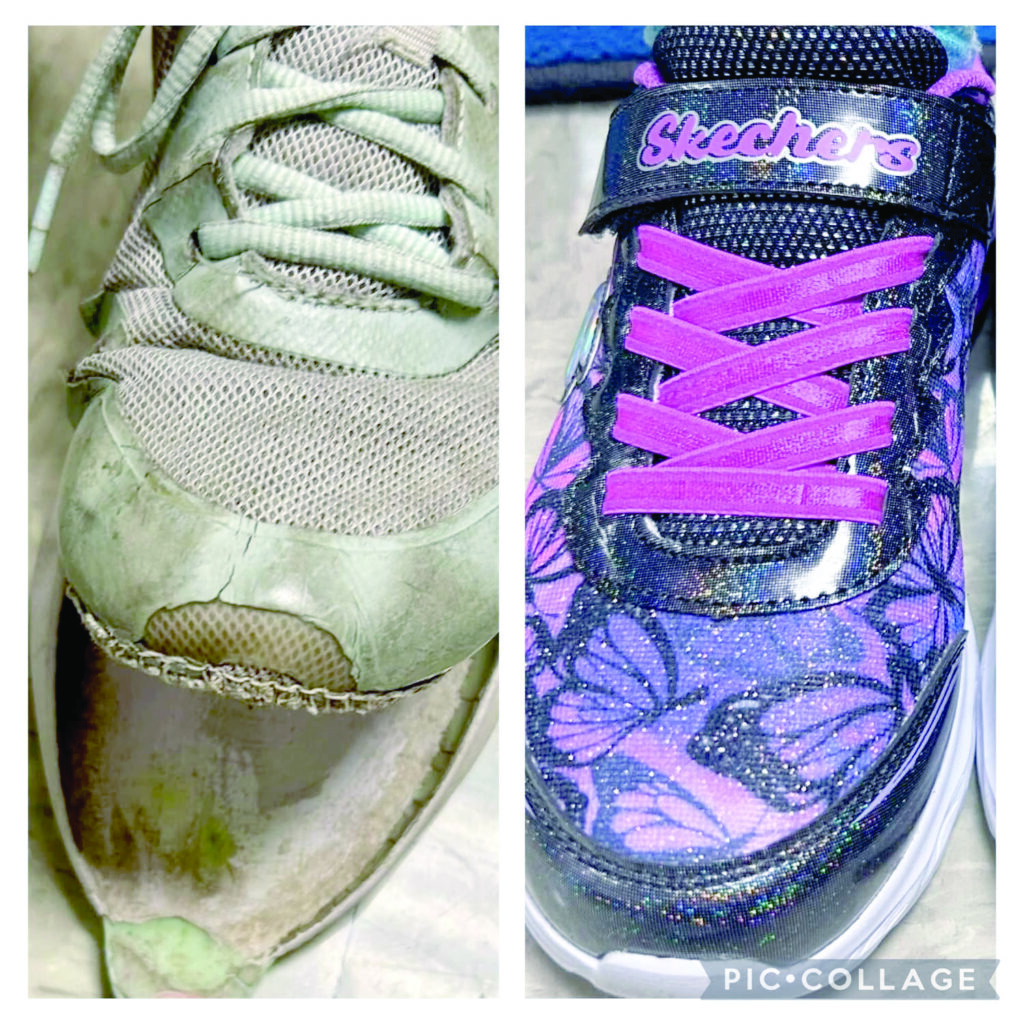
“One student needed a new pair of shoes, and she saw all the new shoes that we have and put them on, and she was just like, ‘I love these’,” Harkey said. “Just to see that, especially when we’re talking about kids that probably get a lot of hand-me-downs, to get something new and that they like is big.”
Harkey said the program has also supplied items that help students participate fully in activities.
“We’ve provided things for like volleyball shoes, sports bras, leggings, whatever they’re needing, so they can feel a part of the program and everyone is equal,” she said.
Rakoski said the joy students show is unmistakable.
“The looks on their faces; it is the sweetest thing to take them into that room,” she said. “Their eyes just light up and they’re like, ‘We can pick it out.’ And we say, ‘Yeah!’”
Essley said new clothing has been especially meaningful.
“They see the tag, and they’re like, ‘Nobody else has worn this?’ she said. “We say, ‘No, it’s for you. It’s brand new. I think that makes a difference.”
Lindsey Hernandez, high school counselor, said the impact she has seen cannot be understated.
“The growth of Care to Learn in our district has been incredible,” she said. “We started with very little resources on-site to support our students.
Having on-site resources such as food, hygiene items, clothing, even a place to shower and wash clothes, has allowed us to care for students immediately and with dignity. It’s made a real difference in their daily lives and their ability to learn. The growth of this program has truly changed what we’re able to provide for our kids.”
Health, hygiene and hunger — met
immediately
District Nurse Sarai Salazar said having the washer, dryer and shower has changed what she can provide.
“It has impact, a big one in our school,” she said. “Just having a washer and dryer, we can actually take care of our kids. It is awesome.”
While uses for the shower are still being determined, Salazar said the washer and dryer, a single unit that performs both tasks, is run every school day. Salazar added the clothing, food and hygiene room helps with everything from ruined coats to broken shoes.
“Yesterday we had a little boy that his little shoes were like falling apart,” she said. “To be able to just go grab a pair of shoes and give it to him, it’s just great. Sometimes, I have kids come in and say, ‘I didn’t have any breakfast,’ and just be able to give them something has made a difference for our school — a big difference.”
Essley said needs can be large or small.
“It can be anything small, from chapstick to eyeglass cleaner or pimple pouches,” she said. “Or bigger items like new shoes or warm coats, and it’s for any student.”
Rakoski said immediacy is what makes the program effective.
“Usually, if we don’t have what they need, someone goes to the store that day,” she said.
Essley echoed that idea.
“The best thing about the program is to be able to fill the gaps and quickly,” she said.
Rakoski said demand for small items has grown as teachers learn what is available.
“We asked teachers if they wanted an emergency snack bag for their classroom, and many are responding that they did,” she said. “Teachers used to have it in their rooms and give it out, but then it comes out of their pay. It’s been really nice to say to teachers, ‘Do not spend your own money; let us know what your needs are.”
Students pitch in
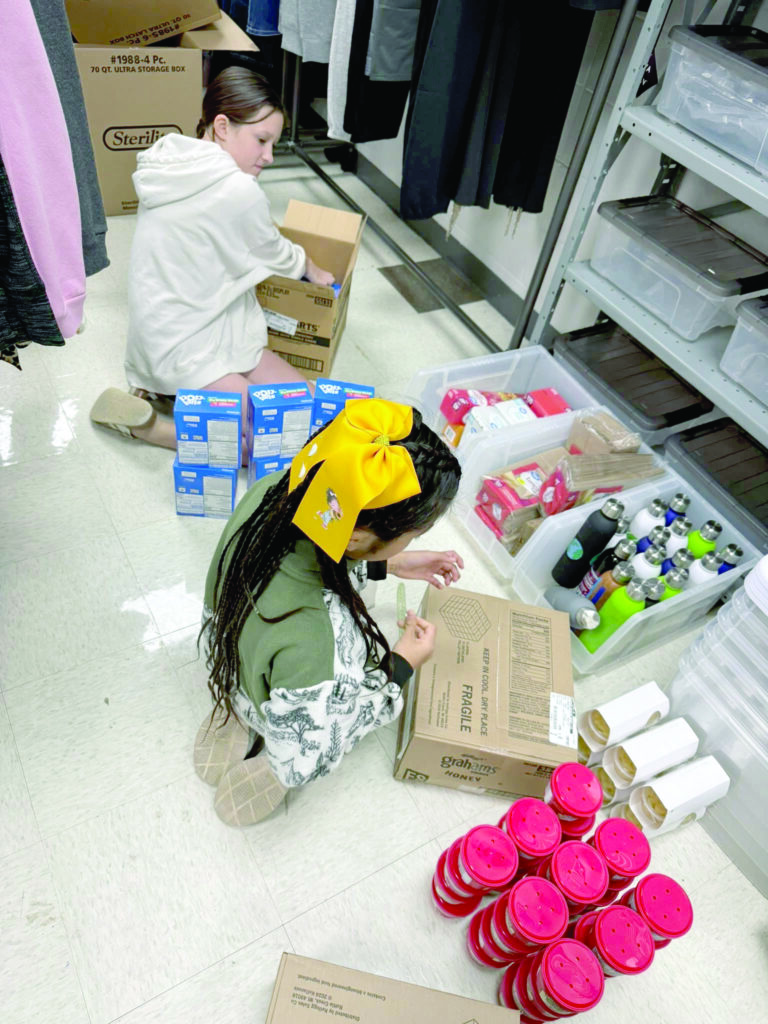
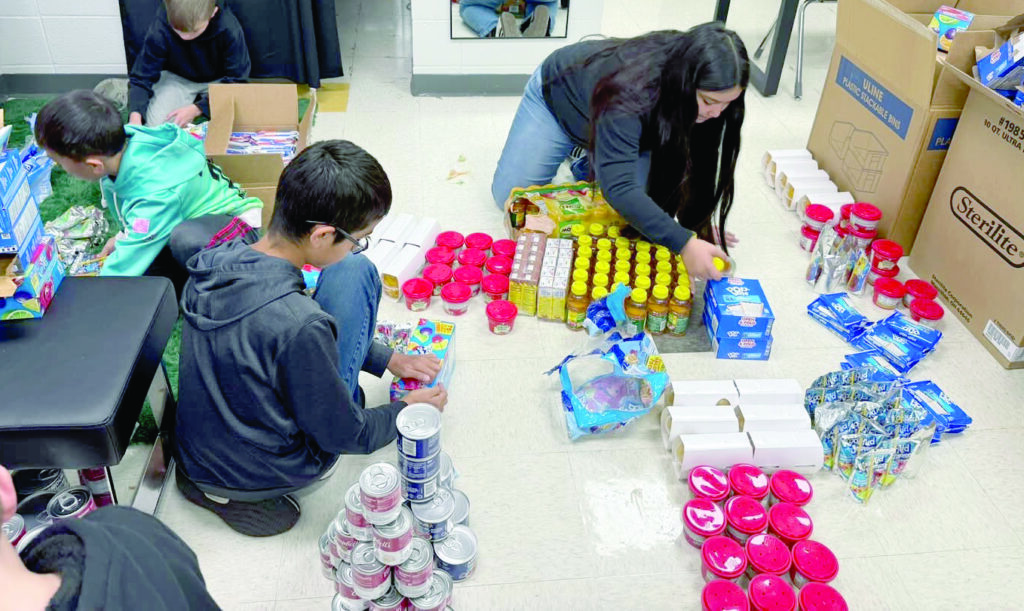
Harkey said students also embraced helping stock the room after a district-wide food drive.
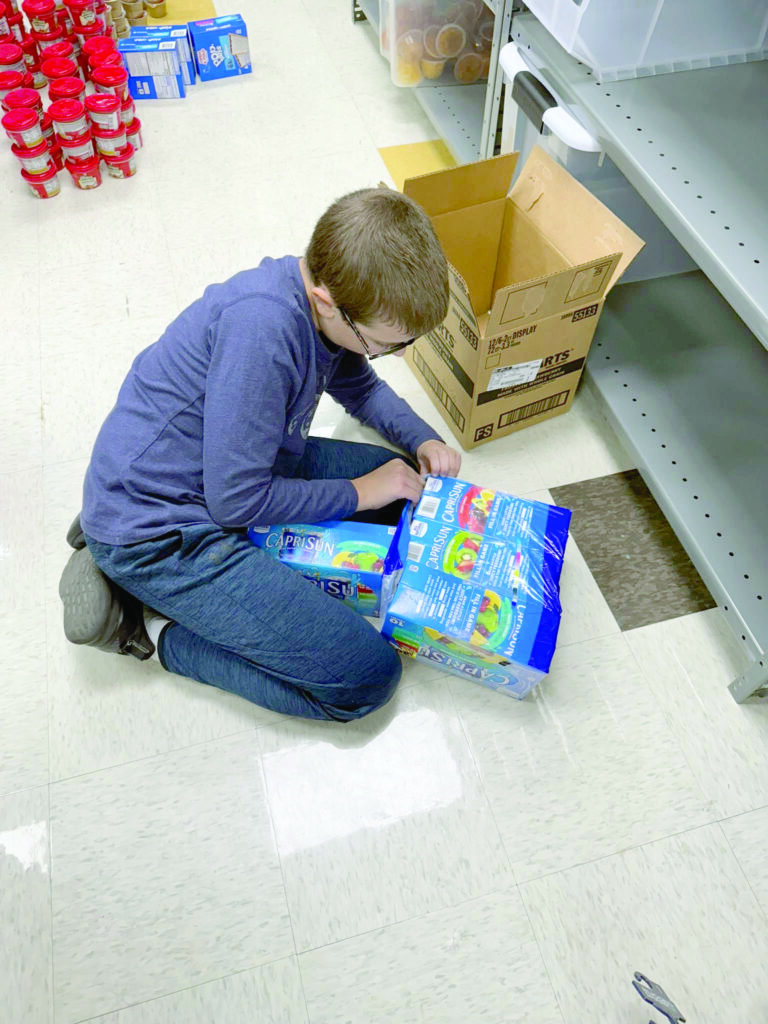
“When they walked in the door, there was a look on their faces and they asked, ‘We have this? This is so nice,’” she said. “They were so excited to sort the food and put together meal boxes, and they were like, ‘When can we do this again?’”
Rakoski saw the same response from her sixth-graders.
“They hadn’t even heard of it, and I kind of told them what it was, and they unloaded every single box of groceries,” she said. “They loved it, and I think that’s good for kids to understand that not everybody’s home looks the same — not everybody’s needs are met in the same way.”
Harkey said even teens who can seem reluctant to work showed enthusiasm.
“It surprised me when we walked in there — it was like they got excited about it,” she said.
Growing donations and community
support
Essley said the chapter has seen broad community backing.
“We have gotten many donations, some anonymous, and some in memory of people who have graduated from Purdy or worked at Purdy,” she said.
Rakoski said one meaningful gift came just before the holidays.
“Brenda Williams, [who worked at the Purdy district for 21 years], made a $5,000 donation,” she said. “She was able to come to the school and meet everybody she was very well loved. She made the donation before she passed [on Nov. 29 after a battle with cancer].”
Essley said that support championed by Williams has continued.
“Now we have people making donations in memory of her, because that’s what she had asked,” she said.
Rakoski said Giving Tuesday brought additional unexpected help.
“Someone made a $500 donation in honor or memory of Brenda,” she said. “A lot of our funds raised the first year were through fund matching. We received fund matching up to $30,000 the first year.”
Harkey noted while teachers’ spending specifically in their classrooms may be less, staff support for Care to Learn remains strong.
“We have between 70-75% of our staff that have either given a one-time donation or payroll deduction each month for the year,” she said.
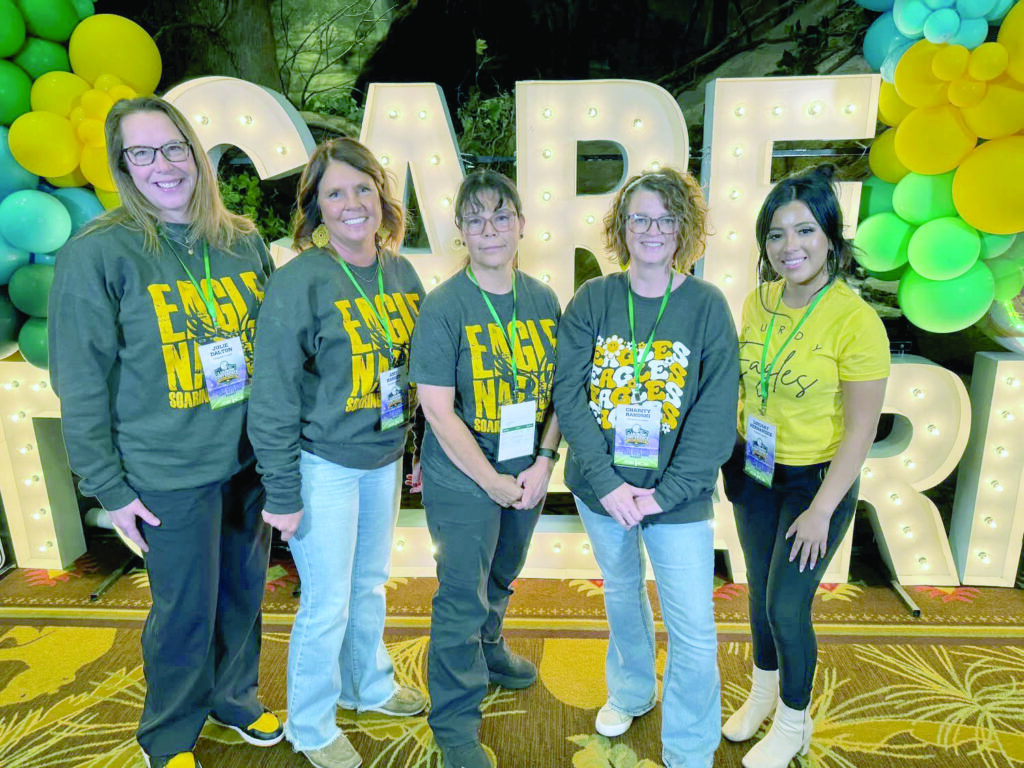
For its efforts the chapter also earned recognition from the Care to Learn organization, receiving the Enthusiasm Award for diligence and contagious excitement promoting Care to Learn core values.
Rakoski said the Missouri Department of Elementary and Secondary Education also offers a reimbursement program, which has been crucial for Purdy.
“As long as we provide proper documentation, DESE will reimburse us for those expenses,” she said. “Talk about taking the financial strain off of a small district, that’s been fantastic.”
Widespread reach
Harkey estimated nearly one out of every five Purdy students have benefitted from Care to Learn in one fashion or another.
“I would say 10-20% — that’d be 60 to 120 kids — and it’s probably closer to 20%, honestly,” she said.
Rakoski said the chapter has helped address unusual challenges as well.
“We’ve met some unique needs,” she said. “We have sprayed some homes for pests, and we bought a hot water heater. We gave out food bags during summer school as well.”
Rakoski said the chapter plans to keep expanding, as well as maintaining its support.
“We’ve come a long way, but part of the agreement with Care to Learn is that we continue to fundraise,” she said. “We have a responsibility, and we’ll continue putting fundraisers out there and asking for donations from the community.”