Staff View — Sheila Harris: Lying together
Although my family moved here from Iowa when I was 12 years old, I’m not a native of the Ozarks.
Maybe that’s why I didn’t learn of this area’s violent Civil War history until fairly recently. Local history wasn’t taught in the public schools I attended, either here or in Iowa, and, to my own shame, I didn’t take the time to educate myself during the years after I moved to Missouri.
That’s why my first visit to the George Washington Carver National Monument, in 2019, caught me off-guard. For the first time, I became acutely aware of the Civil War’s devastating impact on southwest Missouri. Union and Confederate troops clashed in Missouri, at Carthage, on July 5, 1861, less than three months after Confederate troops fired on Fort Sumter and triggered the saddest conflict in US history on American soil.
My visit to the G.W. Carver Museum taught me that the Missouri/Arkansas border had been a hotbed of strife during the Civil War — right here. Right where I’d been living for almost 50 years.
The Civil War, although long past, was not an abstract concept for residents who could trace their lineage back to the founding of Barry County, whose families had passed down stories of atrocities from the past.
I came home from the G.W. Carver Museum determined to learn more.
A naïve question led me, first, to a few historic Barry County cemeteries, where I wondered if I’d find the graves of any Confederate soldiers. A more valid question, I learned, would be whether there’s any cemetery in Barry County that isn’t the final resting place of both Union and Confederate soldiers.
After tromping around multiple cemeteries, a pastime I enjoy (after the snakes and ticks go into hibernation), I discovered Rootsweb.com. Donna Cooper and her crew have done some incredible work documenting the names — and even tidbits of the history — of every single person buried in every cemetery in Barry County (up to a point, I suspect) on the website. When I discovered Rootsweb, my search became much easier.
With my original question laid to rest, a friend gave me impetus for another search: This one more challenging. Where were Barry County’s slaves buried? Where are they buried? I had to know.
In the telling of local history, slavery is not often touched on. For good reason, for a while, I’m sure.
But here we are, 161 years past the Civil War. Has enough time passed, do you think, to acknowledge the part that enslaved people played in the formation of Barry County? Can we accept our own history as it was, by now, without feeling the need to whitewash the past?
According to census records on file with the Missouri Secretary of State’s office, Barry County had a total population of 7,995 residents in 1860. Of those, 247 residents — about 3% — were enslaved. Not many compared to areas of the state along the Missouri and Mississippi rivers, but comparison is irrelevant when people are held against their will.
Some 56 households in Barry County owned slaves in 1860. The majority of slaveholders owned a single enslaved person, but a handful kept anywhere from 9-22 people as property.
Because owners of slaves, especially multiple slaves, had to be able to feed and clothe those who were under their care, they were members of the wealthiest families in Barry County — our city-founders and county office-holders.
I’ve since discovered the graves of many former slaves in a few Barry County cemeteries. Perhaps the most unique is the Washburn Prairie Cemetery, where I’ve heard two different versions of the rationale for the slaves’ distinctive grave-markers, which have long outlasted the tombstones of the city fathers — an irony that can’t be overlooked.
Barry County cemeteries teach their own lessons, if we’re willing to learn from them. In the end, the color of our skin and our uniforms will be lost to the graves we’re destined to inhabit alongside those we disdained in life.
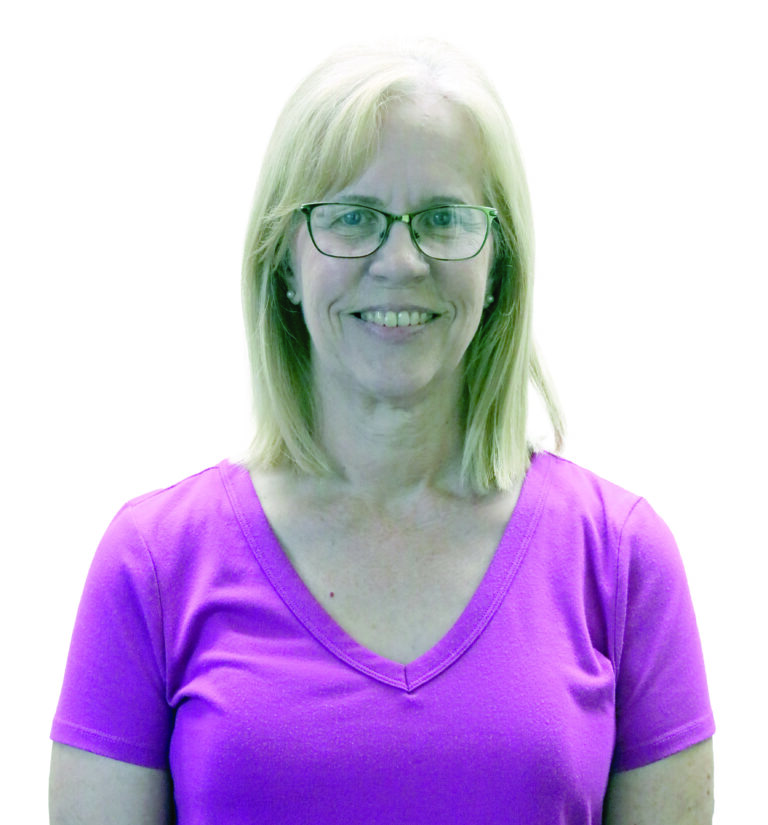
Sheila Harris is a long-time Barry County resident and a sales executive and investigative reporter for the Cassville Democrat with a particular interest in environmental topics. She may be reached at [email protected].