Community Voices — Lynn Hilburn: Early settlers that made Barry County
We’re finally going to get around to talking talk about some of the people/the earliest inhabitants and settlers of the area that made Barry County what it is today.
Many think that history is boring and why should we be bothered with going over something that is well past. But others feel as I do, that we need to be a student of history so that in the future we don’t make the same mistakes, so that we create a better country and a better environment in which to live.
What I am trying to do in my editorial segments about the history of Cassville and Barry County is to present why things are named what they are, why some things are the size that they are, information about things that have influenced people or events in Barry County and tidbits of information about some of our historical characters and about unique things that have happened in Barry County.
Much of the information that I will be using came from these major sources ”Goodspeed’s 1888 History of Barry County,” the book “Early Barry County,” published in 1965 by the original Barry County Historical Society (Compiled primarily by Addah Matthews, Historian), “The First 150 Years in Cassville Missouri,” by Barry County’s own Emory Melton, Dennis Epperly’s book “Rural Schools in the Ozarks,” with information, tidbits, stories, family histories and ‘gossip” from the “Ancestors Unlimited” Quarterlies published by the Barry County Genealogical and Historical Society and from 160 years of my own family’s history in Barry county.
Before I start talking about the early settlers and individuals and families, I want to spend just a little more time on the history of the place called Barry County. Barry County, the southwest corner of Missouri, the state of Missouri and, of course, the whole Louisiana Purchase have a great deal to do with the size and shape of the present-day United States. If Napoleon Bonaparte had not needed money to help him fight the war for the control of most of Europe, then he and the French would never have sold the Louisiana Purchase to America, and western edge of the United States may have ended at the Mississippi River, and we here in Barry County may have been speaking French today.
Going back even farther, there had been signs that there was inhabitation of this area by Indians or others as far back as 6,000 years ago. When the Spanish and French explorers came into this area in the early 1700s, the primary inhabitants of the area were generally peaceful Osage Indians, and maybe a few Delaware Indians. Speaking of the Osage Indians, did you know that there was a relationship between the FBI and the Osage Indians.
As the Osage Indians were pushed out of Missouri and even out of Kansas down into Oklahoma, something unique occurred. Most of the Osage wound up settling in the northern part of Oklahoma, around Pawhuska, Oklahoma. In the 1890s, oil was found in this area. Any Osage who had their names on the Roles became relatively well off. Some unscrupulous white men arranged for their young male relatives to marry Osage women, then the women and some of their family members would disappear, and therefore the surviving husbands became the heirs to more oil money. Actually, tribal leaders believed they were murdered and asked the government for some assistance. The United States sent in some federal police to investigate the situation. Needing a name for this group of lawmen, since they were operating not on American soil (at the time Pawhuska was “Indian Territory”), they called them the Federal Bureau of Investigation (the FBI). The left handed conclusion, some of the former residents of Barry County had a hand in creating the FBI. Isn’t history amazing?
Getting back to the land that we know as Barry County. It was at one time part of three other counties or districts. At the time of statehood for Missouri in 1821, Barry County was part of what was called the New Madrid District, which was generally the south 1/6 of Missouri and ran all the way from the Mississippi River to the western border of the State. Then the western portion of it was divided off and called Crawford County. In 1833 Crawford was divided and the area was part of Greene County.
It was in 1835 the area finally became known as Barry County, which included the territory now constituting the counties of Barry, Newton, Lawrence, Jasper, McDonald, Barton and Dade, and part of Cedar County. The county seat was in Mount Pleasant, which was approximately two miles west of Pierce City. In 1838 the State decided Barry County was too big, so the West 30 miles (+/-) of Barry County became Newton County, and the county seat was moved to McDonald or McDowell.
In 1845 the state of Missouri thought that Barry County was still too big (remember they tried to make counties small enough so families with a buckboard and a team of horses could get to the county seat and back in one long day), so they cut off most of what today is Stone County on the East and Lawrence County on the north, creating our, almost square, 790 square mile County of Barry. They needed a new county seat so they picked the home of William Kerr, which was located close to Flat Creek, near the center of the county (about where the old LeCompte Lumber Company was located). John O Bertram had a house at the old Crystal Springs Trout Farm just north of present city limits of Cassville, but it was located in a floodable area. The Kerr house was closer to the center of the County, and it was sitting on a knob well above the Creek.
As far as I can determine, Edmund Jennings was the first white American to actually stay for a while in southwest Missouri in 1817. He hunted and trapped with the Indians and even dressed like them. When he went back to Tennessee, he referred to the area as the Country of Six Boils, meaning Big Springs. In 1818 and 1819, Henry Schoolcraft, a geologist looking for lead and other minerals, and Levi Pettibone, his companion walked from Potosi, MO down to James River and White River in southwest Missouri. At the time, there were very few others, except trappers and possibly outlaws.
In 1828, Samuel Washburn was the first settler on what was later to be known as Washburn Prairie. He lived with his family there until the early 1830s and established the small community known as Washburn. He then took his family to Texas looking for more land, more “free” land (Remember in Missouri the land cost between $1.00 and $1.25 per acre – In Texas the land was free, if you came and fought with Sam Houston). While the Washburns were gone, the community went through two name changes, but after they returned following the Civil War, the community again became Washburn.
Population information: Barry County did not yet exist in 1820 – Population consisted of probably two or three white men and a few hundred Osage Indians. Barry County still did not exist in 1830 – It was counted as part of Greene County, Missouri Territory – Estimated population 1100 to 1200 settlers.
In my next editorial message, I will actually get down to talking about Littleberry Mason, Price McMurtry, the LeComptes, the Pharises, the McClures, the Baylesses, the Sparkmans, the McConnells, the Varners, the Weathers, the Stubblefields and many others.
Please, keep reading history.
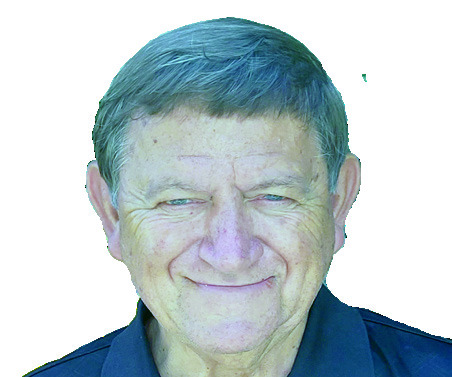
Lynn Hilburn is an officer in the Barry County Genealogical and Historical Society, and invites all to come and join meetings, to provide information about their families or to look up information about their families. Hilburn may be reached at [email protected].