Daffodils from the heart
475 different cultivars of daffodils included in Purdy project
By Sheila Harris [email protected]
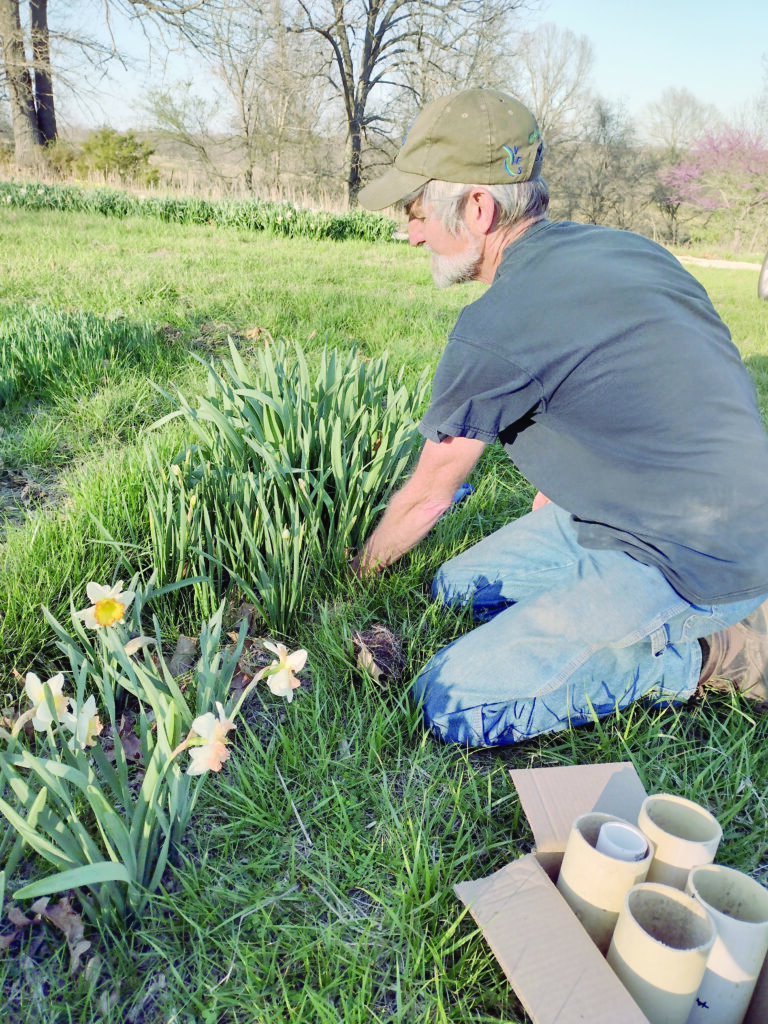
Everything’s coming up daffodils on a farm north of McDowell and on a plot of land in Purdy — the result of a cooperative effort by Barry County resident, Gerry Wass, and a handful of young gardeners from the Purdy area.
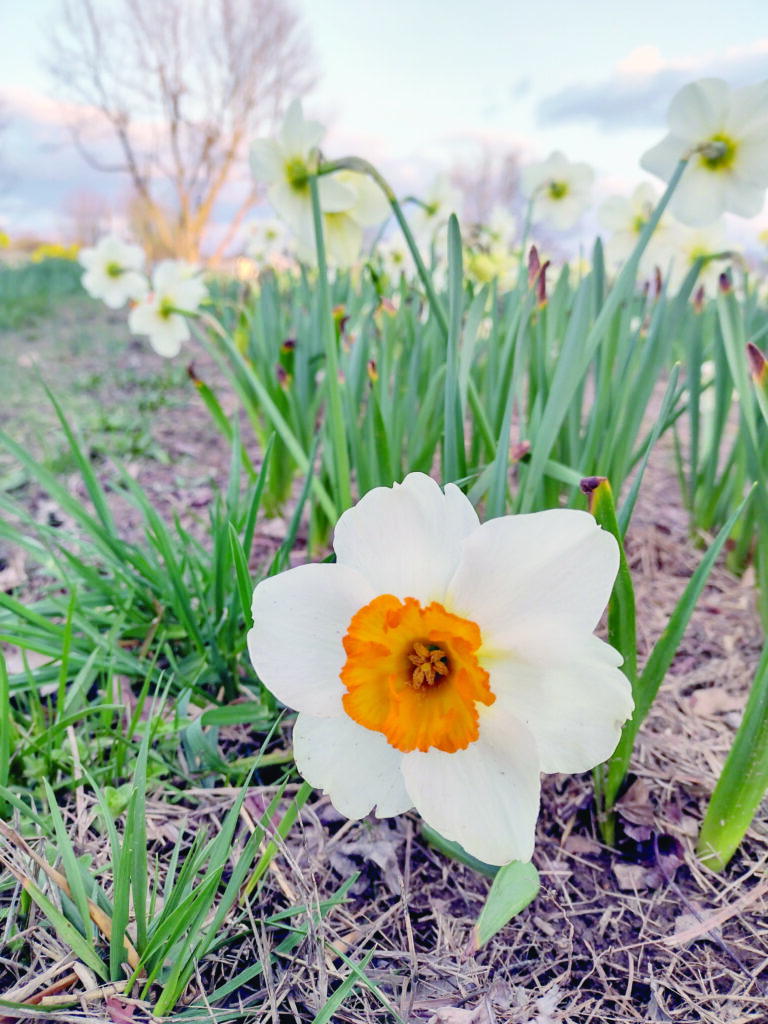
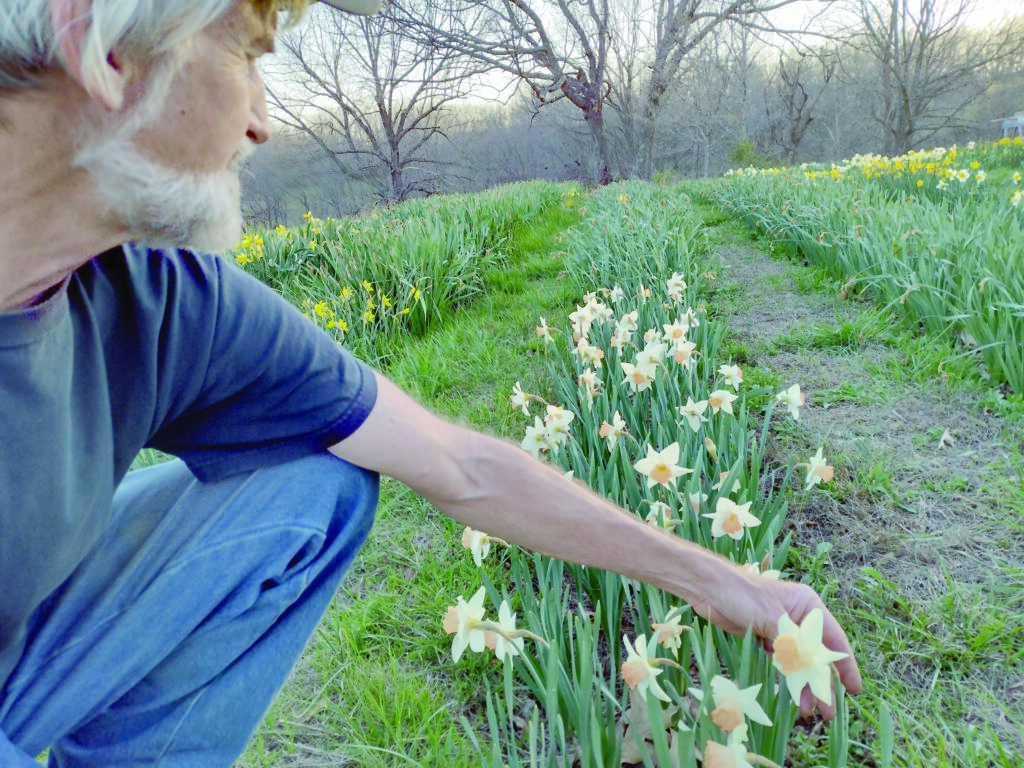
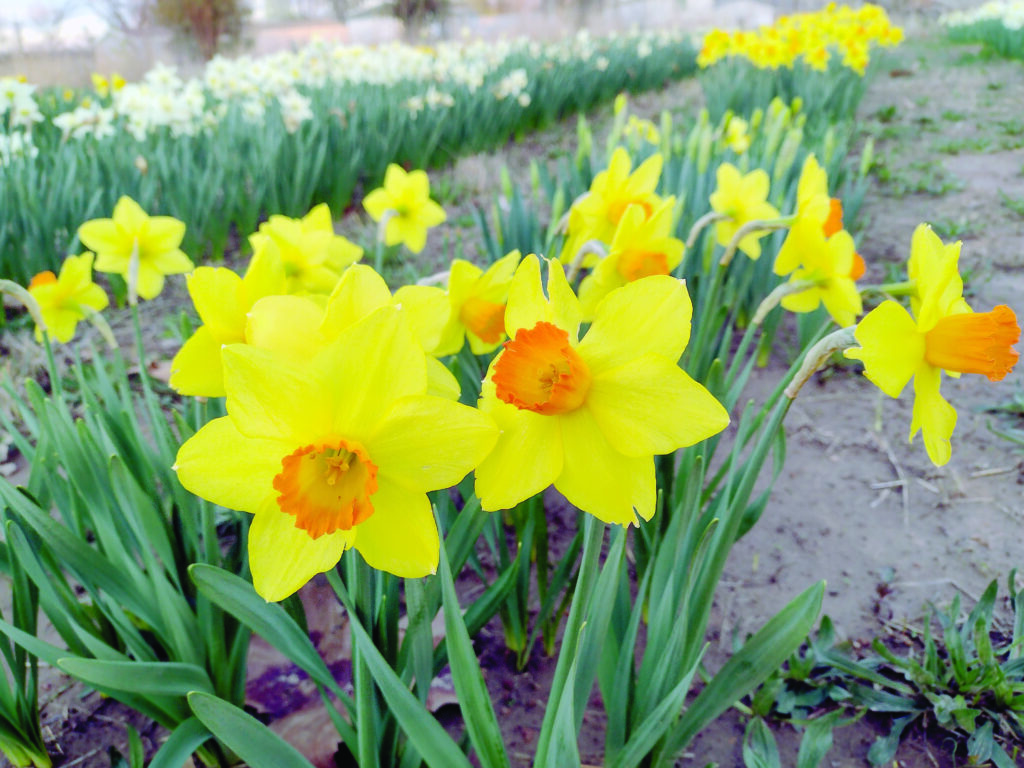
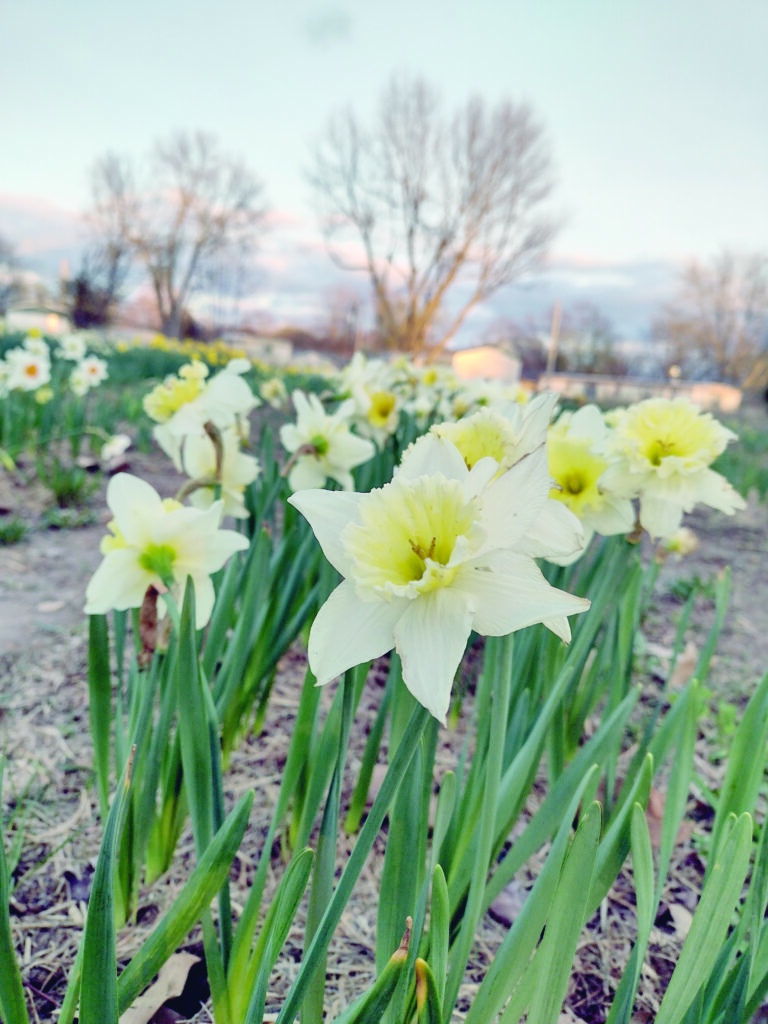
Unseasonably early spring temperatures, recently brought forth a spectacular, blooming show of the 475 different cultivars of daffodils planted by the cooperative on a two-year, rotating basis.
For Wass, raising daffodils is a labor of love, one that reconnects him with his childhood and teen years in Gloucester, Va., where he worked for The Daffodil Mart, a 28-acre flowering paradise near the Chesapeake Bay.
“I started working for Brent Heath and his mother (then-owners of the business), when I was 12 years old,” Wass said. “I liked it so much, and it was such a great part-time job for a school kid, that I worked there until I graduated from high school.”
After Heath married a woman named Becky, the name of the business changed, in later years, to Brent and Becky’s Bulbs. Along with the name change, the business grew to include not only daffodil bulbs, but a wide array of flowering bulbs of almost any variety a person could ask for.
Due to his early exposure, daffodils have long held a soft spot in Wass’s heart. They’ve also provided an endless source of fascination. When he was young, the Royal Horticultural Society’s Book of Registered Daffodils was his go-to choice of reading material.
“I studied it on work breaks and carried it around with me into the fields,” Wass said.
The book, a standard for research among growers, lists breeds of daffodils that date back to the 1800s – most grown in The Netherlands and the British Isles, Wass said.
“They’re all descended from wild species grown in southern Europe and across the Mediterranean region,” he said.
After his high school graduation, college and career took Wass far from Virginia, but the seeds implanted at The Daffodil Mart remained rooted in his heart, where they recently sprouted with spectacular results.
Even though Wass retired 10 years ago as a Spanish teacher at Purdy High School, he wasn’t ready to put his feet up.
During his teaching years, Wass and his students initiated the Purdy Recycling Project, designed to involve willing students and area adults in a joint project for the betterment of the community. The recycling project is a continuing effort, one that recently marked its 20th year.
“In its heyday, the recycling center made good money for the Purdy High School Spanish Club,” Wass said.
Last year, the recycling project, for the first time, achieved the ability (through a legal worker’s cooperative) to pay small dividends to young members in renumeration for a portion of the labor they donated.
Then, Wass said, prices paid for recycled materials dropped.
Undaunted, Wass began looking for new ways to involve community members in the paying cooperative project.
“We had pondered an agricultural project for years,” Wass said. “And, we even tried a gardening project that failed.”
Then, one day in 2018, while tending the river of daffodils he’d planted down the sloping lawn in front of his and his wife Neal’s home north of McDowell, Wass discovered a “sport” – a natural mutation – of a common daffodil that mystified him.
“By 2018, I’d grown tired of trying to plant and raise daffodils in rocky soil for our personal enjoyment, even though I still loved them,” Wass said. “Finding that sport invigorated me, gave me a new direction.”
The following year, Wass decided to begin converting his and Neal’s river of flowers into straight rows (yes, digging and replanting was involved) and call his field a “daffodil farm.” He single-handedly planted one row that year, and two the next.
“In 2022, I hired some willing students to help me,” he said. “Somewhere during that time, I realized that I could become a collector of the daffodil bulbs that Brent and Becky Heath had hybridized — a keeper of their legacy.
“When Brent learned that I wanted to preserve their business’s legacy, and saw evidence that the bulbs I’d planted were growing well, he and I started talking about what it would take for me to grow for them, and to get Brent and Becky’s own bulbs back on the market, because many of them were no longer commercially available.”
With hired student labor lined up, Wass was prepared to begin his daffodil experiment on his and Neal’s front lawn. Between 2022 and 2025, he made four trips to Virginia to dig many of Brent and Becky’s bulbs from their collection to replant in southwest Missouri, to study their growth and to talk to workers about raising daffodils for the co-op.
By 2025, Wass and Brent Heath were ready to share their idea with Becky Heath and her son and daughter-in-law, who are now partners in the flowering bulb operation. When they all met with Wass and listened to his plan for the preservation and promotion of their heirloom daffodil bulbs, Wass was given the go-ahead, and Becky stressed the importance of moving forward in time to promote the bulbs for the business’s 125th anniversary in 2025.
From the one row of daffodils Wass replanted in 2019, the Wass daffodil farm is now home to 21 rows, each 60-foot long, Wass said. A rented, formerly-fallow plot of land in Purdy plays host to another 11 rows, each 80 feet in length.
Each row is planted with separate, carefully-labeled sections of some 475 different cultivars of daffodils.
“Labeling the sections and keeping the varieties apart is tricky, especially in the rocky soil,” said Wass, who is able to distinguish many, if not most, of the cultivars by sight.
In early Spring, when multi-hued daffodils burst forth in riotous color, Neal and Gerry enjoy the visual rewards of the cooperative’s fall planting while sipping their morning coffee.
Turning beauty into monetary remuneration, however, is a task that requires much time spent with a shovel and on one’s knees. Wass is thankful for the young cooperative participants who are willing to help with those endeavors.
“After the daffodils bloom, we leave the bulbs in the ground until May, when the leaves start to turn brown and die back,” Wass said. “Then, we dig those that have been in the ground for two years and allow them to dry in a climate-controlled environment until October.”
Wass has access to a storage building he uses for that purpose.
After the bulbs are dug, cleaned and inspected for quality, Becky Heath decides which, and how many, bulbs she’d like to stock for prospective sales. The bulbs are then packaged and shipped to Virginia.
In the fall, the cycle begins again, when the bulbs held in storage are re-planted.
Among Wass’s current 475-cultivar collection are familiar names such as Barrett Browning, Ice Follies and Ceylon. He recently registered his own unique cultivar last year, a sport that he named ‘Consent.’
“In the 1960s, there were about 10,000 different types of daffodils,” Wass said. “Now there are over 32,000.”
As a collector, Wass has a soft spot for cultivars registered between 1890-1924 by Great Britain’s Reverend George Engleheart and the mysterious Sarah Backhouse, who developed many red-cupped varieties and the first pink daffodil.
Wass acquired many of the bulbs in his daffodil collection from The Greater St. Louis Daffodil Society, which hosts regular bulb exchanges.
All varieties of daffodils, Wass said, are members of the Narcissus family. Jonquils are a specific division of daffodils, while Easter Lilies and Lent Lilies are nicknames.
According to Wass, most of the daffodils spotted alongside country roads where old homesites once stood are the same variety: a cultivar that dates back to the Cherokee Nation.
“Spanish explorers first brought daffodil bulbs to the US, to trade with the Cherokee,” he said.
The bulbs spread from there.
Wass’s cooperative daffodil experiment is reaping dividends.
“We made more money selling bulbs last year than what the recycling center made by selling recycled materials,” Wass said.
The cooperative divided the money made from bulb sales among its members, with each member’s dividend based on the logged time they put into the project.
While Wass is pleased with the financial compensation the group received in return for their labor, Wass also gains satisfaction from watching another generation of young growers developing the love and know-how for gardening that he learned from his own mentors over 50 years ago.
No dollar amount can be attached to that type of lesson, he said.