Community Voices — Terry Held: It all began in Cassville: One poem, one voice, and the possibility of cultural change
It began with a poem.
Not a grand announcement. Not a ribbon cutting, a strategic plan, or a committee charged with improving the cultural landscape of southwest Missouri. Just a student standing before classmates, holding a few lines of poetry, perhaps wondering whether sharing something so personal was a good idea.
There is a particular kind of courage required to speak one’s own words aloud. Reading Shakespeare or Whitman is one thing. Reading something you have written yourself, something born of your own experience, imagination, and understanding of the world, is quite another.
You are no longer borrowing someone else’s voice. You are offering your own. And that is where this story begins.
In 2024, at Crowder College’s Cassville campus, a modest undertaking called Poetry Ain’t Dead began taking shape. Its premise was simple enough: encourage students to write poetry, share their work, and discover that their thoughts and experiences were worthy of being heard.
There was no elaborate blueprint for what might follow. No expectation that a classroom exercise could become something larger than the classroom itself. But something happened.
One voice encouraged another. A student who might never have considered writing poetry began experimenting with words. Someone who had written privately discovered an audience. Others began recognizing that the ordinary circumstances of their lives contained extraordinary possibilities for expression.
What began as an invitation became participation. Participation became connection. And connection began developing into something resembling a nascent cultural movement.
One poem had lit the tinder. One voice carried the tenor of a cultural pivot.
We often misunderstand how culture changes.
We imagine that meaningful change requires substantial resources, prominent leadership, or a carefully constructed institutional apparatus. Certainly, those things have their place. But culture is not merely something an organization declares in its mission statement or prints on a poster.
Culture lives in what people do, what they value, what they encourage, and what they make possible for one another. It is transmitted through relationships, shared experiences, and the quiet accumulation of individual decisions. Sometimes the most consequential decision is simply to say, “I have something to share.”
Consider what happens when that invitation is taken seriously. A student discovers that a poem can communicate what ordinary conversation cannot. Another discovers that listening is itself an act of participation. A teacher recognizes an unexpected talent. A community member encounters a perspective that might otherwise have remained invisible.
The significance is not necessarily the literary quality of the poem, although some of the writing has been remarkable. The significance is that someone has contributed something original to a community that is willing to receive it. That exchange creates something more durable than applause.
It creates belonging.
Today, Poetry Ain’t Dead reaches beyond its Cassville beginnings, inviting participation across Crowder College’s campuses and into the surrounding communities. Monthly poetry opportunities, public readings, student publications, and scholarship initiatives have grown from those early efforts.
The Soil/Water/Soul anthology gives student writing a permanence beyond the classroom. The book itself anchors student poetry as a cultural artifact…not forgotten, not lost in the vapor of time passing to the next, newest thing. Its debut this past week, generated continued interest and record poem entrants. The excitement the published book radiates gives the PAD movement greater momentum. It is available across the Crowder network and across the world via Amazon. To think i\the PAD movement began here in Cassville MO.
The Walt Whitman Scholarship is a natural outgrowth of the PAD movement, giving honor to one of America’s great poets. Whitman was an unknown too, his recognition and appreciation growing slowly but surely through the years. What a great model of cultural inclusion it lends to the PAD movement, connecting creative participation with educational opportunity. Each development opens another door through which someone may enter.
These are meaningful accomplishments, but I find myself increasingly interested in a different question. What changed in the culture that allowed these things to happen? Perhaps the answer begins with permission…
Permission to imagine. Permission to experiment. Permission to contribute something without knowing whether it will succeed. Permission to believe that a small idea, offered sincerely, might have value beyond its immediate circumstances. Permission from many people, listing here three notables; Sarah Smith, Director of Crowder Cassville, gave the initial green light to an experiment in the traditional trenches of academia. And proving innovation to be a great teacher. Richard Aspbill, Cassville City Manager, whose encouragement and guidance allowed PAD to receive a City Proclamation; “Cassville Community Poetry Day” and Mayor Jon Horner, whose own writing an inspiration. But also, a willing judge in our Open Mic Event.
I sometimes call these efforts, on the part of all, entrance and immersion in the immaculate imagination: the human capacity to envision possibilities before the practical world has determined whether they are feasible. It is not imagination divorced from responsibility. Quite the opposite. It is imagination placed in service to something beyond ourselves.
The greater good.
In rural communities, this capacity deserves particular attention. We are accustomed to discussing our limitations: population, funding, geography, declining enrollment, and the persistent migration of young people toward larger places. These challenges are real. But they do not constitute the entirety of our identity.
Rural communities also possess remarkable stores of experience, memory, resilience, creativity, and human connection. Too often, these resources remain unrecognized because we have not created sufficient opportunities for them to become visible.
A college can do more than provide instruction and award credentials. It can become a gathering place for ideas, a catalyst for participation, and a steward of the cultural imagination of the community it serves.This does not require abandoning its educational mission. It may be one of the most meaningful expressions of that mission.
Nor does it require every student to become a poet, every faculty member to organize an event, or every community resident to attend a reading. It requires a willingness to recognize that education has consequences extending beyond the individual learner.
When students discover their voices, they may also discover their capacity to contribute. When institutions nurture that discovery, they help develop not only educated individuals but engaged citizens. And when those citizens carry their confidence, creativity, and sense of belonging into the larger community, the benefits become difficult to measure but no less real.
I do not know what became of every poem shared in those early Cassville classrooms. Some may have been tucked into notebooks, others forgotten, and a few perhaps treasured by their authors. But I suspect their significance cannot be measured solely by what was written on the page. Somewhere along the way, a student stood up and shared an original thought. Someone listened. Someone else decided to try. And a small cultural change began.
It all began in Cassville.
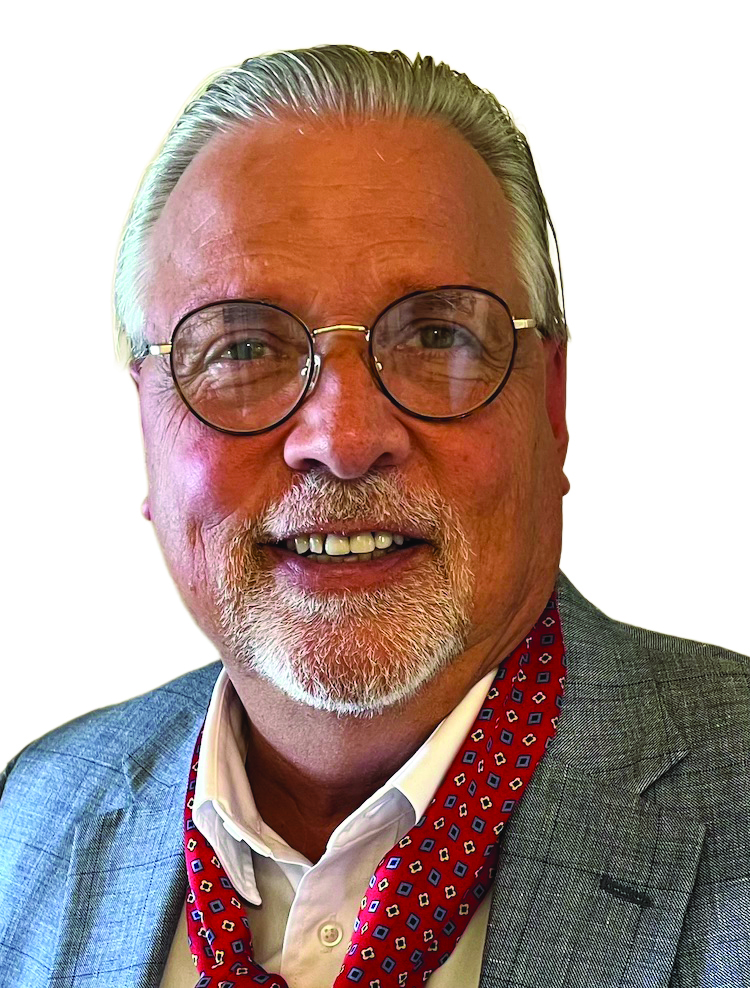
Terry Held is an English instructor at Crowder College, Cassville. The views expressed in this column are solely those of the author and do not necessarily reflect the views or positions of Crowder College. He would appreciate hearing what you think. He can be reached at [email protected].