
Community Voices — Merlyn Johnson: State should do its part
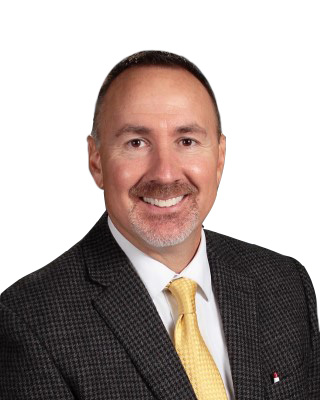
I have worked in public education for 30 years, including 17 years as a superintendent, and I cannot remember a time when Missouri’s education community has been more concerned about the direction of public school funding.
The latest concern comes from the State Board of Education’s FY2028 budget request. The Board chose to keep its request for Missouri’s Foundation Formula at approximately $4.283 billion, the same level as FY2027. According to the Missouri Department of Elementary and Secondary Education (DESE), approximately $269.8 million more would be needed to fully fund the formula. While Gov. Mike Kehoe and the General Assembly will ultimately determine how much money is appropriated, the State Board’s decision sends a troubling message to Missouri schools.
Calling something “flat funding” can make it sound harmless. For schools, it is anything but. Our costs do not remain flat. Salaries, health insurance, utilities, transportation, food, instructional materials, technology and facility expenses continue to increase.
When state funding stays the same while the cost of operating our schools rises, districts lose purchasing power. In practical terms, flat funding becomes a cut. That matters because the Foundation Formula is not an arbitrary number created by school administrators asking for more money.
It is the mechanism Missouri has established to determine the level of state support for educating its children. If the formula calculates that additional funding is necessary, but the state does not provide it, the responsibility does not disappear.
The financial pressure simply moves somewhere else. Increasingly, that burden falls on local taxpayers.
Recent federal education data cited by Missouri education leaders show that 57.5% of Missouri public-school funding comes from local sources, while only 28.6% comes from the state. Missouri relies more heavily on local funding than each of our eight neighboring states.
That means communities like Cassville are already doing a significant amount of the heavy lifting. Our residents support our schools through property taxes, levies and voter-approved bond issues. Those local investments have allowed Cassville R-IV to improve facilities, strengthen school safety, provide opportunities for students and maintain a school system our community can be proud of.
Our local taxpayers have stepped up. It is reasonable to expect the state to do its part as well.
If Missouri continues funding its schools below the level calculated by the Foundation Formula, districts like Cassville will have to absorb increasing costs with fewer resources than anticipated. Eventually, those pressures affect the decisions local school boards make.
They influence our ability to recruit and retain outstanding teachers and support staff. They affect transportation, academic and career programs, extracurricular opportunities, facility maintenance, school safety and our ability to maintain the financial reserves necessary to operate responsibly. These are not extravagant expenses. They are the basic costs of operating a quality public school system.
Behind every dollar in a school budget is something tangible: a teacher in a classroom, a bus traveling a rural road, a paraprofessional helping a student, a textbook or instructional resource, a coach working with students after school, or a building that must be heated, cooled and maintained. For rural schools, many of these costs are unavoidable.
Our buses still have to travel long distances. Our buildings still have to operate. We still compete with other employers for talented people. And our students deserve the same opportunities as students anywhere else in Missouri.
What encourages me is that this conversation is no longer taking place only among superintendents and school finance officials. Teachers are paying attention. School boards are asking questions. Parents and community members are becoming engaged. Recent commentary across Missouri has also focused attention on the growing responsibility placed on local taxpayers to fund public education.
This is an important conversation for our state to have. Public education is one of the largest investments Missouri makes in its future. Strong schools help produce an educated workforce, support local employers, attract families and strengthen communities. In many rural Missouri communities, the public school district is also one of the community’s largest employers and an important part of the local economy.
That makes school funding more than an education issue. It is a community issue.
It is important to emphasize that the FY2028 budget has not been finalized. The State Board’s recommendation is part of a longer process. The Governor will develop his budget recommendations, and members of the Missouri General Assembly will ultimately make appropriation decisions.
This should not be a partisan issue. Republicans, Democrats and independents all send their children and grandchildren to Missouri schools. Rural, suburban and urban communities all depend on strong public schools.
The question is straightforward: What level of investment does Missouri believe is necessary to provide its children with a quality education? Local communities across our state continue answering that question by supporting their schools.
I believe Missouri should do the same. Our students only get one opportunity to receive their education. We cannot come back five or ten years from now and give them the teachers, programs and opportunities they should have received today. Missouri’s communities have invested heavily in their public schools.
As the FY2028 budget moves forward, I hope our state leaders will recognize that commitment and provide the funding Missouri’s own formula says our students need. Our local communities are doing their part.
It is time for the state to do its part, too.
Merlyn Johnson is the superintendent of the Cassville school district. He may be reached at [email protected].