Community Voices — Lynn Hilburn: Barry County and people
In previous editorials, I’ve discussed land in Missouri and in Barry County and how things developed for the first white settlements in Barry County. I will review some of that briefly.
As we know, Missouri became part of the US territories with the Louisiana Purchase in 1803. The southern portion, the portion below the south Missouri “border” line, was referred to the Orleans Territory. The land north of the southern Missouri border was first referred to as the Louisiana Territory, and after 1812, it was referred to as the Missouri Territory.
As we referenced, a territory could not get a voting representative in Congress until it had over 5,000 people, and once it reached 50,000 people, it could become a state. After Missouri set its north boundary, the state was divided into five counties, and the land in southern and southwest Missouri was part of New Madrid County at the time of statehood in 1821. In the early 1830s as the state became more populated it was determined that there needed to be a greater number of counties in order that each area of the state could be more appropriately represented.
The southwest corner of the state, consisting of Jasper, Newton, McDonald, the southern portion of Lawrence, a piece of northern Stone and Barry counties was organized into a “large” county and was named after the sitting US Postmaster General of President Andrew Jackson’s cabinet, William T Barry. The county seat was a community called Mount Pleasant, which at the time was approximately two miles east of Pierce City. After McDonald and Newton County were taken away from “Barry” County, the county seat was moved to a community where Little Flat Creek joined into Flat Creek called McDonald, or McDowell.
After the portion of Lawrence County and the small piece of Stone County were removed, and due to the law that the county seat had to be within six miles of the center of the county, in 1845, the county seat was moved to its present home in Cassville. At the time of the county seat selection there were only three homes near the center of Barry County, and it has been reported that Mr. John O. Burton, who owned the land just north of Cassville, (this was land where the future Crystal Springs Fish Hatchery was to be located) campaigned that his land and home should be county seat.
A second home was that of Littleberry Mason, which was on the east side of Flat Creek near where the baseball fields are. The third choice was the home of William Kerr, who owned a house where the old LeCompte Lumber Company used to be. It was close to the Trail of Tears, close to Flat Creek, but not in a flood prone area. It must have been quite a house, as besides serving as living quarters for the Kerr family, it served as the county courthouse for a few years, and a Mr. Culton rented out one room and ran a small store until a separate store was built.
There was other competition for county seat. Before moving the county seat to Cassville, there were only two towns with stores in Barry County. One was in McDonald (McDowell) and the other was in Washburn (or Keetsville or O’Day). Since Keetsville was within six miles of the center of the county, the people of Keetsville thought they should be the county seat, since they already had an established town. Also, there were people at Exeter who thought that Exeter should be the county seat, especially after they got the railroad going through their town.
Why the name Cassville, which I also wondered growing up here? Cassville was named after US Senator Louis Cass from the state of Michigan, who had also been a soldier and a diplomat in the Northwest Territory. It is believed that Littleberry Mason and Senator Cass knew each other from the War of 1812.
A story of interest about Mr. Cass. After the Aaron Burr and Alexander Hamilton Duel in 1804, Aaron Burr’s political life in Washington was over. Burr went to the Northwest Territory and tried to establish himself as a leader and started trying to establish the Northwest Territory as another country with himself as a monarch or an emperor of the territory. Remember, the Northwest Territory was Michigan, Wisconsin, Indiana, part of Illinois and Minnesota, east of the Mississippi River.
Also, Burr was trying to work a deal with Mexico on getting part of Texas and New Mexico as part of his “empire.” Louis Cass had been appointed by Jefferson as a US Marshall over the state of Ohio, and since there were no other marshals and/or not much law north of and west of Ohio, he was also a US Marshall for the Northwest Territory. When Cass determined what Burr was trying to do, he very quickly notified President Jefferson, and Jefferson had Burr arrested and charged him with treason. Mr. Cass’ prompt action may have prevented the United States from another civil war, because there was one issue upon which Mr. Cass could not be dissuaded, and that was that “nothing was going to break up our United States.”
I still haven’t gotten to too many people in Barry County, have I? Well, here it goes. There have been artifacts found and historical items discovered, especially around some of our caves, that indicate that there were probably people here in southwest Missouri as long as 7,000 years ago. As we discussed earlier, there were several Indian tribes in this area, mainly the Delaware, the Osage and the Sioux, that roamed through and settled in this area for as many as 2,000 years before the “white” settlers came. Many of you, if you are older than 50, may remember the store at Bates Corner on Hwy 76/86, where Mr. Bates had hundreds of Indian artifacts. In fact, it could be said that he had a mini museum there.
Back to people. Edmond Jennings is said to have been the first white American to come to southwest Missouri and stay a while in 1817. In 1818 and 1819, Henry’ R. Schoolcraft and Levi Pettibone left St. Louis and came and explored the area but did not stay. And finally, in 1827, the first people to set up residency in Barry County is believed to be Sam Washburn and his family, who started his settlement about 8 miles south of Cassville at the location of the town called, you guessed it, Washburn.
A strange thing about the town of Washburn. The Washburn family left to go help fight for Texas independence from Mexico In the mid 1830s, so that they could/would receive a large quantity of land. While they were gone, two brothers named Keets started another town just east of the old Washburn settlement and called it Keetsville, and they had more than one successful store there.
After the railroad was brought through the area, another group of people started a town along the railroad called O’Day, and they thought their town should be county seat.
Apparently, things did not go as well in Texas as what the Washburn family thought, so after the Civil War, they came back to the area. Since the Keets families were not as prominent after the war, having been raided several times by both the Northern and the Southern armies, and no one could remember who O’Day was, the town name was changed back to Washburn.
Well, we still didn’t get to too many people or families in early Barry County, but I promise you that we will next time. especially regarding Littleberry Mason.
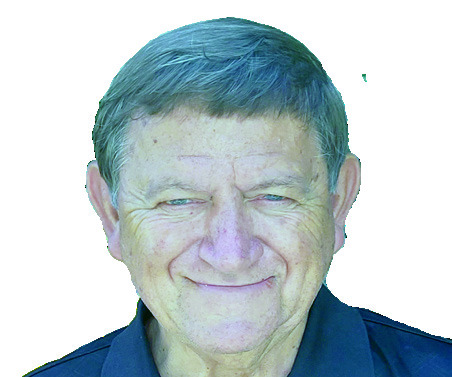
Lynn Hilburn is an officer in the Barry County Genealogical and Historical Society, and invites all to come and join meetings, to provide information about their families or to look up information about their families. Hilburn may be reached at [email protected].