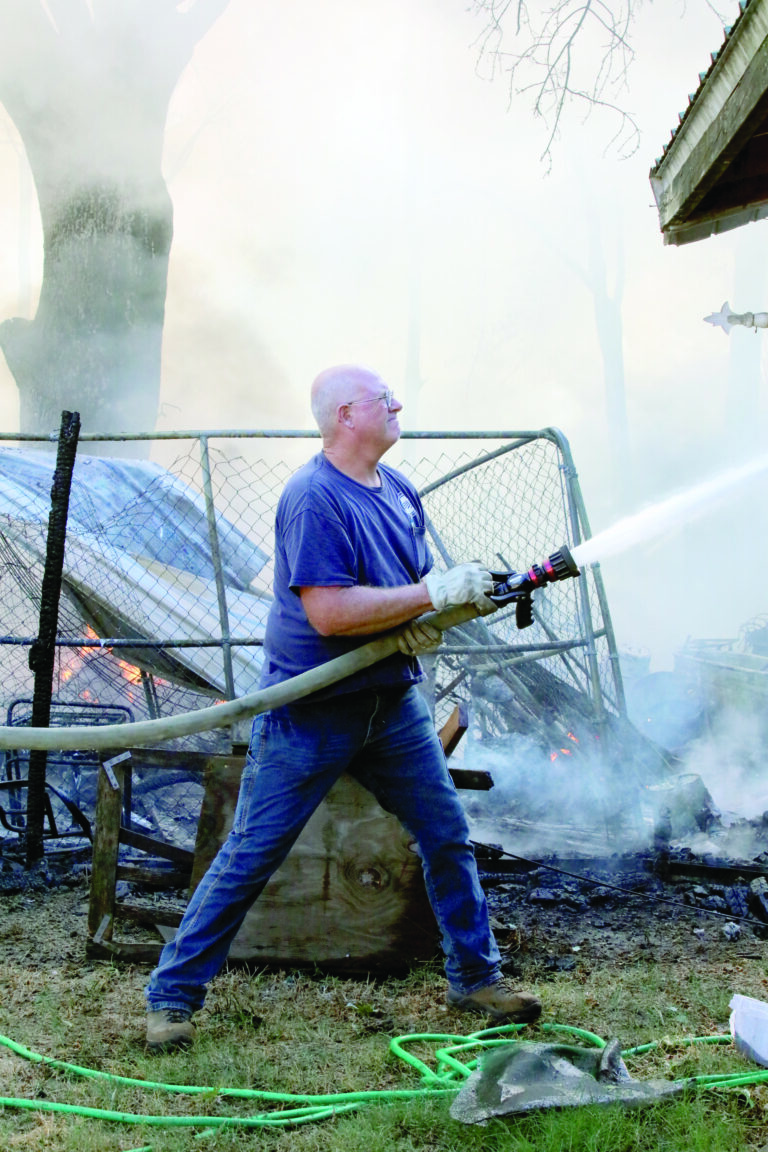
Pollution, industrial ag decried at meeting

Speakers focus on CAFOs, data centers posing local threat
By Murray Bishoff Special to the Cassville Democrat
More than 50 people attended a public meeting on July 19 at the Scott Regional Technology Center in Monett to hear a variety of state leaders and experts discuss environmental threats they perceive stemming from concentrated animal feeding operations (CAFOs), data centers and sludge tanks proposed in southwest Missouri.
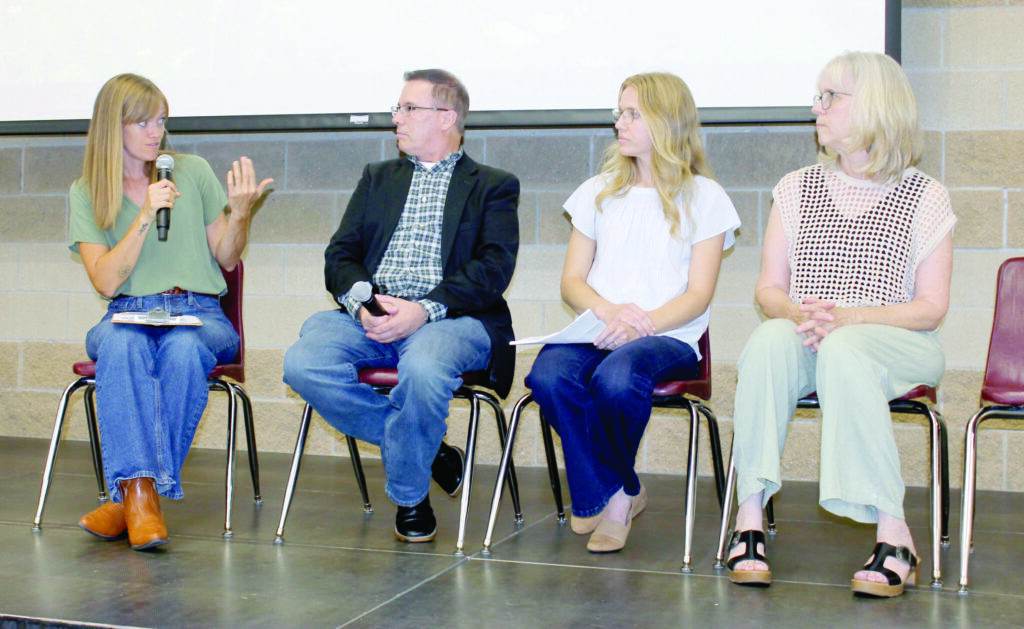
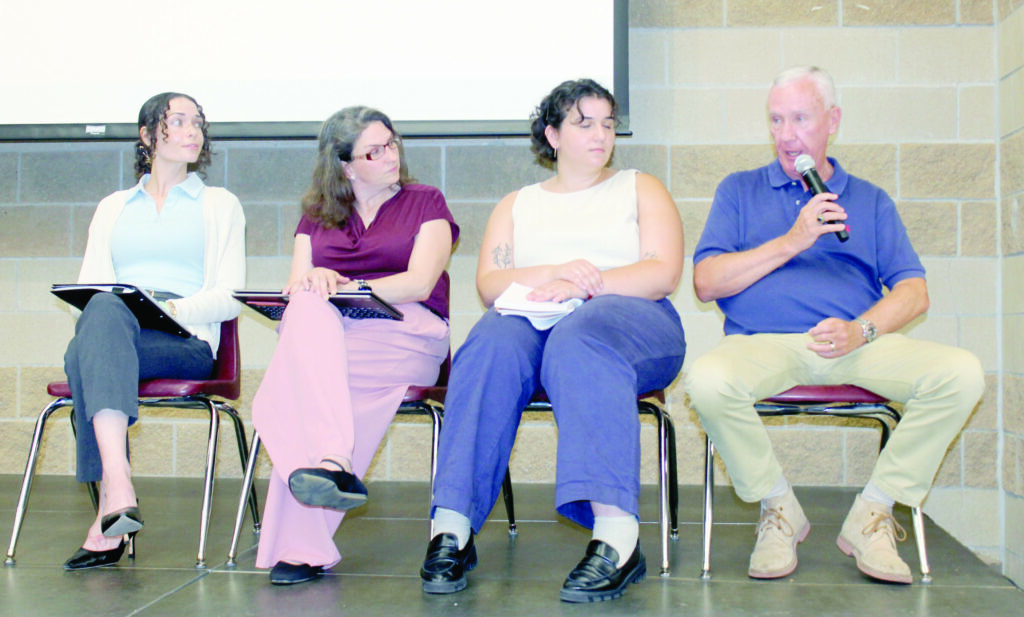
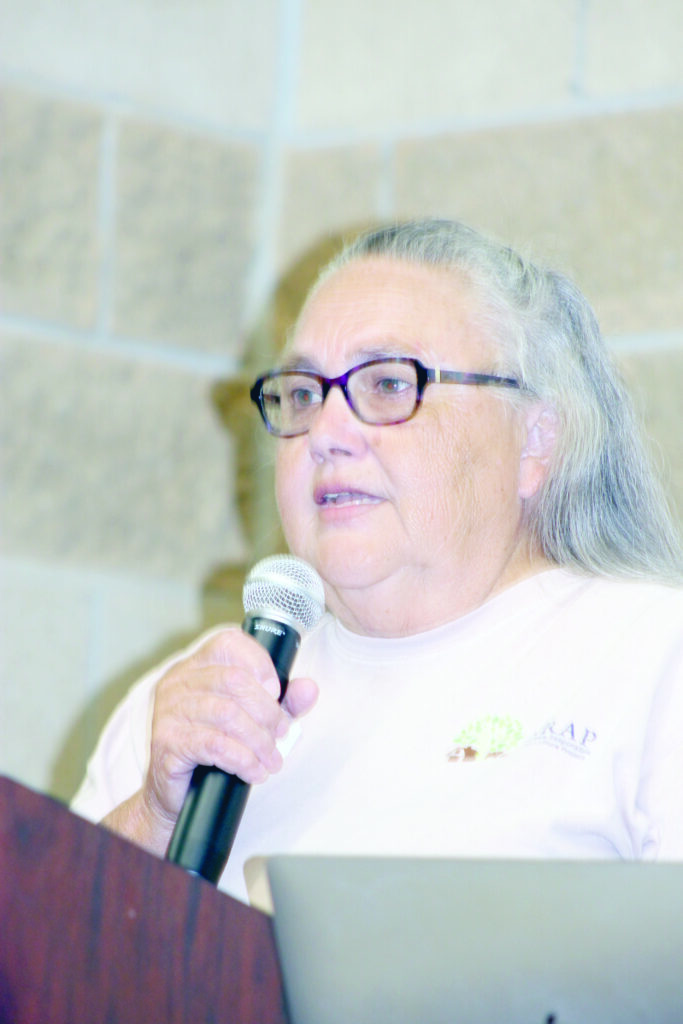
The meeting was organized by Protect Our Water and Environmental Resources (POWER). A large percentage of those attending were landowners. Among public officials in attendance were Presiding County Commissioners Bob Senninger from Lawrence County and Steve Blankenship from Barry County, and State Senators Mike Moon and Jill Carter, in addition to several candidates for the state legislature.
Leah Heidlage, with POWER, opened the meeting by noting plans for poultry farms on Sarcoxie Prairie had been approved by the Missouri Department of Natural Resources (DNR). The proposed poultry operation supporting 1.3 million birds, according to research, would require the use of 25 million gallons of water and significantly impact landowners for many miles.
“Water is our primary interest,” Heidlage said. “Extraction of our resources is why we’re here. Water is what unites us. Our land is the legacy we plan to leave to our children. Existing regulations do not protect it. We should leave this land better than we found it.”
Several speakers pointed to action by the Missouri General Assembly in 2019 as the immediate cause for the current struggle. Senate Bill 391 and House Bill 1713 had the effect of both removing local control over the use of land plus replacing commissioners on the Missouri Clean Water Commission, which oversees DNR.
This meant counties and municipalities could not pass agriculture-focused ordinances that regulated issues such as setbacks between properties, control over water bodies, and the land application of waste. As Maxine Gill with the Missouri Coalition for the Environment noted, the Clean Water Commission oversees sludge and industrial agriculture operations.
Gill claimed the commission has been “captured by industrial agriculture. Even public interest seats have been taken over. They want to protect the bottom line of industrial agriculture.”
Unregulated pollution
Sources of concern surfaced in the discussion. Sheila Harris, a reporter with the Cassville Democrat, reviewed her coverage of permitted plans to build sludge storage tanks northwest of Cassville. Harris noted the sludge planned is “raw meat processing parts” that are “thrown onto fields.” Such a source, she said, is “a vector for disease and odor.”
Moreover, she noted the recharge area for Roaring River has been traced to more than 47 square miles. Such a practice could not only endanger drinking water but also threaten the integrity of Barry County’s recreation and tourist industry.
Harris further recounted how C&H Hog Farms was shut down by Arkansas officials, but contracted to bring its waste material to Missouri. Citizens sued DNR and waste contracting companies, prompting a change in legislation. Harris noted Missouri laws only apply to surface distribution of waste material. The karst topography in southwest Missouri, with fractures in the bedrock, allows land-applied substances to seep into the underground water table, which is not protected by law.
Harris and Kim Prince, speaking for POWER in Newton County, pointed out that Iowa is No. 2 in the nation for cancer rates. A recent study by the IEC-Harkin Institute credited the cancer rate to water nitrite contamination due to fertilizers in particular, a disbursement that accesses drinking water. Prince added that a Class 2 poultry farm can receive a permit from DNR without any notification to neighbors, leaving those nearby “helpless.”
Steve Jeffery, an environmental attorney with the Jeffery Law Firm in Chesterfield, noted that DNR will not regulate Per- and polyfluoroalkyl substances (PFAS), commonly known as “forever chemicals,” nor does the agency monitor for the presence of veterinary medicine in waste material from farms. Both seep into the water table and risk widespread contamination of public water sources.
Land value concerns
Richard Jones, a rancher and realtor from Sarcoxie, pulled statistics from the construction of data centers in Virginia, Oregon, Arizona, and Illinois. He found the closer a property is located to a data center, the greater the impact on property values. While land purchased by data centers sells for 20% above normal prices, land within three miles of a data center drops in value by 20%.
Susie Crutchfield, with the Socially Responsible Agriculture Project, identified herself as a contract poultry grower for Tyson Foods for 25 years. She was among the growers impacted by “integrators” who dictate terms to growers. The integrators, since 2012, have systematically demanded growers undertake “massive” upgrades. Her husband calculated that he would not be able to pay off the debt to upgrade until he was 80, so the Crutchfields withdrew.
The integrator “has all the control,” she continued, extending to “the meat factory industry.” The upgrade would have boosted her monthly electric bill three to four times. She asserted integrators have pushed to shut down older farms that have a lower paper value so that they can build newer farms with a greater portfolio value. Crutchfield also related that flushing water lines as instructed with iodine for 17 years resulted in her contracting thyroid cancer. She is now cancer-free, but was never warned about the danger.
Strategies for change
Several strategies were suggested for fighting these issues.
Rebecca Collins, with the Joplin Sustainable Technology Alliance, said companies come to towns with business proposals and are told, “You must accept unregulated growth or nothing. We don’t have to accept that.” A Community Benefit Agreement, dictating standards for businesses to meet, including local employment and regulation, can be pursued.
Attorney Steve Jeffery pointed out a “common playbook” by data centers involves promises of benefits to the community at the price of governments signing non-disclosure agreements. “Big city lawyers overwhelm rural county commissioners by promising big money,” Jeffery said. Governments should refuse. In Festus, he noted, the public recently voted out four city council members for their involvement in a data center deal and is now going after others.
“If I could be blunt, the reason DNR does a crappy job is because people like to do the right thing, but are told not to because of policy makers,” Jeffery said. “In 2009-2010, people lost the right to file nuisance suits. The Republican super-majority caused it. If you continue to vote red in every election cycle, this is on you, unless you want to vote against your own self-interest. The power in Jefferson City is from the lobbyists all up and down High Street. The solution to all these problems is political. The person who looks back at you from the mirror is the one who can cause change. It starts with you.”
Jamie Blair, with the Missouri Rural Crisis Center, injected that some Republicans have been good allies. “Sometimes all they need is political cover.” Several added that showing up for hearings, talking to legislators, and presenting a unified front has an impact on lawmakers.
Kim Prince’s call to repeal Senate Bill 391 and House Bill 1713 drew applause.
Heidlage wrapped up the program by noting, “Lasting change happens whenever we all work together. We want change and we want it today. We are the Show-Me State. Show us we care. Together we can all make a difference.”