
Barry County native collecting bits of history
BY SHEILA HARRIS [email protected]
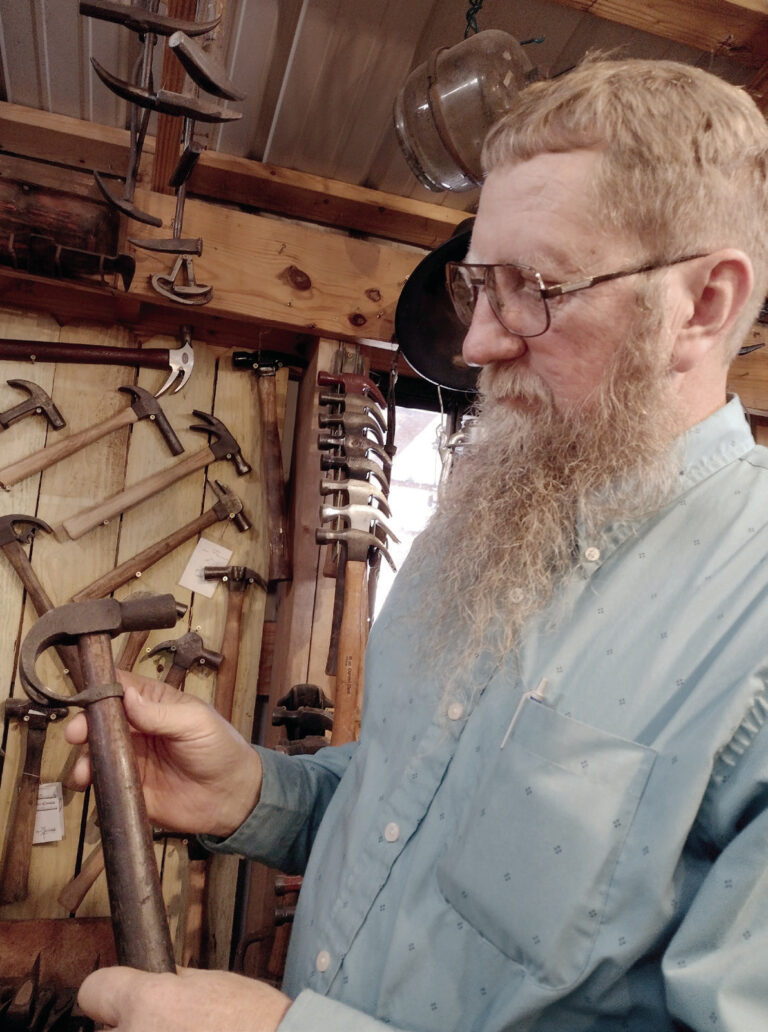
Rural Purdy native David Keeling is sitting on a trove of local history, the result of a hobby he began a decade ago.
“I’m a little embarrassed about the amount of stuff I’ve collected in just ten years,” said Keeling, whose hobby has led to a veritable museum of his own making.
Embarrassed or not, Keeling doesn’t mind giving private tours of his extensive collection of tools and other local memorabilia when asked. “I collect because I enjoy it,” he said. “But, these items represent the history of everyone who lives in the Barry and Lawrence County area and beyond, so, in that sense, I’m collecting for everyone.”
For Keeling, whose family tree can be traced back to the earliest settlers in Barry County, the preservation of local history, through collecting the details that show how life was once lived, is important.
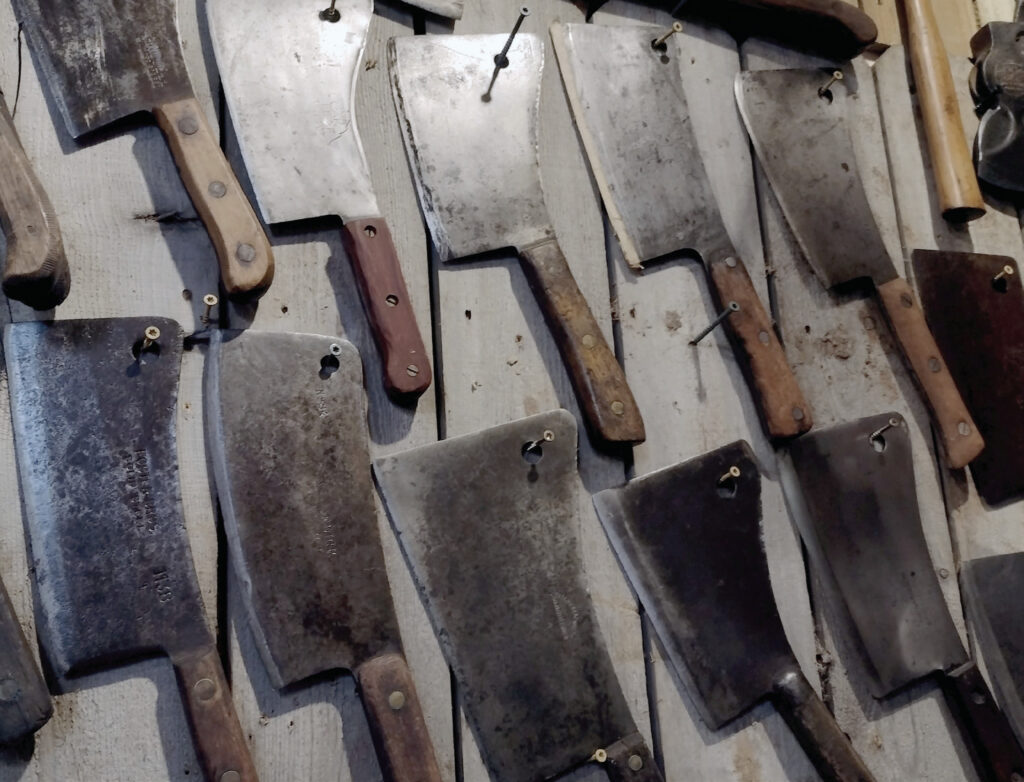
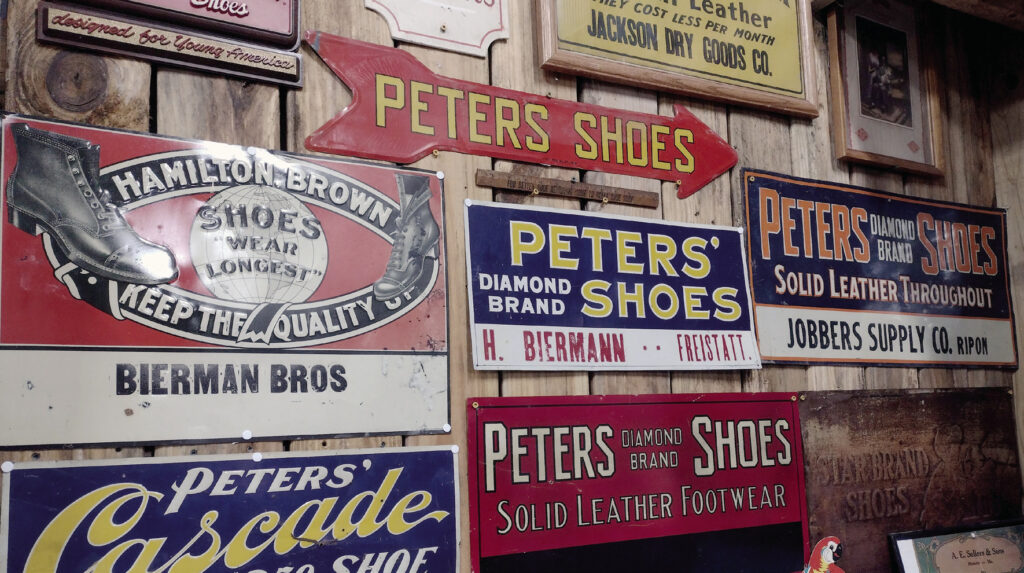
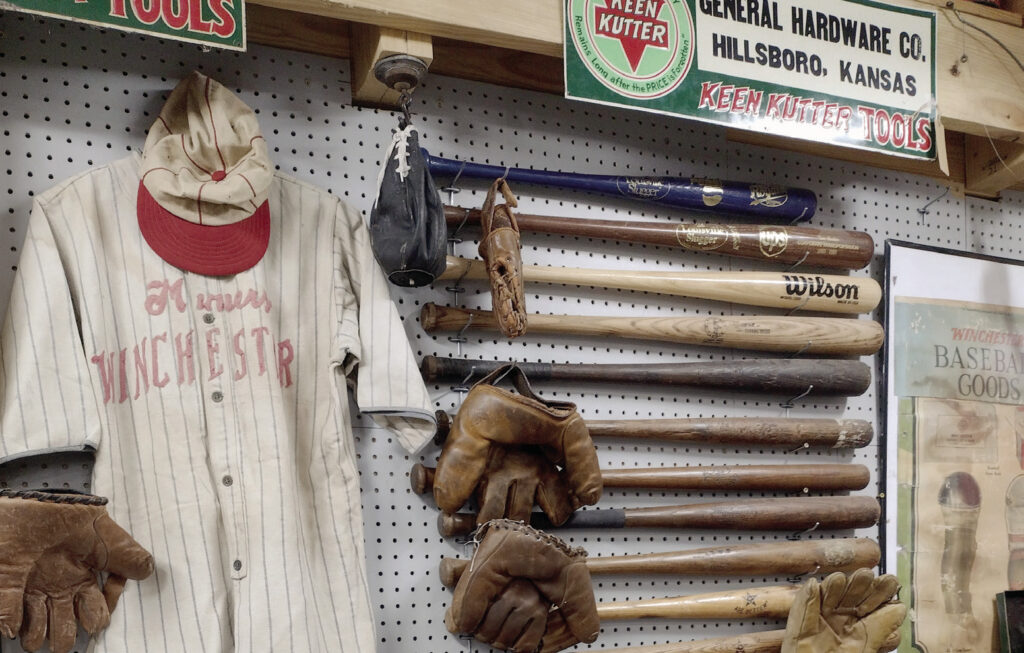
Several buildings on Keeling’s premises feature walls lined with eye-catching, carefully arranged displays of antique tools, while a larger structure houses a variety of historic memorabilia placed in individual displays.
Perhaps as remarkable as Keeling’s collection is his ability to recite the historical use of each of the items, thus bringing southwest Missouri’s past to life.
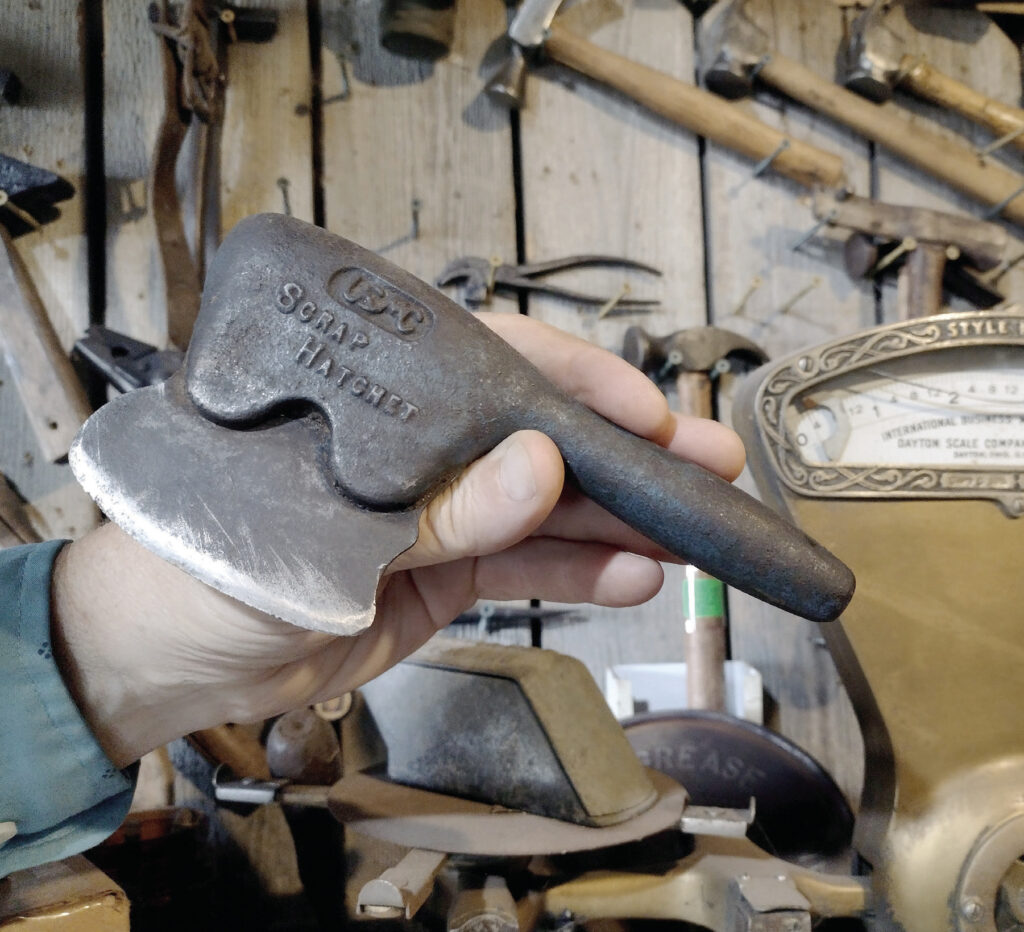
“My collecting habit started with antique axes,” said Keeling, who became fascinated with the old hand-cutting tools while cutting firewood for local residents.
“I spotted axes at garage sales and would pick them up,” he said. “That’s how I learned there were lots of different brands of them. Then I became curious about the history of the different axe-makers, and started to research.”
From that point, Keeling said, he was off.
Keeling’s research of tools led to the discovery of hundreds of brands of swinging tools – axes, hatchets, hammers and the like — each created for a unique purpose.
“Cobblers used a particular type of hammer for repairing shoes; specific hammers are used for masonry work and blacksmithing; and grist mills used certain hammers to clean grind stones,” Keeling said.
The list goes on. “Snow-knocker” hammers were used for cleaning snow from horses’ hooves; ice hammers were used by airline stewardesses for chunking the ice for passengers’ drinks; and ice-harvesting axes were used for cutting large cubes of ice for the iceboxes that pre-dated refrigerators.
Gold-beating hammers, Keeling said, were used to flatten the precious metal into fine sheets used for book embossing, and prisoners were issued specific hammers to reduce big rocks to gravel.
Keeling has examples of each of those tools in his collection.
Among the most common during the late 1800s and early 1900s, were crate hammers.
“In the old days, storekeepers received merchandise in crates,” Keeling said. “So, manufacturers provided merchants with a hammer to open the crates with.”
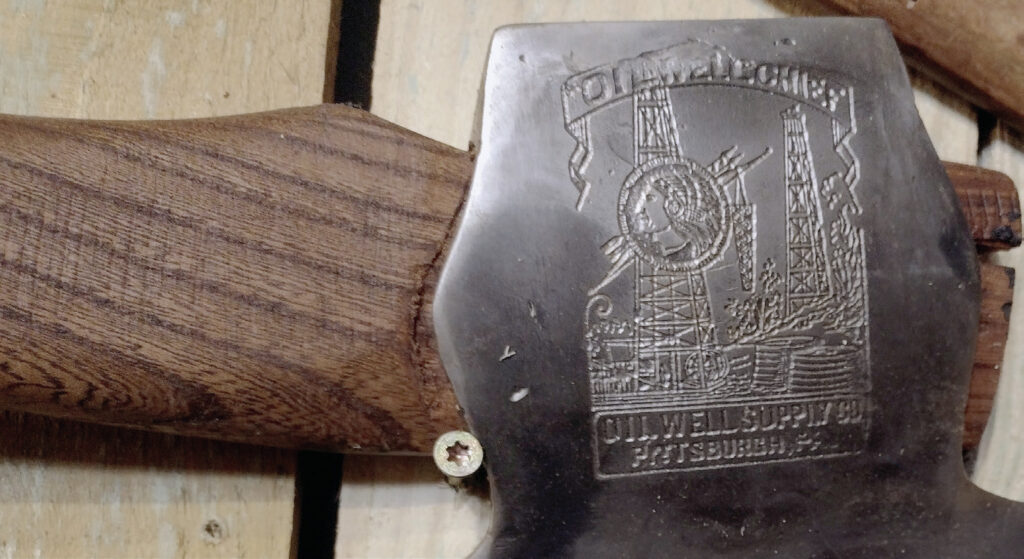
The hammers, themselves, Keeling said, were used as advertising by the companies, with names acid-etched or otherwise engraved into the hammer heads.
One of the most unusual items in Keeling’s collection – a Conestoga wagon pin – served a triple purpose.
“The wagon pin not only secured the wagon behind the horses, but it also served as a pry bar and a hammer,” Keeling said.
As companies diversified into tool production, Keeling said they became competitive and more creative with their branding.
“Solomon’s patented hammer was unique in that it had a bracket to hold the head on,” Keeling said.
Keeling said Craftsman began producing an expensive line of tools in the 1800s that featured rosewood handles with brass plating.
Although Keeling’s collection began with swinging tools, he’s since broadened his interests to include other items. Sugar nippers pinched a nip off the larger block, while a Confederates States branding iron and a historic dentist’s office chair – complete with the requisite tools of the trade – served purposes less sweet.
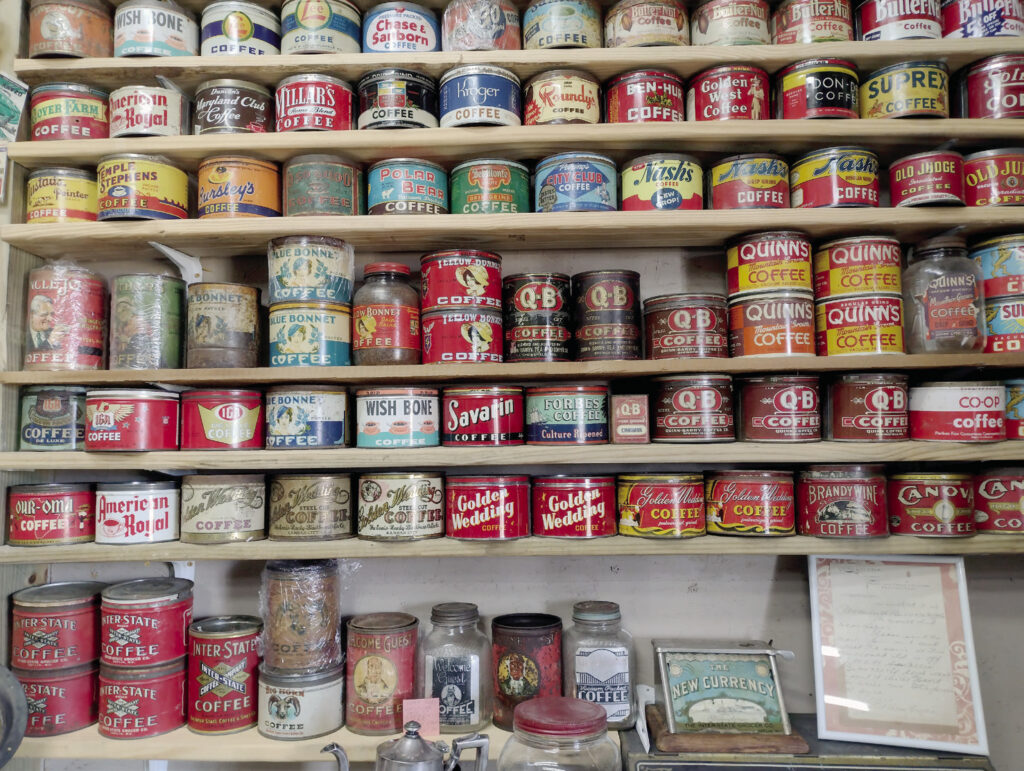
Tools aren’t Keeling’s only artifacts. The walls in a separate museum, of sorts, are lined with other bits of southwest Missouri’s past. An Oct. 30, 1952, edition of a newspaper contains an advertisement for Stacey’s General Store in Sparta, where Aunt Jemima would be making a Nov. 1 appearance to make and serve up her famous hot cakes. Railroad memorabilia from Pierce City’s, Monett’s and Purdy’s founding days vie for wall space with the ads of local tomato canneries and tickets or “chits” for locally-grown strawberries.
The commercial production of strawberries began in the area in 1890, said Keeling, whose great-grandfather and great-great-grandfather both raised the sought-after fruit, which grew prolifically in Ozarks soil.
Keeling, who pastors a church in Monett, said, in recent years, he’s slowed up a bit from making missionary trips abroad to places like China, The Philippines, Singapore and countries in Africa.
“I had to do something in my spare time,” he said.
That’s when he took up collecting.
Keeling said, these days, most tool and memorabilia collecting is done via Ebay, tool shows and purchases from other collectors.
“Not many of the original owners of what are now antiques are still around,” Keeling said.
Although Keeling is unwilling to open his collection up for public viewing at set hours, he’s happy to share it by private appointment when he’s available. He may be reached at 417693-1358. Leave a message, if necessary, and he will return calls, he said.