Monett Fire Department turns 120
Firefighting efforts grow with the times, resources
By Murray Bishoff Special to the Monett Monthly
The Monett Fire Department marked its 120th anniversary on March 27, commemorating the occasion with a department dinner, and looking back at the history of the department’s humble beginnings and consistent growth.
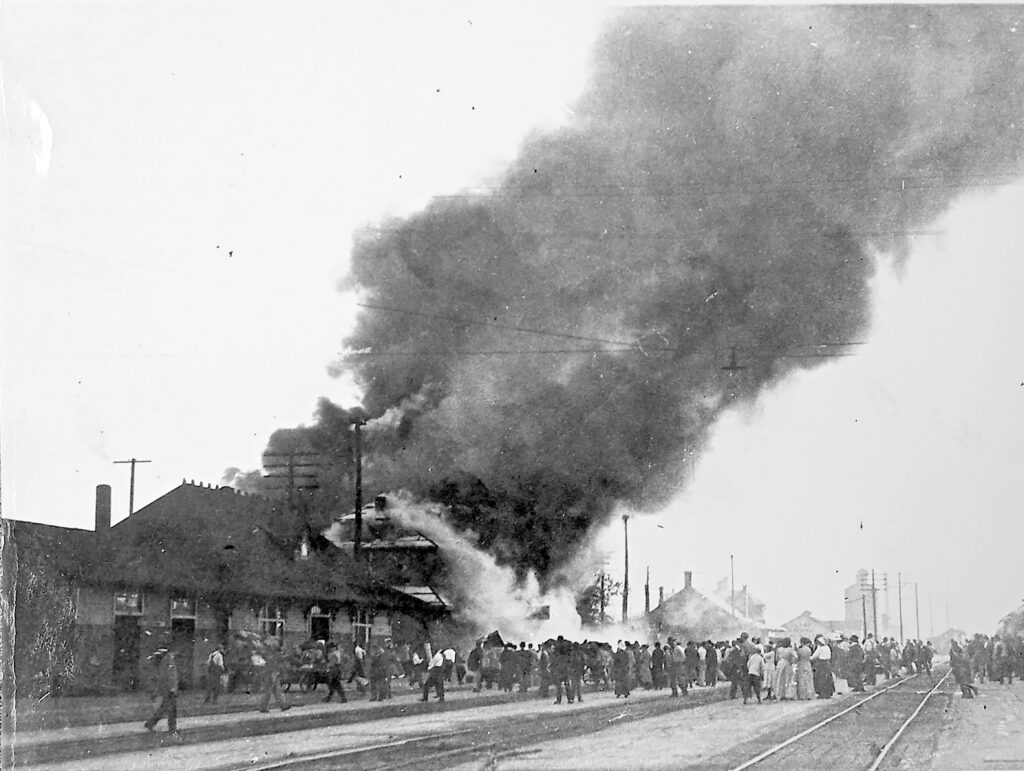
With Monett forming its city government in 1888, the lack of an organized fire department until 1906 seemed odd in retrospect. Current Fire Chief Brandon Pennington recalls seeing a reference to a major fire in 1905 that could have been the motivating factor.
Records kept by the fire department refer to a Southwest Firemen’s tournament in Webb City in June 1905. Lawson Jeffries, who became Monett’s first fire chief, and 19 other men competed for the city, using a steel ball bearing hose cart borrowed from the City of Aurora. They placed fourth in the 100-yard horse race, third in the hub, and second in the hub race. There’s nothing like local rivalry to inspire innovation. The date of establishment comes from the City Council passing Ordinance No. 183.
Where the first fire station was located is unclear. Some records suggest it was attached to the rear of Monett’s original city hall, located where Station No. 1 is today. By one account, when the city government needed more room for offices, the fire department was moved to Wagner’s Garage, located where the city parking lot is today at Sixth and Broadway.
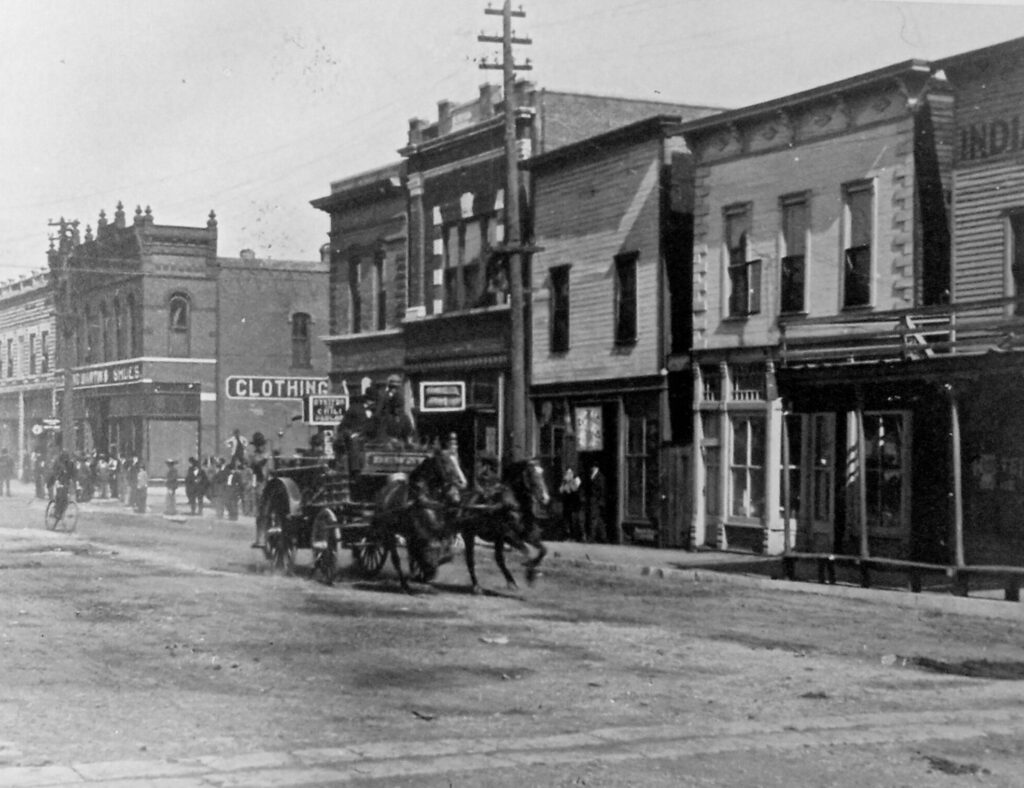
In 1909, a livery stable was added to house a fire wagon and two horses, Max and Jack. The horses were supposed to “work the streets” to keep them fit for fire runs. According to one account, Max was “wind broken” and could be heard coming before the fire wagon was in sight.
Firefighters could appear in the street and try to flag down the fire wagon for a trip to the fire. Another account stated, “Every time the fire alarm would go off, the team of horses would head for the Martin Hotel [the future home of Jumping-Jacks Shoes, on the east side of Fourth Street south of what would become Kelly Creek], because there had been so many fires there, and it was all they could do to turn the horses to keep them from going there.”
The first chief was paid $100 a year. The volunteer firemen were paid $2 a run, more later on if water was poured. One of the few surviving namedropping stories from those early days said, “The Clinton brothers were the fastest men on the department, and Pee Wee Bowman was the smallest,” all key qualities for success.
One newspaper account from April 1909 stated, “The fire department boys made a trial run Sunday night with the fire wagon. The small team hitched to it ran with ease with the wagon brake on. The wagon carried 1,000 feet of hose, coupled and ready,” an upgrade from the original 300 feet of hose, “and several of the firemen. It is a heavy-looking affair, but it is ball bearing [equipped] and so perfectly adjusted that it takes little power to run it. The alarm will be turned in at the barn at the same time it is at the city hall, and by the time any of the firemen arrive, the team will be ready to start. This will be a great improvement over the old days, when the boys had to wait until enough arrived to haul the cart. Then, after a tiresome run, they would be tired at the start of the actual firefighting. Then they also had to endure the jeers of a crowd who hooted at the fire appliances provided by the city.”
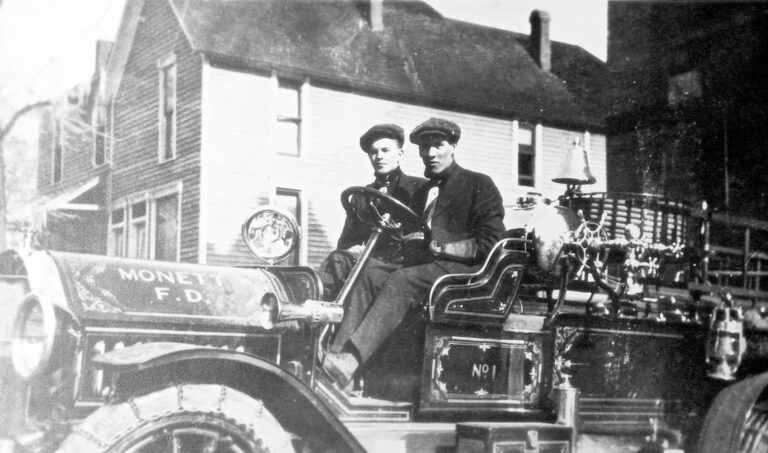
In 1916 the department saw an upgrade with the purchase of a 1915 REO chain-driven truck, which did not have a pump and carried no water. It had a ladder, an axe, and some hose. According to firefighter Walt Feehan, “when the new truck was delivered, the old station and horse stalls were cleaned out, although it still smelled like a livery stable. Chief T.D. Pitts had a room upstairs, and he had to sleep downstairs where the truck was kept. He says that the old fire station was full of rats, and for entertainment, he used to lay on his cot and wait for the rats to stick their heads out of holes, and he would shoot them with his .22 caliber rifle.”
In 1922, the city bought a 1922 REO truck, which had a 500-gallon-per-minute pump and 1,000 feet of hose, but still carried no water. In 1931, under Chief Henry Planchon and Assistant Chief William Burrous, they built a tank to hold 100 gallons of water, added a booster reel with 150 feet of hose, and a 28-foot extension ladder.
The history of the department is measured in its men and its equipment.
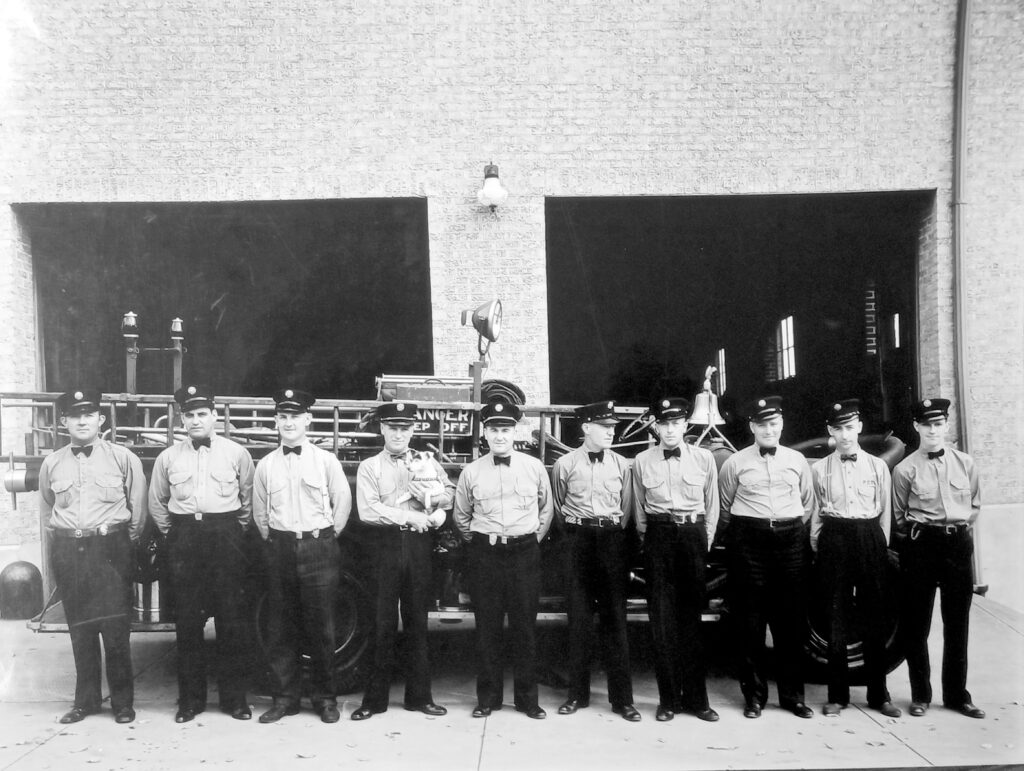
Lawson Jeffries, who had an active business, only stayed as chief four years. T.D. Pitts followed for a year. George Patterson wore the top hat from 1911-1916, then Ed Wagner was chief from 1916-1928. The department stabilizes under Henry Planchon, who served as chief from 1929-1959. When the current city hall was built in 1929, Planchon, his assistant chief, and their families moved into the fire station section, serving as round-the-clock staff.
It is said the staircase leading to the quarters upstairs at the fire station was built at sharp right angles to keep the horses from climbing them. The horses may have been retired by then, but the story endures.
O.A. Manes, an assistant chief, succeeded Planchon for a decade. Between 1929 and the early 1960s, a total of 70 men served as either firefighters or volunteers.
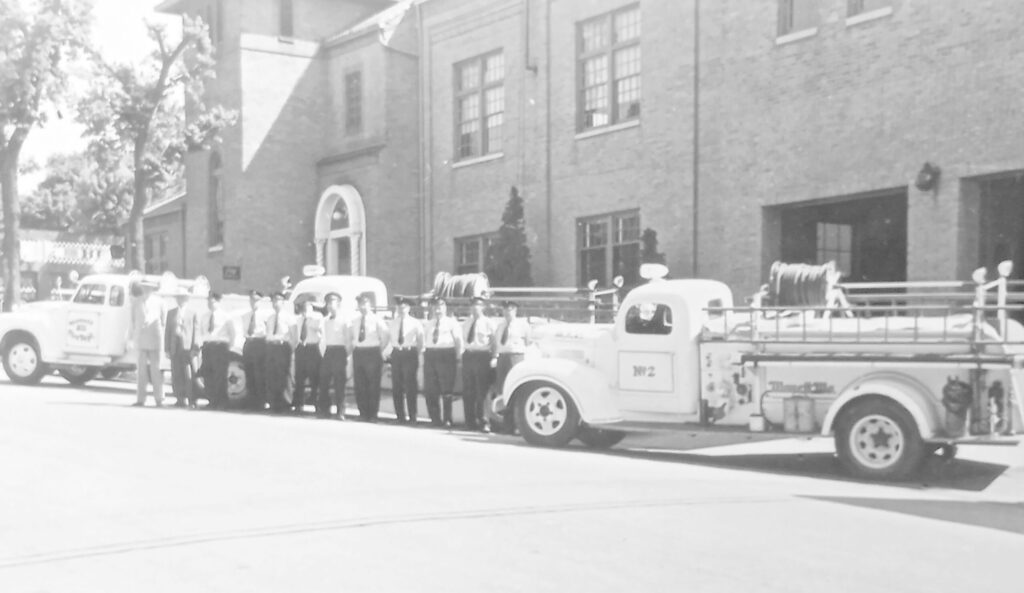
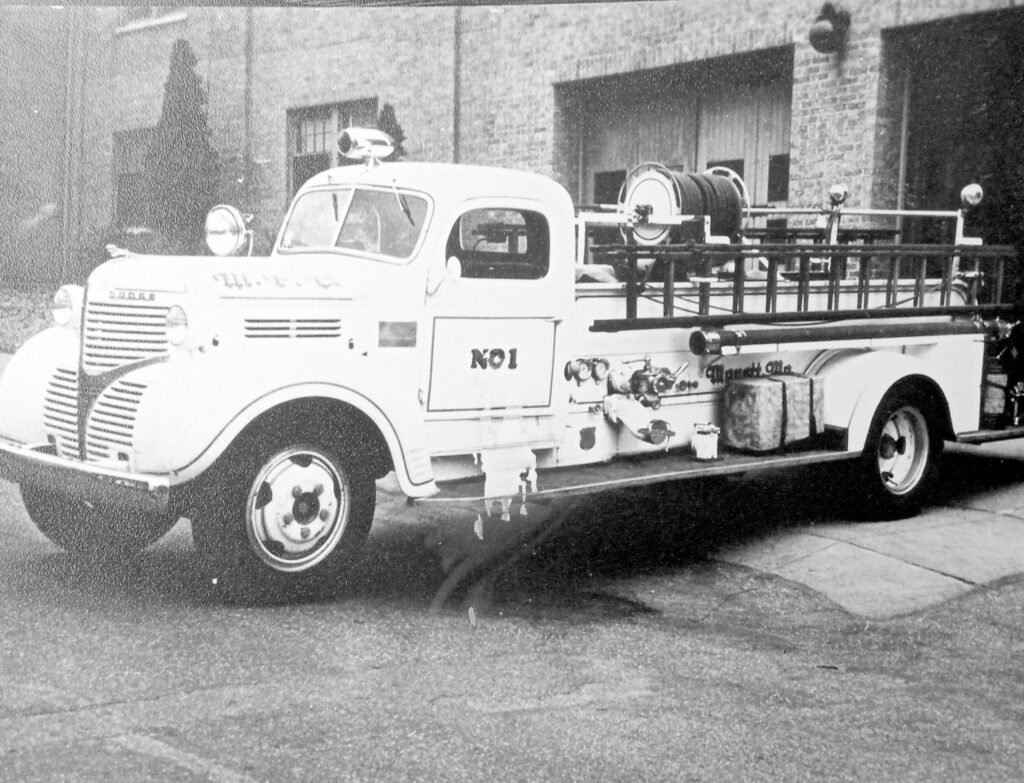
Equipment steps up in 1939 when the city council, under Mayor V.B. Hall, bought a 1939 Dodge truck, deemed to be “the first white truck in this section of the country,” a tradition that lasted into the 1960s. This truck had a 500-gallon-per-minute pump, 150 gallons of water, and 1,200 feet of hose. The 1922 REO truck was kept in reserve. In 1944, when trucks were hard to find due to the war, the city took a 1940 Dodge truck used for Works Project Administration jobs, attached a tanker to it, and converted it to a fire truck, trading in the REO truck in the process. The city used this makeshift fire truck until 1951, when it purchased a two-ton GMC chassis and had a wide truck made of it. The 1939 Dodge was traded in 1955 for a Ford F800, a new front-line truck. The 1955 truck, unfortunately, was broadsided by a car in 1959. It was traded in for a 1960 Chevrolet chassis, which was then made into a fire truck.
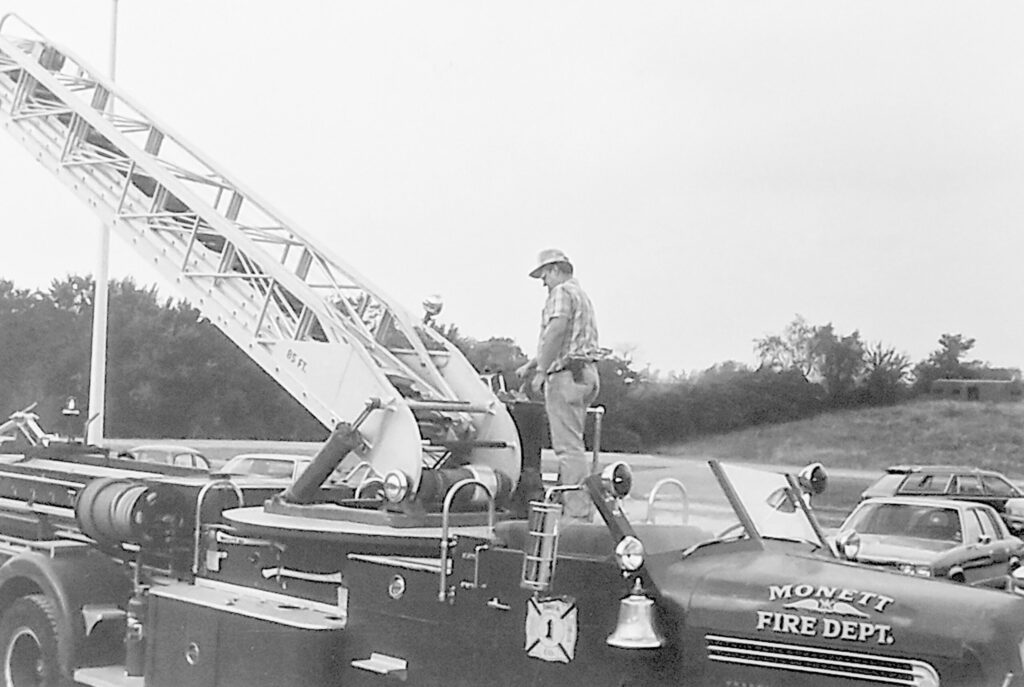
In 1982, the city took delivery of a 1951 Seagrave 85 Service aerial truck. The department purchased a Pierce pumper in 1988 and has stuck with Pierce trucks ever since.
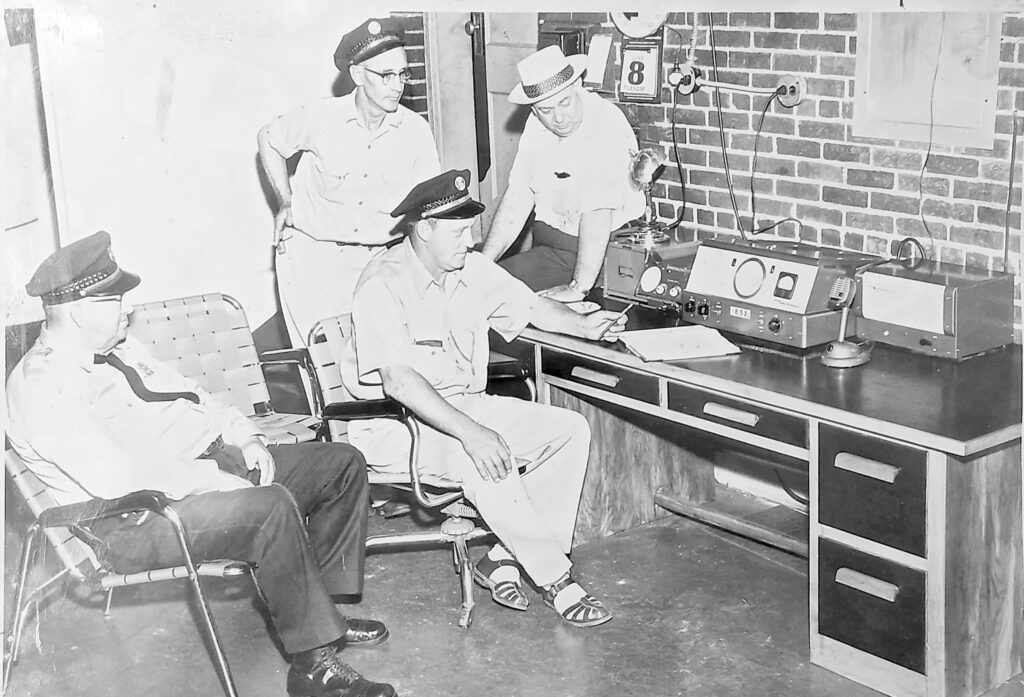
In April 1954, the city acquired a two-way Motorola radio system. The base was installed in what is the office of Station No. 1. The base station could transmit signals out about 50 miles and had separate channels for police and the Highway Patrol. Mobile units were installed in the 1951 GMC fire truck. The call letters for the base station were KAG-801.
A new radio system went into use in March 1980. The new base was located in the northwest corner of the city hall, which had originally been part of the public library. It stayed there until the Monett Police Station moved its operations across the street in 1991 to the old Monett Times building at 212 Fifth Street. The fire department radio then switched back to the original office in the fire station.
In 1961, the Missouri Inspection Bureau, the precursor for the Insurance Services Office (ISO), advised the city to upgrade its water mains, fire hydrants, hire a 10th volunteer, and purchase a 45-foot extension ladder. All these steps were taken, lowering the insurance rating to a 7 for most of the city. The 45-foot ladder came in three sections and took six men to raise it.
“There’s a lot more training today,” Chief Pennington said. “It was all in-house or on-the-job training where my grandpa [Jim Nolan] was chief. Everything is changing these days, sometimes every year. Fires are more toxic now, full of plastics. A flashover used to take a long time then. Now fire temperatures ramp up quickly. Citizens expect us to be training. When they are having their worst day, we bring chaos to calm.”
One of Pennington’s innovations has been to replace mutual aid with automatic aid. If there’s one alarm, Freistatt, Pierce City, Purdy, and Monett Rural come to help. A second alarm will bring four more departments, and a third alarm will bring four more. In a major incident, Pennington stressed, timing is crucial. He observed it’s easier to call off help than to mobilize it in an emergency.
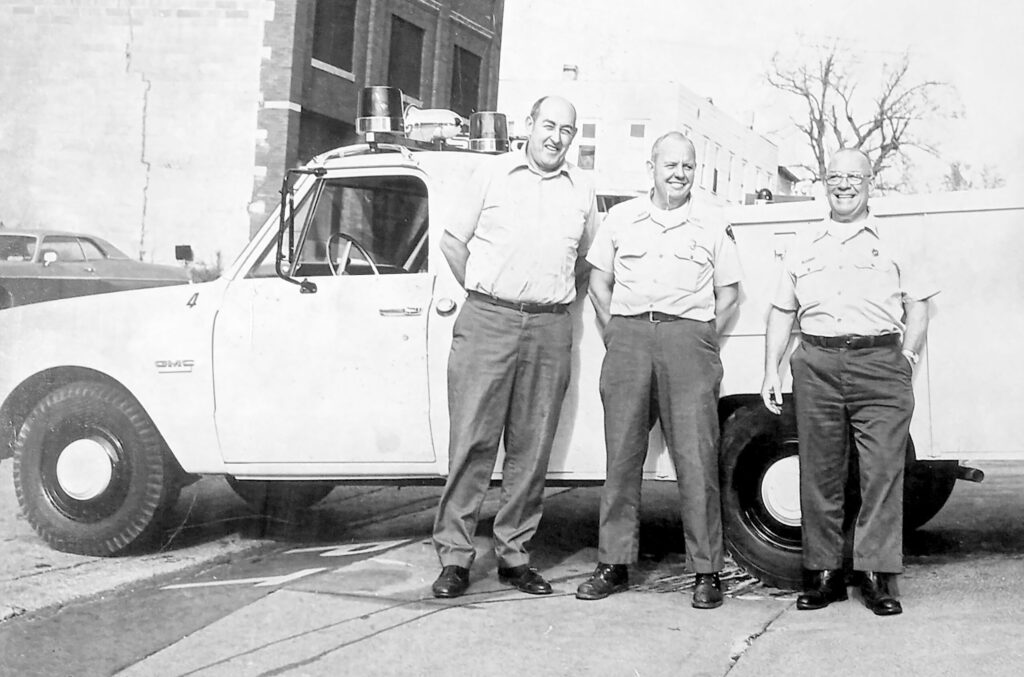
In the city’s 1971 comprehensive plan, the idea for a second fire station south of the railroad tracks surfaces, as Monett’s Industrial Park became busier. Among Chief Nolan’s notes was a list of major fires and deaths that occurred since 1960. In that list were two children killed in one house fire south of the railroad tracks before there was an easy way to get to Marshall Hill. Pennington said that fire “haunted my grandpa,” and Nolan began pushing for that second station south of the tracks in November 1982. It finally opened in 1996, three years after Nolan retired, the same year the city bought its current ladder truck.
Now Pennington is pushing to have a third station opened just west of North Park on Hwy. 37. The city council is listening and supporting the idea of building a new access road across the north of North Park to Hwy. H, offering quick access by firefighters to houses on the north side of town. Pennington hopes it doesn’t take another 20 years, as it did for his grandfather, to see that new station built.
All that takes money. Pennington will be the first to concede costs are much more today. Single-layer bunker gear in the 1960s cost $1,500. Today’s bunker gear, with three layers, costs $4,000 to $5,000, and it has to be replaced every 10 years. Self-contained breathing apparatuses used to be seldom used, in part because they had to be sent to Springfield to be refilled. Today, they are essential equipment. Station No. 2 has its own cascading device for refilling the air.
A 60-foot ladder truck in the 1980s cost $14,500. The city just placed an order for a new ladder truck to replace the 30-year-old truck now in use, for $1.8 million, with a 107-foot ladder.
In 1906, the city had two full-time firefighters. Two years after Station No. 2 opened, the city boosted staffing to two people on duty at the downtown station and three at the Industrial Park. That staffing level has remained for 28 years. Now the department has 16 full-time firefighters and two part-timers, five per shift, working 48 hours on and 96 hours off. Adding a third station would boost staffing to an additional four people per shift, adding 12 more people to the payroll.
“The city has been good to us,” Pennington stressed. “Benefits are the biggest kicker. We’re getting there.
“Everything me and my time are doing is to benefit the city and the citizens, to lower the ISO rating and be prepared at a moment’s notice. We’re like a life insurance policy. You don’t need us until you do. It’s time to start doing the Pride and Progress that’s on those water towers,” he added.