Drury Leadership Summit explores strategies
3 speakers discuss cultivating influence, success
By Murray Bishoff Special to the Monett Monthly
Three prominent area business leaders spoke on cultivating successful leadership strategies at Drury University’s 14th annual Leadership Summit in Monett on Nov. 13 at the City Park Casino.
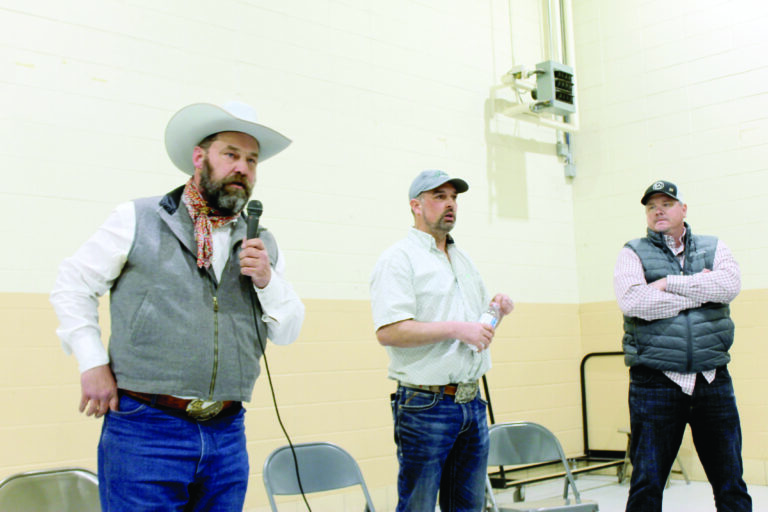
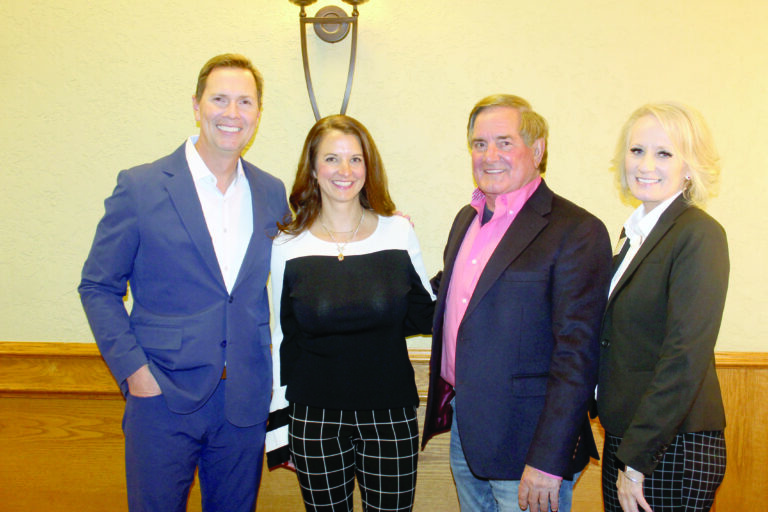
Hosted by the Foundations of Organizational Leadership class at the Drury GO campus in Monett, Ethan Forhetz, Kari Walden and Randy Little offered insights from their experience and recommendations for the college students.
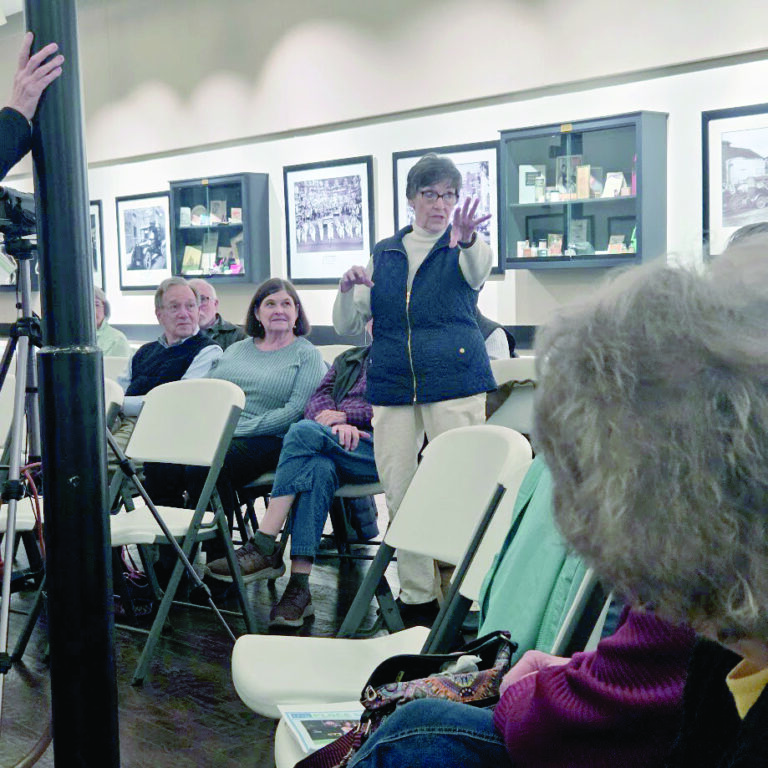
Rhonda Schilly, senior director of Drury’s Monett campus, stood in for class educator Joel Thomas as master of ceremonies for the evening. She introduced past speakers in attendance, noting how the event had grown from the first session held in the basement of the Monett campus.
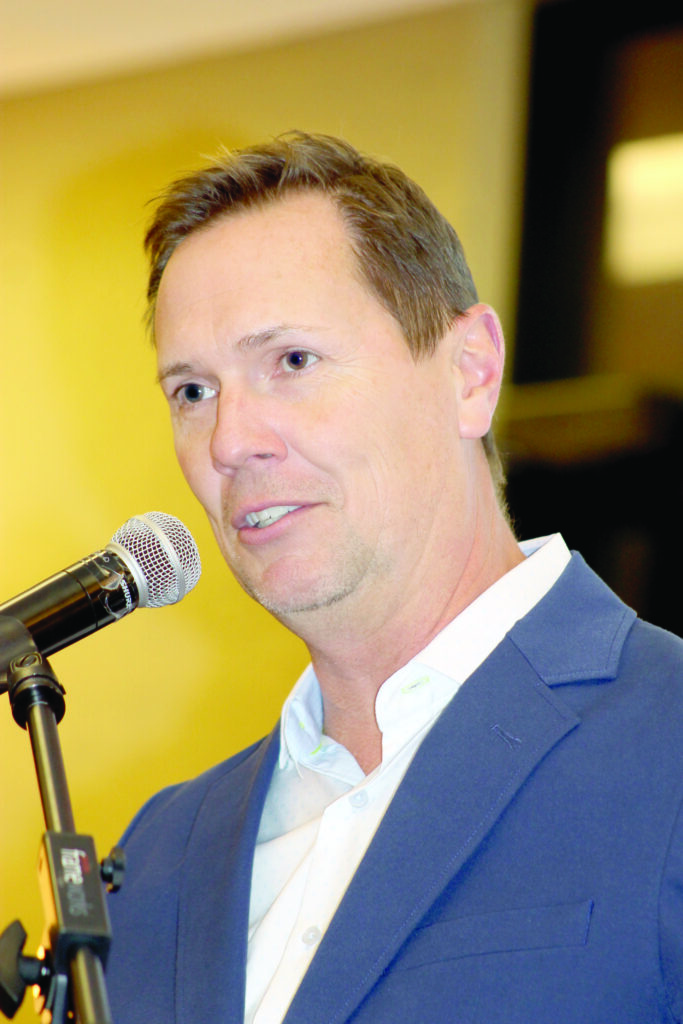
Ethan Forhetz
Ethan Forhetz, vice president and national spokesman for Convoy of Hope, is best known as a TV journalist for 15 years with KY3. He noted that everyone, whether aware of it or not, has influence. “Leadership is not about a position,” he said. “You don’t need a corporate post to have leadership. You can lead a family, a class, or a friend group.”
Forhetz discussed keys to leadership that can start at any time. He drew a distinction between motivation, “telling people what to do,” and inspiration, which “pulls people along to join you.” He added, “One pushes from behind. The other pulls.”
Leadership also means providing clarity and trust, but he cautioned, “Clarity without trust produces fear. People do their best work when they know what is expected of them.”
Leadership also means being proactive, Forhetz continued. Forward thinking means deciding actions before a crisis, setting goals. “Leadership is not about putting out fires.” He added one leads through influence, that there is a distinction between positional leadership with a title and relational influence, where people follow “when they want to.” His formula stated time plus concern and care equals influence.
Finally, Forhetz declared the Golden Rule: “Lead like what you would want to follow.” He urged celebrating people publicly, as opposed to complaining, which would make others not want to be there.
“Leadership is not about being in charge — it’s about caring for people who are in your charge,” he concluded.
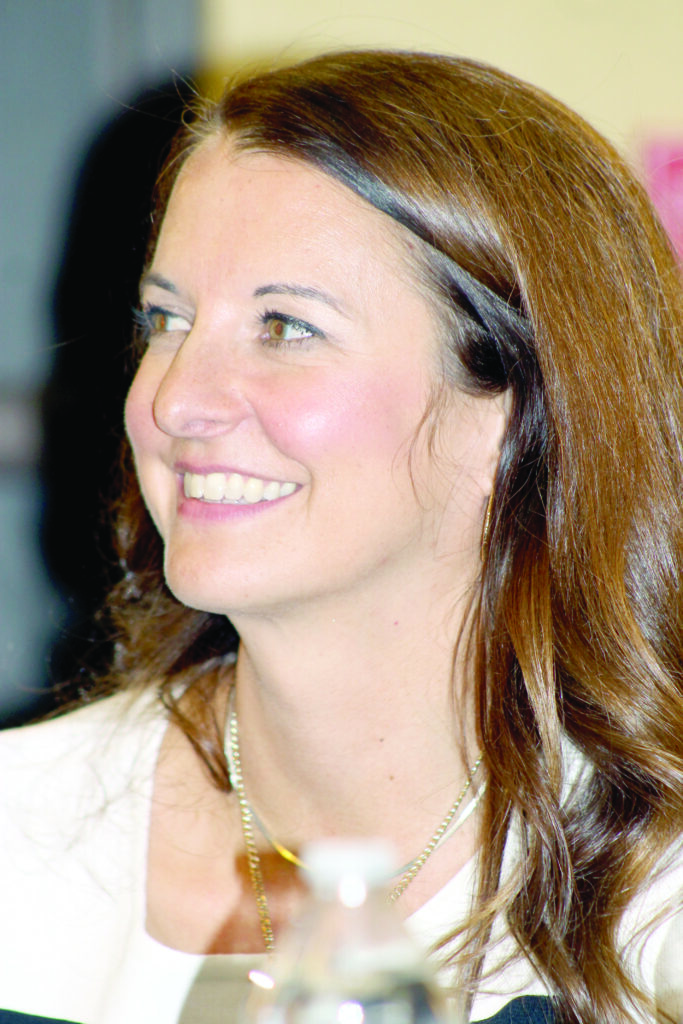
Kari Walden
Kari Walden, assistant general counsel at the Jack Henry company, where she has worked for more than 15 years, framed her presentation around a photo of a tractor raking hay in a field. At Jack Henry, she noted, her role is risk mitigation, doing a job the best possible way so both Jack Henry and the client are successful; not an adversarial position, like many attorneys.
She recalled her father would talk about doing a job, like haying, in terms of how it would impact the next person, like the bailer. A hay row cut too close to the fence would pull the bailer into position to damage the fence, making a bad day for everyone. Walden would think of the next person when she raked hay as a girl.
“Leadership does not mean management,” she said. “It’s what you do to influence those around you.”
Successful leadership, she continued, begins with authenticity.
“Leadership is easy when it’s profitable,” she said. “It plays out when things are hard. It’s different as a woman. It’s how you show up yourself. You think you have to be perfect, but that’s not as powerful as showing up flawed as your authentic self and saying, ‘We’ll figure it out.’”
Walden observed part of authenticity comes from how you deal with stress, how you support your time, and persevere in difficult times.
“The answer is always with the people around you,” she said. “It’s never just about you. The way to persevere is how you build trust and connections.”
Leadership also includes adaptability and resilience. Walden noted that 15 years ago, when she started at Jack Henry, widespread use of cellphones was new, and business involved creating new products for mobile use. Today’s market involves dealing with artificial intelligence and cryptocurrency, things that barely existed a few years ago.
“The way to be resilient is to be resourceful,” she said. “I’m never the smartest person in the room. People taught me to be resilient. You may have to pivot and change your approach. There’s no limit to what can be done. You just have to adapt. My dad would tell me, ‘Make hay while the sun shines.’ There’s a lot to learn about leadership and how we support one another.”
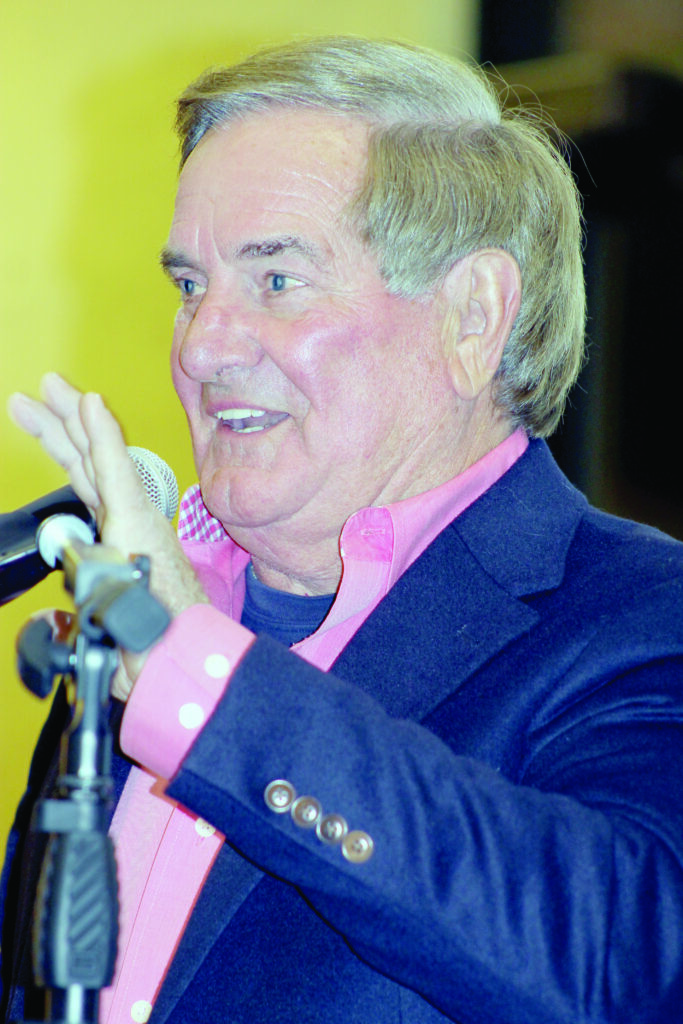
Randy Little
Randy Little, founder of PFI Western Store in 1975, a business he sold after 47 years, today runs Missouri Berries in Republic with his wife, Johnelle. They also operate a Branson attraction. He serves as the current commissioner of the Missouri State Fair, holds leadership roles with the University of Missouri, and runs a 1,000-acre cattle farm.
Little spoke about founding PFI in 1975 and growing it into the largest single-store retailer in the nation. He wanted to be in business for himself, requiring him to think in a different business model and “dream a little harder.” He boiled leadership down to respect, desire, and determination.
Little stressed having respect in anything you do, and determination that cannot waiver. If encountering people who doubt your path, he urged finding better relationships, like a banker who believed and would stand with you.
“Life is nothing but a series of relationships,” Little said. “Be creative. Be positive. The speed of the leader determines the speed of the bat. Get people involved. Surround yourself with better people than yourself. Choose in a different direction. Become a leader naturally.”
Little spoke about having a plaque on his wall for years that said, “Act instead of react.” He used that as a motto and a business model.
Audience questions
In taking question from the audience, the speakers were challenged to show the difference between quick wins and sticking to a long-term strategy. Forhetz urged a combination of both, celebrating the wins to keep morale high and looking ahead for what can be celebrated week-to-week and month-to-month.
Walden urged knowing where an effort leads.
“The low-hanging fruit helps you toward a longer vision,” she said.
Little said at PFI, his business had to create items a year in advance to market them.
“Get a game plan. Follow the plan. Buy into it. Deliver on it,” he said.
Asked about the most important quality to building lasting success, Little said flatly, “Pay your people a lot. I was never an easy boss. I wanted to think how we could be bigger and better all the time. My people stayed with me. We were family. Take care of your employees.”
Walden noted that in a large corporation, authenticity penetrates the authority chain.
“When you give people the freedom to be honest about their whole lives, they are more likely to be honest in their work,” he said.
Forhetz, in offering advice on making a positive impact in the community, said to “start something small.” He related how Hal Donaldson, founder of Convoy of Hope, struggled in her personal life after his father was killed and his mother was debilitated in a car wreck when he was young. As a teen, grasping at opportunities, Donaldson found himself at one point interviewing Mother Teresa.
She asked him, “What are you doing to help the poor and suffering?” Donaldson said he was doing nothing, and she responded, “Everyone can do something. Just do the next kind thing that God puts in front of you.”
Touched, Donaldson took all his $300 in savings, bought groceries, and gave them away. That led to working with a handful of farmers and ultimately to founding Convoy of Hope, which has helped more than 3.1 million people to date.
Walden added, “Show up. There might be little opportunities, places you will see if and when you look for them.”
Asked what they would do if they knew at a younger age what they know now, Forhetz said, “Understand failure isn’t fatal. It’s OK to fail. You want to learn from it.”
Walden added, “You don’t have to have all the answers. Be willing to say no. You can go up or sideways. Don’t be unwilling to change.”
Schilly ended the evening with a quote from pastor Craig Groeschel, who said, “People want to follow a person who is real, not always right.”
A reception preceded the program. Those attending had additional opportunities to chat with the speakers after the presentations. For the first time, a busload of middle school students from Aurora attended the summit.