Beef producers see upbeat outlook
Concerns about drought, stockyard practices shared
By Murray Bishoff Special to the Monett Monthly
Beef producers shared insights on production and strategies for success at the annual Beef Cattlemen’s Conference, hosted by the Monett Area Chamber of Commerce and the University of Missouri Extension Service on Feb. 24 at the Monett National Guard Armory.
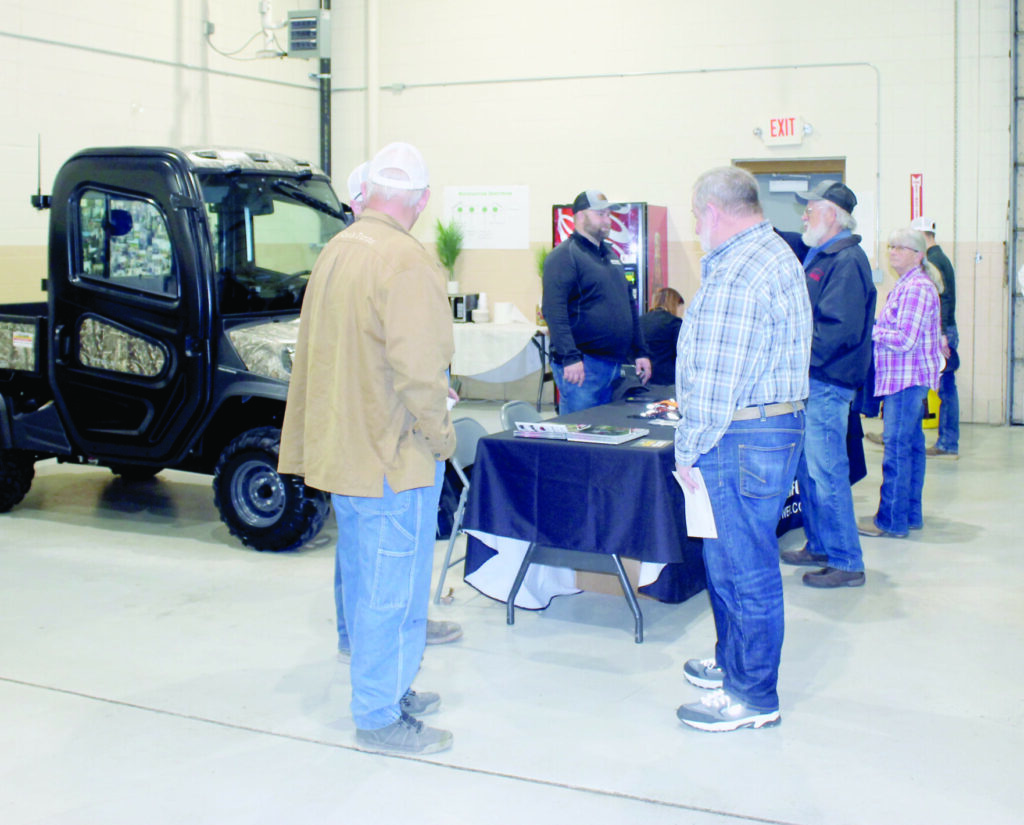
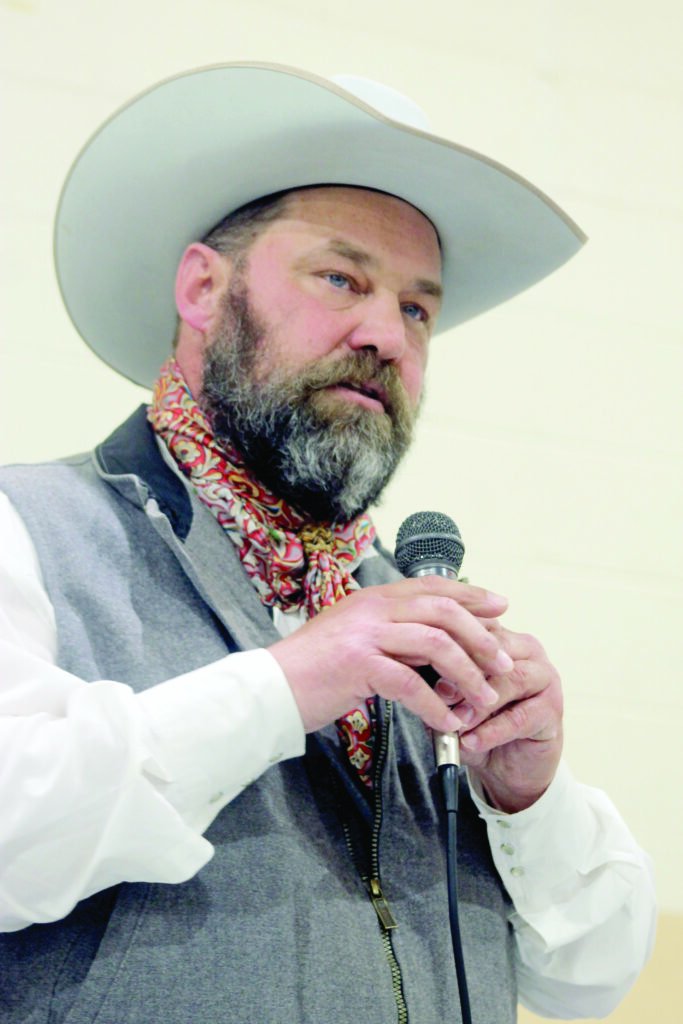
Ian McGregor, field specialist for the University Extension, gave the welcome following a chili supper provided by the Southwest Missouri Cattlemen’s Association.
McGregor spoke about adding stockers to one’s herd as a strategy to offset difficulties maintaining cattle year-round. Taking in a weaned calf when feed is plentiful and selling in July offered a way to use resources, rather than wait until cattle sales became necessary when forage supplies dwindle.
“In the worst-case scenario, you won’t have to sell off a lot of precious cows,” McGregor said. “It takes a long time to rebuild a herd. Forage demand can switch on and off. Stockers are an easily exchangeable liquid commodity. And with stockers, you’re not dealing with the drama of calving.”
The biggest danger in the stocker strategy is losing money due to an animal death. McGregor suggested buying animals from a neighbor rather than the stockyard to minimize risk. He also cautioned tracking the volume of feed available at different times of the year.
Jennifer Lutes, an ag business specialist, encouraged producers to use available tools, like the University of Missouri’s spreadsheet on break-even pricing. She also encouraged use of Livestock Risk Protection (LRP) insurance and Pasture Range Forage (PRF) insurance, as well as mortality insurance and marketing contracts.
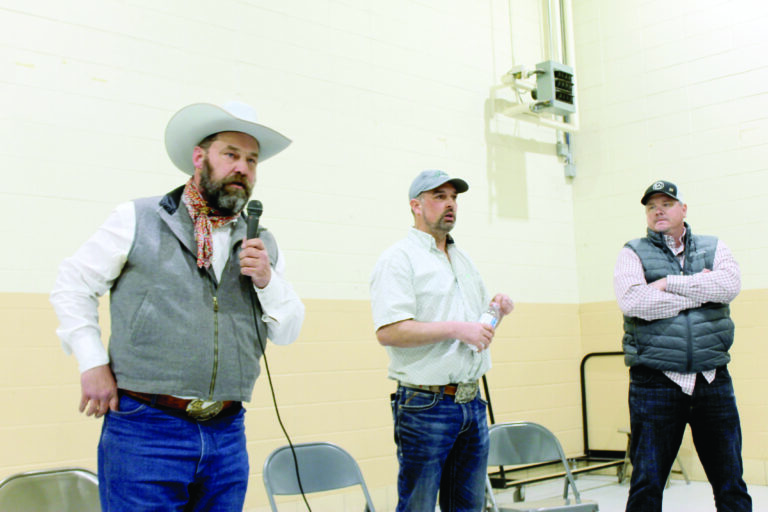
A panel of cattlemen offered specific perspectives on the business. Bryson Byergo, from Byergo Angus Farms in Savannah, talked about the operation started by his grandfather that has grown to over 1,000 head. Travis Merrick, whose ranch is located nine miles south of Lockwood, discussed the experience he’s gained in the past 10 years running the operation. Wes Spinks, from Jerico Springs, spoke from his perspective buying cattle for feedlots.
Byergo challenged ranchers to think in the long run. Even though the cattleman has an animal for a brief period, the care taken under that charge extends to how well the next owner performs. He urged using data rather than expected progeny differences that may not happen. His farm follows genetic sourcing. He does not buy calves that don’t weigh 750 pounds expecting them to produce bigger offspring.
Merrick emphasized taking a balanced approach. For example, Merrick does not trust foot scores done by himself. He has others do it for third party scoring to get it right. He tries to identify females that will raise efficient calves, thus finding cow lines that will deliver what he wants. He looks for cattle that eat less and come off feed faster, and show healthy traits.
“There’s no reason not to invest in the best cattle you can,” Merrick said. “Take pride in what you’re doing.”
“The cattle buyer only owns cattle when he’s got smoke under them,” Spinks said. “They must come off the truck and perform well for that person.”
He noted the market these days wants 80% choice meat or better. When he goes to the stockyard, he looks for the names of owners that he knows, ones that have a record of years of strong performance. Spinks also noted that stockyards used to slaughter cows at 1,200 pounds. Now they want them at 1,600 pounds. He urged ranchers to look for animals that can produce cattle that size.
Spinks was frankly critical of the stockyard system in speaking to groups of cattlemen after the talk. He noted that even though all animals receive additional vaccinations as soon as they reach stockyards, the mortality rate is now higher than it has been in decades, a phenomenon that defies explanation. Moreover, he said no matter how good the rancher’s records are and how carefully the animal’s history is documented, stockyards strip animals of their ear tags, put on their own tags, and trash any records that came with the animals. The strong history never reaches the buyer.
Spinks told the cattlemen that selling animals in matching groups brings higher prices, rather than in handfuls. Buyers like to see uniformity.
Offering a market outlook, Dr. Bill Brooks from Northwest Missouri State University saw several more good years ahead from current trends. With about 40% of cattle in the nation living in drought conditions, an increase from a year ago, cattle are moving to different parts of the country, out of places like Nevada and Utah. There are also unexpected events, like tariffs that stopped cattle coming from Mexico to the processing plant in Lubbock, Texas. That plant is closing, and Brooks didn’t see it coming back. Rather, he expects to see large fleets of trucks hauling corn to Mexico.
With the dollar value running flat, Brooks expected sales of beef to remain competitive on the international market. He further noted that Americans export most of their leather, which returns as products.
Cattle inventories continue to fall, and beef slaughter numbers have dropped, reflecting a reluctance by producers to thin their herds, thus they are keeping animals longer and growing them larger. Brooks said this is having side effects like forcing the sale of bigger cattle trailers.
“We’re a long way from building herds up,” Brooks said. “Beef heifers are expected to calve higher than last year. We’re going to have a few more heifers in beef herds this year.”
Demand seems to have supported higher beef prices, despite past trends to the contrary. Brooks said it will not take much to drive prices up.
“Overall, it looks like it will be a pretty decent year again for producers, if you have animals to sell,” he said. “Look at drought conditions. The average age of farmers is not getting any lower. Finding folks who will do this work may be as big a challenge as the drought.”